

How Often Should Athletes Get Adjustments? Guide
How often should athletes get adjustments? Learn frequency by sport, signs you need one, injury prevention, and the cost of chiropractic care without.
Read More →
Last Updated: September 21, 2026
Sciatica pain is the result of irritation or compression somewhere along the sciatic nerve, the longest nerve in the body, which begins in the lower lumbar spine and runs through the buttock, down the back of the leg, and into the foot. This guide explains what causes sciatica pain in leg and foot, how to tell nerve-root compression from referred pain, and which self-care steps are worth your time.
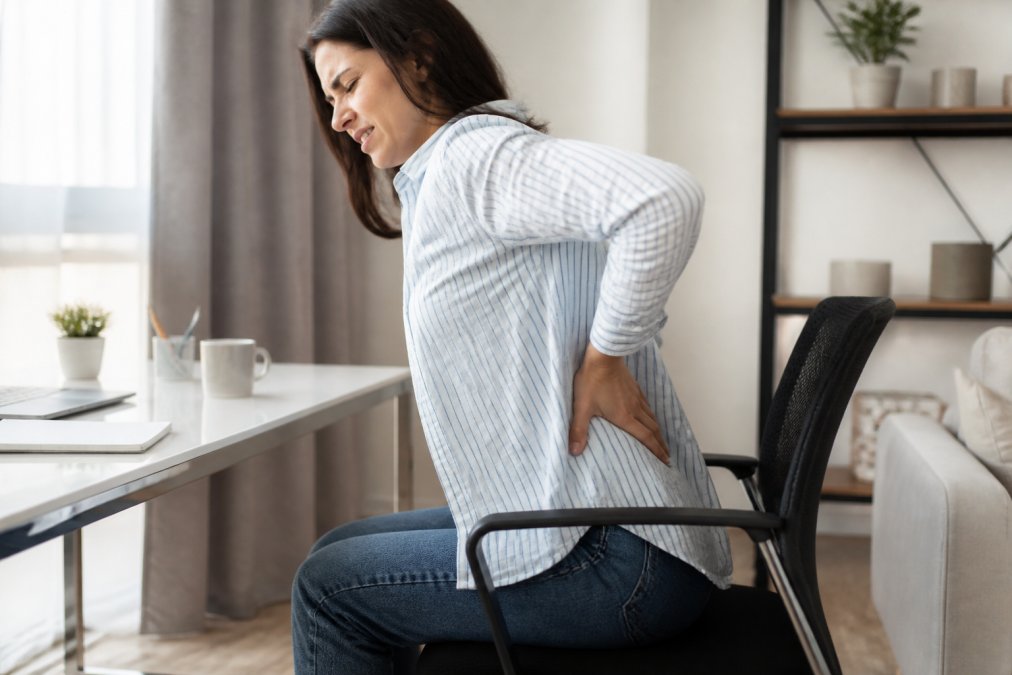
The most common cause of sciatica pain in the leg and foot is nerve root compression, where a structure in the lumbar spine presses directly on a nerve root. A herniated disk and bone spurs are the two most frequent culprits.
A herniated disk occurs when the soft inner material of a spinal disk pushes through its outer ring and presses against a nearby nerve root (Herniated disk: MedlinePlus Medical Encyclopedia). Bone spurs, by contrast, are bony growths that develop over years and can narrow the space a nerve root travels through. Both produce the shooting pain and numbness that radiate below the knee.
Spinal stenosis is a narrowing of the spinal canal that puts pressure on nerve roots, and it becomes more common with age (Spinal Stenosis Symptoms, Causes, & Risk Factors). Piriformis syndrome is different: the piriformis muscle in the buttock spasms or tightens against the sciatic nerve, producing similar symptoms without any spinal involvement at all. A common mistake is assuming every case starts in the spine.
| Cause | Where It Acts | Typical Pattern |
|---|---|---|
| Herniated disk | Lumbar spine | Sharp, follows one nerve path |
| Bone spurs | Lumbar spine | Gradual, worse with standing |
| Spinal stenosis | Spinal canal | Both legs, eases when seated |
| Piriformis syndrome | Buttock muscle | Deep ache, worse with sitting |
Most acute cases of sciatica improve within several weeks with conservative treatment, though the timeline depends heavily on the underlying cause. A muscle-related flare-up often settles faster than one driven by a herniated disk.
Exercises for sciatica pain work best when they reduce nerve irritation rather than stretch an already irritated nerve. The goal is gentle, directional movement, not force. Most practitioners find that the single biggest mistake patients make is treating sciatica like a tight hamstring and stretching aggressively into the pain.
Caution: Stop any of the movements below immediately if they increase shooting pain, numbness, or tingling — do not push through nerve pain.
Before you pick a stretch, run a simple directional-preference test. Lie on your back and note your baseline leg pain. Then try each of these for 30 seconds and re-rate the pain:
Caution: Stop any of the movements below immediately if they increase shooting pain, numbness, or tingling — do not push through nerve pain.
Once you know your preferred direction, build a short daily routine. A common flexion-biased sequence:
Caution: Stop any of the movements below immediately if they increase shooting pain, numbness, or tingling — do not push through nerve pain.
Most sciatica articles stop at "do some stretches." Recovery actually has phases, and the exercises change at each one:
Caution: Stop any of the movements below immediately if they increase shooting pain, numbness, or tingling — do not push through nerve pain.
Because the sciatic nerve runs all the way to the foot, foot mechanics can feed back into the whole chain. If you overpronate or have a leg-length difference, the pelvis tilts and the lumbar spine compensates with every step. Adding a simple arch and calf routine, towel scrunches, single-leg balance, and calf raises, can reduce that repetitive load.
See a doctor promptly if you notice muscle weakness in the leg, gait imbalance, or loss of bladder or bowel control. The last of these, along with numbness in the saddle area, may indicate cauda equina syndrome, a rare but serious emergency that needs immediate care.
Referred pain is pain felt in one location that originates in another, without direct nerve compression. Radiculopathy is the specific term for symptoms caused by a compressed nerve root. The distinction changes everything about treatment, and it is the single most common source of confusion for people trying to figure out what is causing their leg and foot pain.
Referred pain happens when a structure like a muscle, joint, or disk sends a dull, aching signal along a shared nerve pathway. The pain is real, but the nerve itself is not being pinched. It tends to stay in a broad region, the buttock, the back of the thigh, and rarely crosses below the knee in a sharp, electric way.
Use these differentiators to organize what you tell a clinician. None of them is a diagnosis on its own.
| Feature | Referred pain (muscle/joint source) | Radiculopathy (nerve root compression) |
|---|---|---|
| Quality | Dull, achy, cramping | Sharp, shooting, electric, burning |
| Distribution | Broad region, often buttock or thigh | Follows a nerve strip, often below the knee |
| Numbness/tingling | Uncommon | Common, in a specific pattern |
| Muscle weakness | Rare | Possible, in a specific muscle group |
| Reflex changes | None | Sometimes reduced at the ankle or knee |
| Response to position | Varies, often with activity | Often changes with sitting, coughing, or sneezing |
A classic bedside clue is the straight leg raise: lying flat, a clinician lifts your extended leg. If pain shoots down the leg at a low angle, that points toward nerve root irritation. Another is the cough or sneeze test, if a cough reproduces the leg pain, that suggests a compressive, mechanical source rather than a simple muscle strain.
If the source is referred pain from a strained muscle or an irritated joint, treatment focuses on the muscle: soft tissue work, mobility, and load management. If the source is radiculopathy, treatment focuses on the nerve root: reducing compression through directional exercise, posture, and, when needed, imaging and specialist referral. Applying the wrong approach is why some people stretch for weeks with no improvement.
Many real cases are mixed. A person can have a mildly herniated disk and a tight piriformis muscle, with symptoms from both. That is why a proper evaluation looks at the whole chain, spine, pelvis, hip, and foot, rather than assuming one structure is the whole story.
Yes. Sciatica typically affects one side, but the pain can travel from the lower back through the buttock, down the leg, and into the foot. The location depends on which nerve root is compressed. For example, compression at L5 can cause pain along the top of the foot, while S1 compression often affects the outer edge and sole. Some people feel shooting pain, numbness, or tingling in multiple areas along the nerve pathway.
Common triggers include prolonged sitting, heavy lifting with poor form, sudden twisting, and even sneezing or coughing if a disk is already irritated. Muscle tightness in the piriformis or hamstrings can also aggravate the nerve. For many people, a combination of poor posture, weak core muscles, and repetitive strain sets off an acute flare-up. Staying mindful of ergonomics and avoiding sudden movements during recovery can reduce recurrence.
Sciatica-related foot pain usually comes with other signs along the nerve pathway, such as lower back pain, buttock discomfort, or numbness and tingling in the leg. The pain often worsens with sitting, coughing, or stretching the leg. If foot pain appears alone without any back or leg symptoms, it is less likely to be sciatica. A doctor can use a physical exam and, if needed, magnetic resonance imaging to confirm the source.
The worst thing is to ignore worsening symptoms or push through severe pain. Prolonged bed rest can also weaken supporting muscles and delay recovery. Avoid heavy lifting, deep forward bends, and high-impact activities during an acute flare-up. If you notice saddle anesthesia, loss of bladder or bowel control, or sudden muscle weakness, seek emergency care immediately because these can signal cauda equina syndrome, a rare but serious condition.


