

Yoga Poses to Avoid With Chronic Back Pain
Yoga poses to avoid with chronic back pain: Learn which yoga poses aggravate chronic back pain, why they're risky, and safe modifications to keep.
Read More →
Last Updated: August 10, 2026
A car accident triggers immediate physical trauma that extends far beyond what's visible on the surface. The violent collision forces your body through rapid acceleration and deceleration, straining muscles, ligaments, and joints in ways your musculoskeletal system isn't prepared to handle. Many accident victims experience delayed symptoms, sometimes appearing days or weeks after the crash, which is why early intervention matters significantly.
Chiropractic treatment for auto accident injuries can play a part in accident recovery. Emergency room care is designed to assess and manage immediate, life-threatening, or acute traumatic injuries like fractures. After initial evaluation concludes, a chiropractic assessment can provide a specialized focus on soft tissue function and spinal biomechanics. This complementary approach may help identify areas of function that could use attention after an impact.
For more detailed steps in managing your recovery through chiropractic care immediately following a collision, explore our guide on post-collision chiropractic steps.
At chiropracticcare.clinic, we recognize that accident recovery isn't one-size-fits-all. The treatment approach depends on injury severity, the accident mechanism, your age, and your overall health status. Early assessment and documentation are equally critical, not just for your physical recovery, but for any potential insurance claims or legal proceedings related to the accident.
Car accidents generate forces that damage soft tissue structures throughout the body. Understanding what happens during impact helps explain why chiropractic assessment is so important, even when initial pain seems minor.
Whiplash occurs when the head snaps forward and backward rapidly during collision, stretching the cervical spine beyond its normal range of motion. This mechanism damages muscles, tendons, and ligaments in the neck, often accompanied by nerve irritation that radiates pain into the shoulders and arms.
The cervical spine contains seven vertebrae supporting your head's full weight while allowing significant mobility. When whiplash forces these vertebrae out of alignment, the surrounding soft tissue becomes inflamed, and nerve roots may become compressed. Symptoms range from mild stiffness to severe pain and neurological symptoms like tingling or numbness in the hands.
Many whiplash injuries don't present immediate symptoms. The inflammation develops over hours or days as your body's response to trauma unfolds. This delayed presentation is why seeking chiropractic evaluation within the first week after an accident is crucial, early intervention prevents inflammation from becoming chronic.
The lower back absorbs tremendous force during a collision, especially if you're hit from behind or side-impact. The lumbar spine bears your body's weight and generates most of your spinal mobility, making it particularly vulnerable to strain injuries.
Lumbar strain involves microscopic tears in the muscles and ligaments supporting the lower back. Unlike a dramatic rupture, these small tears accumulate inflammation and create muscle guarding, where muscles tighten protectively around the injury site. This protective response, while initially helpful, can become problematic if it persists, limiting your range of motion and creating chronic pain patterns.
Impact forces can also shift lumbar vertebrae slightly out of alignment, a condition chiropractors call vertebral subluxation. Even minor misalignment changes how forces distribute through your spine during movement, accelerating wear and creating pain that worsens over weeks if untreated.
Beyond the spine itself, car accidents damage the extensive soft tissue network supporting your entire musculoskeletal system. Muscles throughout your neck, shoulders, back, and hips experience sudden contraction and stretching during impact, creating microscopic damage that triggers inflammation.
This soft tissue mobilization process, where inflammation builds and gradually resolves, takes weeks to months if left unmanaged. Without proper treatment, scar tissue can form within damaged muscles and ligaments, creating permanent restrictions in your range of motion and chronic pain patterns that persist long after the accident.
Chiropractic care for accident injuries combines manual adjustment, soft tissue therapy, and functional rehabilitation to address the biomechanical damage that causes post-accident pain and dysfunction.
The core of chiropractic treatment is manual adjustment, applying controlled force to vertebrae that have shifted out of alignment. When vertebrae misalign, they restrict spinal mobility and can irritate nerve roots, creating pain and neurological symptoms throughout your body.
A chiropractor performs a thorough patient assessment before adjustment, including physical examination, range of motion testing, and often diagnostic imaging like X-rays. This assessment identifies which vertebrae are misaligned and how the misalignment is affecting surrounding tissues and nerves.
The adjustment itself involves applying precise, controlled force to restore proper vertebral position and joint mechanics. This restores normal movement patterns, reduces nerve irritation, and allows your body's natural healing processes to function more effectively. Some patients report improved mobility soon after adjustment, though full healing requires multiple sessions as inflammation resolves and tissues strengthen, and individual results vary.
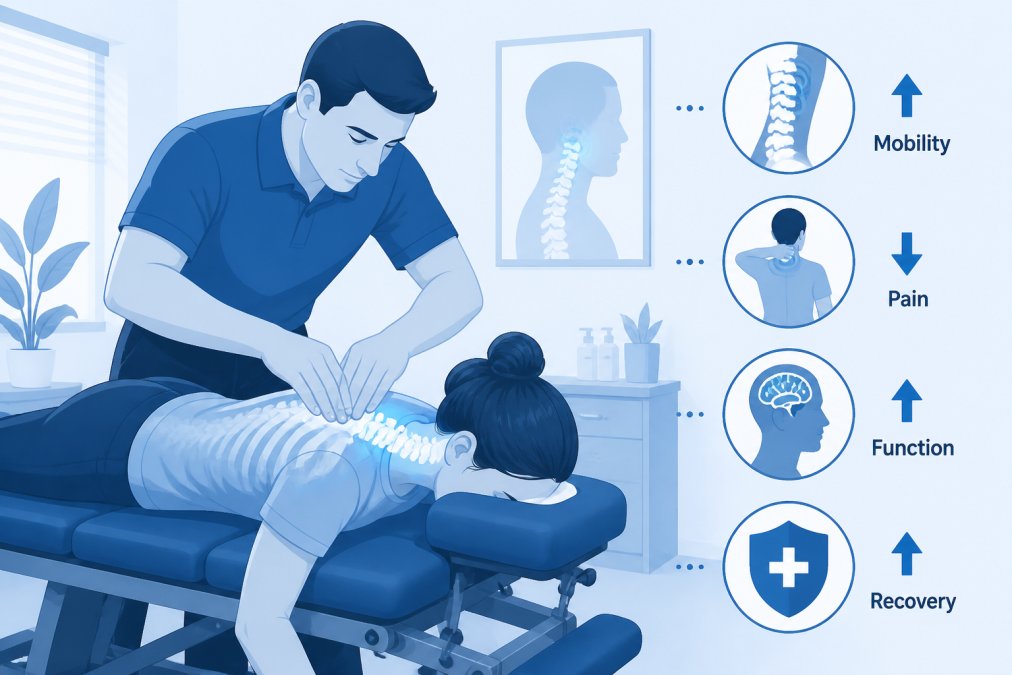
Beyond spinal adjustment, chiropractic treatment addresses the muscle tension and soft tissue damage that causes much of the post-accident pain. Soft tissue mobilization techniques, including massage, trigger point therapy, and instrument-assisted techniques, break up adhesions, improve blood flow stimulation, and reduce inflammation in damaged muscles and ligaments.
Inflammation reduction is critical because excessive inflammatory response can become self-perpetuating. Your body's initial inflammatory response protects the injury site, but if inflammation persists unchecked, it creates chronic pain and tissue damage. Therapeutic modalities that reduce inflammation while supporting healing allow tissues to repair properly without developing chronic complications.
These techniques also address muscle tension patterns that develop as your body protects an injury. When muscles remain contracted to guard an injured area, blood flow decreases, limiting oxygen and nutrients available for healing. Soft tissue mobilization restores normal blood flow and muscle function, accelerating recovery.
Recovery timelines vary significantly based on injury severity, your age, and how quickly you begin treatment. Understanding the phases of recovery helps set realistic expectations for your healing process.
The acute phase typically lasts two to six weeks after an accident. During this period, inflammation is highest, pain is most severe, and your body is in active healing mode. Chiropractic treatment during the acute phase focuses on reducing inflammation, restoring basic spinal alignment, and managing pain to allow rest and healing.
Some patients report noticing improvement in acute-phase symptoms during regular chiropractic care. However, symptom improvement doesn't mean complete healing, tissues are still actively repairing beneath the surface.
The chronic recovery phase extends from six weeks to several months after the accident. During this period, inflammation has decreased, but tissues continue strengthening and remodeling. Treatment shifts toward restoring full range of motion, rebuilding functional strength, and preventing compensation patterns that could create long-term problems.
Some patients continue chiropractic care for three to six months after an accident, especially if the injury was severe or if they're dealing with persistent symptoms. The goal during this phase is complete functional recovery, not just pain relief, but restoration of normal movement patterns and prevention of chronic pain development.
Range of motion restriction is one of the most common lingering effects of car accident injuries. Even after acute pain resolves, many accident victims find their neck or back won't move through normal directions, or movement creates discomfort.
This restriction develops from several sources: muscle tension that persists after acute inflammation resolves, scar tissue formation in damaged soft tissues, and protective muscle guarding patterns your nervous system maintains even after the injury has healed. Chiropractic treatment addresses each of these through progressive rehabilitation that gradually restores normal movement patterns.
Restoring range of motion requires consistent, progressive treatment. Early sessions focus on gentle mobilization and manual therapy. As healing progresses, your chiropractor introduces active rehabilitation exercises that rebuild strength and neuromuscular control. This progressive approach prevents re-injury while systematically restoring function.
If your accident involved another party's negligence, you may pursue an insurance claim or legal action. Proper chiropractic documentation is essential for supporting your claim and ensuring you receive appropriate compensation for your injuries.
Your chiropractor maintains detailed medical records documenting your injury assessment, treatment provided, and progress toward recovery. These records serve as objective evidence of your injuries and the necessity of treatment. Insurance adjusters and attorneys rely on these records to evaluate claim validity and determine appropriate compensation.
Comprehensive treatment documentation includes your initial patient assessment, describing symptoms, mechanism of injury, and physical examination findings, plus detailed notes from each subsequent visit. These notes record treatment provided, your response to treatment, and any changes in your condition.
A clear treatment plan outlining the expected course of care strengthens your claim. Insurance companies are more likely to approve ongoing treatment when your chiropractor has documented a specific plan addressing your injuries. This documentation also protects you legally, creating an objective record of your condition and treatment rather than relying on memory.
Diagnostic imaging, typically X-rays, provides objective evidence of spinal misalignment and structural damage. These images are powerful documentation tools because they show physical findings rather than relying solely on your description of symptoms.
Your chiropractor's patient assessment includes range of motion measurements, orthopedic testing, and neurological examination findings. These objective measures document your functional limitations and provide baseline measurements for tracking recovery progress. When documented consistently across multiple visits, they demonstrate improvement or persistent impairment, supporting your claim.
Insurance adjusters and defense attorneys scrutinize chiropractic claims carefully. Strong documentation with objective findings, imaging, range of motion measurements, neurological testing, makes your claim significantly more credible than subjective symptom descriptions alone.
Not every post-accident symptom requires emergency evaluation, but some do. Understanding when to seek emergency care versus chiropractic evaluation helps you get appropriate treatment quickly.
Seek emergency care immediately if you experience severe pain, loss of consciousness, difficulty breathing, numbness or weakness in your limbs, or signs of serious head injury. These symptoms suggest potentially serious conditions requiring emergency medical evaluation. Emergency departments have diagnostic capabilities, CT scans, MRI, that can identify fractures, internal bleeding, and other serious injuries that chiropractic care cannot treat.
After emergency evaluation rules out serious injury, chiropractic care becomes appropriate for managing soft tissue injuries, spinal misalignment, and functional recovery. Many accident victims are discharged from emergency departments once life-threatening injuries have been ruled out, often with instructions to rest and use over-the-counter pain medication as needed. Following an emergency evaluation, a chiropractor can perform a musculoskeletal assessment focused specifically on soft tissues and spinal function. For patients whose symptoms remain or change, this evaluation can serve as an appropriate next step in seeking care.
The optimal approach involves emergency evaluation first (if symptoms suggest serious injury), followed by chiropractic assessment and treatment. Your chiropractor can coordinate with your emergency care physician if needed, ensuring comprehensive management of your injuries.
The most important reason to seek early chiropractic care is preventing chronic pain development. Many accident victims who don't receive proper treatment develop persistent pain lasting months or years after the initial injury.
Chronic pain develops when acute injuries don't heal properly. Incomplete healing leaves scar tissue, persistent inflammation, and neuromuscular dysfunction that creates ongoing pain signals. Your nervous system becomes sensitized to these signals, amplifying pain perception even as underlying tissue damage gradually resolves.

Early, comprehensive chiropractic treatment interrupts this progression. By addressing spinal misalignment, reducing inflammation, and restoring normal movement patterns during the acute phase, your chiropractor prevents the chronic pain patterns that develop from incomplete healing.
Post-adjustment recovery protocols are equally important. Your chiropractor typically recommends specific exercises, ergonomic modifications, and activity restrictions during healing. These recommendations support your body's healing process and prevent re-injury that could restart the inflammatory cycle.
Seek immediate emergency care if you experience severe pain, loss of consciousness, difficulty breathing, or neurological symptoms. For musculoskeletal injuries without emergency warning signs, scheduling a chiropractic evaluation within the first few days is advisable. Early intervention helps document injuries for insurance claims and prevents inflammation from worsening. A chiropractor can perform a patient assessment and diagnostic imaging to identify soft tissue injury and spinal alignment issues before chronic pain develops.
Recovery timelines vary based on injury severity. Acute whiplash may improve in 2-6 weeks with regular treatment, while more severe soft tissue injuries or chronic pain prevention may require 8-12 weeks or longer. Some patients notice initial improvement in range of motion and comfort within the first few weeks of consistent chiropractic care, though this varies by individual and injury severity. Your chiropractor will develop a personalized treatment plan and adjust the timeline based on your response to manual adjustment and soft tissue mobilization.
Maintain comprehensive medical records including your initial patient assessment, diagnostic imaging results, treatment plan details, and progress notes from each visit. Document all symptoms, injury dates, and functional limitations. Your chiropractor's records should show the connection between the accident and your musculoskeletal injuries. This documentation supports your personal injury claim and helps insurance adjusters understand the necessity and scope of your chiropractic care for accident-related trauma.
Yes. Whiplash involves soft tissue injury to the cervical spine and surrounding muscles, causing neck pain, stiffness, and neurological symptoms. Chiropractic treatment addresses whiplash through spinal alignment, manual adjustment, and soft tissue mobilization to reduce inflammation and restore range of motion. Many accident victims experience delayed symptoms appearing days or weeks after the collision. Early chiropractic evaluation may help support recovery and address symptoms before they become harder to manage, though outcomes vary by individual.
If you've been in a car accident, don't wait for symptoms to worsen before seeking evaluation. Early evaluation in the weeks following an injury can be an important part of supporting your recovery. At chiropracticcare.clinic, we specialize in accident injury assessment and comprehensive treatment planning designed to restore your function and prevent chronic pain. Contact our office to schedule an evaluation and discuss how chiropractic care can support your recovery.


