
Table of Contents
- Chiropractor vs Physical Therapy: Quick Comparison
- What Is a Chiropractor and How Do They Treat Back Pain
- What Is a Physical Therapist and How Do They Treat Back Pain
- Key Differences in Treatment Philosophy and Approach
- How Long Does Physical Therapy Take for Back Pain
- Physical Therapy Exercises for Lower Back Pain Recovery
- When to Choose a Chiropractor for Your Back Pain
- Frequently Asked Questions
Last Updated: August 21, 2026
Chiropractor vs Physical Therapy: Quick Comparison
When chronic back pain strikes, the choice between a chiropractor and a physical therapist often feels urgent and confusing. Both practitioners claim to address musculoskeletal problems, both require multiple visits, and both can improve mobility and reduce pain. Yet their underlying philosophies, treatment methods, and long-term outcomes differ significantly.
The real question isn't which profession is universally "better", it's which approach aligns with your specific condition, your body's response to treatment, and your recovery goals. At chiropracticcare.clinic, we understand that patients often benefit from understanding these distinctions before committing to either path.
This comparison cuts through the marketing and explains what each practitioner actually does, where their methods diverge, and how to decide which one (or whether both) makes sense for your situation.
| Aspect | Chiropractor | Physical Therapist |
|---|---|---|
| Primary Focus | Spinal alignment and joint adjustment | Functional movement and therapeutic exercise |
| Main Treatment | Spinal manipulation and adjustments | Strengthening, stretching, and mobility work |
| Typical Visit Duration | 15-30 minutes | 45-60 minutes |
| Treatment Philosophy | Vertebral subluxation correction | Biomechanics and functional recovery |
| Best For | Acute pain, alignment issues, preventative care | Post-surgical rehab, chronic weakness, functional deficits |
| Diagnostic Imaging | Often ordered | Typically not ordered unless referred |
What Is a Chiropractor and How Do They Treat Back Pain
A chiropractor is a licensed healthcare professional trained to diagnose and treat musculoskeletal disorders, primarily through spinal manipulation and joint adjustment. Chiropractors complete a Doctor of Chiropractic (D.C.) degree, which typically requires 4 years of graduate education after undergraduate coursework, including anatomy, physiology, radiology, and hands-on manipulation techniques.
Chiropractic treatment centers on the concept that proper alignment of the body's structure, particularly the spine, enables the body to function optimally. When vertebrae become misaligned (what chiropractors call a subluxation), this can restrict nerve function, limit range of motion, and trigger pain. Chiropractors use spinal manipulation to restore alignment and reduce nerve irritation.

A typical chiropractic session for back pain involves assessment, X-rays or other diagnostic imaging, and hands-on adjustment. The chiropractor applies controlled force to specific vertebrae or joints, producing the audible "crack" many patients associate with chiropractic care. This adjustment aims to restore mobility, reduce inflammation around the joint, and alleviate pressure on nerves.
Beyond spinal manipulation, many chiropractors incorporate soft tissue mobilization, ergonomic counseling, and posture correction into their treatment plans. Some also recommend home exercises, though the emphasis typically remains on the in-office adjustment rather than independent therapeutic exercise.
What Is a Physical Therapist and How Do They Treat Back Pain
A physical therapist (P.T.) is a licensed healthcare professional with a Doctor of Physical Therapy (D.P.T.) degree, typically requiring 3 years of graduate education after a bachelor's degree (apta.org). Physical therapists specialize in restoring functional movement, improving strength, and addressing biomechanical deficits that contribute to pain and disability.
Physical therapy for back pain focuses on identifying and correcting the underlying movement patterns, muscle weaknesses, and postural habits that cause or perpetuate pain. Rather than emphasizing alignment correction, physical therapists assess how your body moves, where you lack strength or flexibility, and what activities trigger symptoms.
Treatment typically involves therapeutic exercise, stretching, manual therapy (which may include soft tissue work or joint mobilization), and education about body mechanics and activity modification. A physical therapist teaches you how to move correctly, build endurance in stabilizing muscles, and gradually return to activities that matter to you.
Sessions usually last 45-60 minutes, with a significant portion devoted to active exercise performed by the patient. The therapist guides proper form, progresses the difficulty as your strength improves, and adjusts the plan based on your functional goals and response to treatment.
Key Differences in Treatment Philosophy and Approach
The fundamental difference lies in how each profession conceptualizes back pain. Chiropractors typically view back pain as stemming from vertebral misalignment that disrupts nerve function. Their treatment aims to restore spinal alignment through manipulation. Physical therapists, by contrast, view back pain as often resulting from movement dysfunction, muscle weakness, postural habits, and biomechanical inefficiency. Their treatment aims to restore functional capacity through exercise and movement retraining.
This philosophical divide shapes everything about the treatment experience. A chiropractor's visit is provider-directed, the practitioner performs the adjustment. A physical therapist's visit is patient-directed, you do the work under guidance. Chiropractic care emphasizes the adjustment as the primary therapeutic tool. Physical therapy emphasizes your own effort and behavioral change.
The timeline also differs. Chiropractic care often follows a pattern: initial intensive phase (2-3 visits per week), maintenance phase (1-2 visits per week), and then ongoing preventative visits. Physical therapy typically runs 6-12 weeks with decreasing frequency as you gain independence with home exercises, then concludes when functional goals are met.
Physical therapy is a modality often utilized within established post-surgical rehabilitation medical pathways. Regardless of the type of care you choose, always confirm specific coverage details and benefits directly with your insurance provider.
How Long Does Physical Therapy Take for Back Pain
The time needed for physical therapy varies depending on the root cause and severity of the pain. Generally, acute injuries resolve faster than chronic conditions, but the specific duration and rate of recovery depend greatly on your individual consistency with attendance and completing at-home exercises.
Most physical therapists structure treatment in phases. The initial phase focuses on pain reduction and basic mobility restoration, typically lasting 2-4 weeks. The intermediate phase emphasizes strengthening and functional movement patterns, lasting 4-8 weeks. The final phase focuses on return to sport or activity and independent maintenance, lasting 2-4 weeks.
Attendance frequency matters significantly. Patients who attend 2-3 sessions per week and perform home exercises consistently progress faster than those attending once weekly or skipping home work. A typical week involves 2-3 clinic visits plus 5-6 days of independent home exercise.
Your age, overall fitness level, and adherence to the home exercise program influence duration. Younger, more active patients often progress faster. Older adults or those with multiple comorbidities may require longer treatment. Patients who perform prescribed home exercises daily see better outcomes than those who only do exercises during clinic visits.
Physical Therapy Exercises for Lower Back Pain Recovery
Physical therapy exercises for lower back pain focus on building strength in the core stabilizers (deep abdominal and back muscles), improving flexibility in tight areas, and retraining movement patterns that protect the spine.
Common therapeutic exercises include pelvic tilts (lying on your back, gently rocking your pelvis to engage core muscles), bridges (lying on your back with knees bent, lifting hips toward ceiling), and bird dogs (on hands and knees, extending opposite arm and leg while maintaining spinal stability). These exercises activate deep stabilizing muscles without excessive spine loading.

Progression typically moves from basic stability work to functional movements. Early exercises are performed slowly and controlled. As strength builds, exercises incorporate more dynamic movement, balance challenges, or resistance. Advanced progressions might include planks, dead bugs, or sport-specific movements.
Stretching addresses muscle tightness that restricts range of motion. Hip flexor stretches, hamstring stretches, and piriformis stretches (targeting deep hip muscles that can refer pain to the lower back) are common. Physical therapists teach you the difference between beneficial stretching and movements that aggravate your condition.
The critical element is consistency and proper form. Performing exercises incorrectly or sporadically produces minimal benefit. A physical therapist teaches you exactly how to perform each movement, watches your form, corrects compensations, and progresses difficulty as you adapt. Home exercise compliance, doing prescribed exercises on non-clinic days, directly correlates with recovery speed and long-term success.
We recommend that you speak directly with your practitioner or insurance provider to discuss specific costs and coverage details before beginning any new plan of care.
When to Choose a Chiropractor for Your Back Pain
Chiropractic care makes particular sense for acute musculoskeletal pain with clear mechanical onset, you lifted something wrong, slept awkwardly, or experienced a minor impact that triggered pain. If your pain is localized to one area, worsens with certain movements, and improves with rest or specific positions, spinal manipulation may provide rapid relief.
Some patients who respond well to chiropractic care report noticing pain reduction soon after adjustment, though this varies by individual and condition. Discuss your response to treatment with your chiropractor at each visit so they can adjust your plan based on your progress.
Chiropractic care also suits patients seeking preventative care and maintenance. Some people benefit from periodic adjustments to maintain spinal alignment and prevent recurring pain, similar to how others use regular dental cleanings to maintain oral health.
However, chiropractic care is less ideal for patients with nerve compression requiring imaging confirmation, post-surgical rehabilitation requiring structured progressive exercise, or chronic pain rooted in movement dysfunction rather than alignment. If your back pain stems from weak core muscles, poor posture habits, or movement patterns that stress your spine, exercise-based physical therapy typically addresses the root cause more directly.
Patients with severe neurological symptoms (significant numbness, weakness, or bowel/bladder changes) require medical evaluation before any manual therapy. Age alone is not a barrier, older adults can benefit from chiropractic care, but pre-existing conditions like osteoporosis require careful consideration and communication with your chiropractor about safety.
Choosing between a chiropractor and physical therapist for back pain requires understanding your specific condition and what each profession offers. Acute mechanical pain often responds well to chiropractic adjustment. Chronic pain rooted in weakness or movement dysfunction typically responds better to physical therapy. Many patients benefit from both, initial chiropractic adjustment for pain relief followed by physical therapy to address underlying dysfunction and prevent recurrence.
At chiropracticcare.clinic, we recognize that effective back pain management often involves integrated care. Whether you choose chiropractic treatment, physical therapy, or a combination approach, the key is selecting a qualified practitioner who thoroughly assesses your condition, explains their treatment rationale, and adjusts the plan based on your response. Get started by consulting with a qualified provider who can evaluate your specific situation and recommend the most appropriate path forward.
Frequently Asked Questions
Is it better to go to a chiropractor or a physical therapist for back pain?
The choice depends on your specific condition, preferences, and treatment goals. Chiropractors focus on spinal alignment and joint adjustment through manual manipulation, while physical therapists emphasize therapeutic exercise and functional recovery. For acute injuries or alignment issues, chiropractic care may provide faster relief. For chronic conditions requiring strength building and long-term functional improvement, physical therapy often delivers better outcomes. Many patients benefit from both approaches as complementary treatments. Consult with your primary care physician to determine which option aligns with your diagnosis and treatment plan.
How long does physical therapy take for back pain relief?
Physical therapy duration varies based on condition severity, injury type, and individual response. Most patients begin noticing improvement within 2-4 weeks of consistent treatment. A typical course ranges from 6-12 weeks, with sessions occurring 2-3 times per week. Acute injuries may resolve faster, while chronic conditions often require longer treatment periods. Your physical therapist will establish a timeline during your initial assessment and adjust it based on your progress. Home exercise program adherence significantly impacts recovery speed, so consistent practice between sessions accelerates results.
What is the typical cost difference between chiropractic care and physical therapy?
The most effective way to plan for your treatment is to speak directly with your insurance provider and your chosen healthcare practitioner. They can give you accurate, current information about your specific coverage details and available payment options before you begin care.
Can physical therapy exercises alone resolve chronic back pain without additional treatment?
Physical therapy exercises address pain through strengthening, improving range of motion, and correcting biomechanical dysfunction. For many patients with chronic back pain, a consistent therapeutic exercise program produces significant improvement. However, some conditions benefit from combining physical therapy with other interventions like manual therapy, chiropractic adjustment, or medical management. Success depends on diagnosis accuracy, exercise adherence, and individual factors like age and overall health. Your healthcare provider can determine whether physical therapy alone is appropriate or if complementary treatments would enhance your recovery.
Why might my doctor recommend one treatment over the other?
Physicians base recommendations on diagnostic findings, your medical history, and evidence-based outcomes for your specific condition. Physical therapists are often recommended for conditions requiring progressive strengthening and functional restoration, while chiropractors may be suggested for vertebral subluxation, joint misalignment, or acute musculoskeletal pain. Some doctors prefer evidence-based approaches with extensive clinical research support. Your primary care physician should explain their reasoning and discuss both options if you're uncertain. If you want to explore an alternative approach, discuss it with your doctor before starting treatment to ensure it complements your overall care plan.
Learn more about back pain care at our Montgomery, AL clinic, or book an evaluation.
Table of Contents
- Factors Affecting Chiropractic Recovery Time
- Understanding Your Initial Clinical Assessment
- Typical Chiropractic Visit Frequency for Acute vs. Chronic Pain
- Cost of Chiropractic Care Without Insurance
- Chiropractic Maintenance Care vs. Corrective Care
- How to Know If Chiropractic Care Is Working
- When to Stop Treatment and Transition to Prevention
- Frequently Asked Questions
Factors Affecting Chiropractic Recovery Time
Recovery timelines vary significantly based on your condition's nature, severity, age, fitness level, and adherence to post-visit care. At chiropracticcare.clinic, we recognize that recovery is highly individualized.
To determine the specific number of visits you may need for chiropractic relief, consider our companion post that explains how many sessions Montgomery patients typically require: Chiropractic Sessions Guide.
Acute injuries from specific incidents typically resolve faster than chronic conditions developed over months or years. Whiplash may respond within two to four weeks, while degenerative disc disease often requires extended treatment. Your body's healing capacity matters enormously, younger patients generally progress faster, though a fit 60-year-old may recover as quickly as a sedentary 35-year-old. Sleep quality, stress levels, physical activity, ergonomics, and inflammation management all influence how rapidly your musculoskeletal system responds to adjustments.
Condition severity directly correlates with treatment duration. Minor subluxations causing mild neck stiffness require fewer visits than herniated discs causing radiating neurological symptoms. Multiple problem areas typically need longer treatment courses than single localized complaints.
Understanding Your Initial Clinical Assessment
Your first chiropractic visit establishes a baseline for measuring progress and determines whether chiropractic care suits your condition.
During the initial evaluation, a chiropractor performs a thorough examination including medical history, current symptoms, range of motion testing, orthopedic and neurological assessments, and often imaging. This reveals the extent of spinal misalignment, soft tissue damage, inflammation, and neurological involvement. The practitioner documents pain levels, functional limitations, and movements that aggravate or relieve symptoms.

The assessment includes questions about daily activities, work environment, posture habits, previous injuries, and how your condition affects quality of life. For example, an office worker with chronic neck pain may have postural dysfunction from computer use, while an athlete with acute shoulder pain may have a sports-related soft tissue injury requiring different treatment emphasis.
Based on this assessment, the chiropractor develops a preliminary treatment plan outlining expected visit frequency, estimated care duration, and specific therapeutic goals.
Typical Chiropractic Visit Frequency for Acute vs. Chronic Pain
Acute Pain: What to Expect in the First Few Weeks
Acute pain from recent injury typically requires more frequent visits initially, decreasing as inflammation subsides. Most acute conditions respond well to intensive treatment in the first two to four weeks, followed by a tapering schedule.
For acute injuries, a common initial schedule involves two to three visits per week for the first two weeks. This frequency addresses inflammation, restores range of motion, and corrects biomechanical dysfunction while the injury is in its acute inflammatory phase. After two weeks, frequency typically decreases to once or twice weekly for an additional two to four weeks. Many patients experience significant relief within four to six weeks of consistent treatment.
Common acute conditions include whiplash injuries (2-3 visits weekly for 3-4 weeks), acute lower back strain (2-3 visits weekly for 2-3 weeks), and sports-related muscle strains (2-3 visits weekly for 2-4 weeks). Acute pain responds to intensive, frequent care initially, with gradual reduction as function returns.
Chronic Conditions: Building a Longer-Term Plan
Chronic pain requires a fundamentally different approach than acute injuries. Rather than intensive initial treatment, chronic conditions benefit from consistent, moderate-frequency care sustained over several months, with goals shifting toward gradual biomechanical correction and functional restoration.
Typical chronic condition treatment begins with one to two visits weekly for the first four to eight weeks. Many patients with chronic lower back pain, cervical spine dysfunction, or degenerative conditions see measurable improvements within this initial phase, though complete relief often takes longer.
After the first phase, maintenance typically drops to once weekly for several months. This frequency maintains corrections while allowing your body to adapt to improved spinal alignment. The critical insight: chronic conditions often require more total visits than acute injuries, but spread over longer timelines. Chronic conditions generally require more total visits than acute injuries, though the exact number depends on your individual assessment and progress.
For chronic conditions like herniated discs, sciatica, or postural dysfunction, realistic expectations involve three to six months of consistent treatment before determining whether chiropractic care provides sufficient relief.
Cost of Chiropractic Care Without Insurance
Costs vary by location, chiropractor experience, and treatment plan. Contact our office directly for current fee information and to discuss options based on your insurance coverage.
Chiropractic Maintenance Care vs. Corrective Care
Understanding the distinction between corrective and maintenance care clarifies why treatment frequency changes and helps you recognize when you've transitioned from active treatment to prevention.
Corrective care is the intensive treatment phase aimed at resolving your current condition and restoring normal function. This phase involves more frequent visits, active rehabilitation exercises, and specific therapeutic interventions, typically lasting four to twelve weeks depending on severity.
Maintenance care begins once acute symptoms resolve and you've achieved functional improvement. This phase focuses on preventing relapse and supporting long-term musculoskeletal health, typically occurring monthly or every few weeks rather than weekly.
The transition from corrective to maintenance care represents a critical decision point. Some patients stop treatment entirely once pain resolves, only to experience relapse weeks later. Others recognize that occasional maintenance visits prevent problems from developing. For chronic conditions, the line blurs, a patient with degenerative disc disease might require ongoing corrective interventions indefinitely, while someone who achieved full recovery from acute injury might transition to quarterly maintenance visits purely for prevention.
How to Know If Chiropractic Care Is Working
Determining whether treatment produces results requires tracking specific, measurable improvements rather than relying on subjective feeling alone.

Pain reduction is the most obvious success indicator. You should notice measurable decreases in pain intensity, frequency, or duration within the first two to four weeks for acute conditions. For chronic conditions, improvement is often more gradual over the first month.
Functional improvement indicates treatment is working. Can you perform previously limited activities? Can you sit at your desk for eight hours without increasing symptoms? Can you sleep through the night? These functional metrics often matter more than pain scores because they reflect real quality-of-life improvement.
Range of motion improvements provide objective evidence of progress. You might notice you can turn your head further, bend forward with less discomfort, or reach overhead without shoulder pain. Your chiropractor measures range of motion during visits, providing quantifiable data about genuine improvement.
Reduced medication dependency is another positive indicator. If you're taking fewer pain relievers or muscle relaxants as treatment progresses, chiropractic care is effectively managing your condition.
If you're not seeing measurable improvements after four to six weeks of consistent treatment, discuss whether adjustments to your treatment plan are needed or whether additional professional evaluation is appropriate.
When to Stop Treatment and Transition to Prevention
The appropriate time to stop corrective treatment is when you've achieved your functional goals and symptoms have stabilized at acceptable levels. This doesn't necessarily mean complete pain elimination, but rather that your condition no longer significantly limits activities and pain is manageable without medication. For acute injuries, this typically occurs within four to eight weeks. For chronic conditions, it might take three to six months.
Before stopping treatment entirely, discuss with your chiropractor whether maintenance care would be beneficial. Some conditions benefit from occasional preventative visits, while others may not require ongoing care once resolved.
A common mistake is stopping treatment abruptly the moment pain disappears, only to experience relapse when biomechanical corrections haven't fully solidified. Gradual reduction in visit frequency, from weekly to monthly to quarterly, allows your body to maintain improvements while reducing dependency on regular adjustments.
Some patients benefit from seasonal or situational maintenance care. Someone with chronic lower back pain might increase visit frequency during high-stress periods. An athlete might schedule preventative adjustments before competition season. Red flags suggesting you should resume active treatment include return of significant pain, loss of range of motion improvements, or functional limitations reappearing.
Determining how many chiropractic visits for relief you'll need requires understanding your specific condition, your body's healing capacity, and realistic recovery timelines. The most important step is scheduling a comprehensive initial clinical assessment where a qualified chiropractor can evaluate your condition and develop a personalized treatment plan. If you're considering chiropractic care for back pain, neck pain, or other musculoskeletal concerns, a professional evaluation and evidence-based treatment can be beneficial. Contact a chiropractor to discuss your symptoms, understand your treatment options, and establish clear expectations for your recovery journey.
Frequently Asked Questions
How many chiropractic visits do most people need to feel relief?
The number varies significantly based on your condition's severity and duration. Acute injuries may show improvement within 2-4 visits over 1-2 weeks, while chronic conditions typically require 6-12 visits spread over several weeks. Your chiropractor will assess your specific situation during your first visit and create a personalized treatment plan. Recovery depends on factors like age, overall health, compliance with home care recommendations, and whether you combine chiropractic care with other therapies.
What factors affect how many chiropractic visits I'll need?
Key factors include the nature of your condition (acute vs. chronic), how long you've had the pain, your age and overall health, severity of spinal misalignment, presence of underlying conditions like herniated discs or sciatica, your posture and biomechanics, and how well you follow home care instructions. Additionally, whether you combine chiropractic adjustments with physical therapy, stretching routines, or ergonomic changes can significantly impact your recovery timeline and total visit count.
Is chiropractic care worth the cost if I don't have insurance?
Cost-benefit depends on your specific condition and financial situation. Many patients find relief from chronic pain that other treatments haven't resolved, potentially reducing long-term healthcare expenses. Before committing to a full treatment plan, discuss pricing structure and payment options with your chiropractor. Some offer package discounts or flexible payment arrangements. Consider the investment against the cost of ongoing pain management, missed work, or alternative treatments you've already tried.
What's the difference between maintenance care and corrective care in chiropractic treatment?
Corrective care focuses on treating your current condition and restoring spinal health through more frequent visits, typically 2-3 times weekly initially, then tapering as you improve. Maintenance care begins once your acute symptoms resolve and involves periodic adjustments (usually monthly or quarterly) to prevent future problems and maintain spinal alignment. Maintenance care helps preserve your range of motion, supports preventative health, and may reduce the risk of exacerbation. Your chiropractor will recommend transitioning to maintenance once you've achieved functional improvement and pain relief.
Learn more about what to expect as a new patient at our Montgomery, AL clinic, or book an evaluation.
Table of Contents
- Understanding Recurring Tension Migraines and Neck Pain
- How Chiropractic Care Addresses the Musculoskeletal Component of Headaches
- How Long Does Chiropractic Treatment Take for Headaches
- Chiropractic Care vs Medication for Migraines
- Posture Correction and Ergonomic Adjustments
- At-Home Self-Care Exercises and Lifestyle Modifications
- Signs Your Headaches May Have a Musculoskeletal Component Worth Evaluating
- Integration with Primary Care and Medical Management
- Frequently Asked Questions
Last Updated: August 19, 2026
Understanding Recurring Tension Migraines and Neck Pain
Recurring tension headaches and migraines affect many adults, causing moderate to severe pain often accompanied by neck tension and upper back discomfort. The distinction between tension headaches and migraines matters because treatment approaches differ significantly. While tension headaches produce a dull, pressing sensation, migraines involve throbbing pain, sensitivity to light, and sometimes neurological symptoms like dizziness or visual disturbances.
Cervical spine misalignment, muscle spasms in the upper back, and restricted neck range of motion can trigger or perpetuate migraine cycles. Many individuals report that symptoms worsen after prolonged sitting, poor posture, or stress-induced muscle tightness in the cervical region.
Understanding the musculoskeletal component of your headaches can help break the cycle. This guide explores how a chiropractor can address the musculoskeletal and cervicogenic-headache components that sometimes accompany recurring head pain, as part of a plan coordinated with your physician.
Migraines are a neurological condition, but neck tension and cervical spine function can be part of the picture for some people, especially when cervicogenic headache overlaps with migraine symptoms. Spinal manipulation and soft tissue therapy may help manage a musculoskeletal component when it is identified, as part of a broader plan coordinated with your physician.
How Chiropractic Care Addresses the Musculoskeletal Component of Headaches
Our clinical focus regarding headaches is the upper cervical spine and the surrounding musculature. For some patients, tension and limited mobility in the neck area are components of pain that accompany headaches and migraines. We assess this musculoskeletal contribution alongside your general symptoms to ensure comprehensive care.

Spinal Manipulation and Vertebral Subluxation
Spinal manipulation targets specific joints and vertebrae contributing to your migraines. A chiropractor uses controlled force to restore proper alignment and mobility to restricted or misaligned vertebrae. This adjustment increases range of motion, reduces nerve irritation, and allows normal blood flow to resume in compressed areas.
Your chiropractor evaluates cervical spine alignment, palpates for restriction areas, and may use imaging to identify subluxations. Once problem areas are identified, precise adjustments realign the vertebrae. Many patients report immediate relief or gradual improvement as the spine stabilizes and muscles adapt to proper positioning.
Evidence supporting spinal manipulation is strongest for cervicogenic headache, a distinct diagnosis from migraine defined as headache originating from neck structure dysfunction. By addressing restricted joints, adjustments aim to restore normal mechanics. Some patients report improvement in their symptoms over a period of consistent care, though individual results vary.
Soft Tissue Therapy and Myofascial Release
Soft tissue therapy addresses the muscular component of tension migraines. Myofascial release and active release techniques target trigger points, areas of tight, contracted muscle that refer pain to the head and temples. These techniques break up adhesions in the neck, upper back, and shoulder muscles that restrict movement and perpetuate pain cycles.
A chiropractor often combines spinal manipulation with soft tissue therapy for comprehensive treatment. Graston technique, a specialized form of instrument-assisted soft tissue mobilization, breaks down scar tissue and muscle tension. Myofascial release manually stretches the fascia surrounding muscles, improving flexibility and reducing the muscular tension that triggers migraines.
Trigger points in the upper trapezius and levator scapulae muscles commonly refer pain to the temples and forehead. Identifying and releasing these specific points may help provide relief for the musculoskeletal component of recurring tension headaches, for patients where that component is present.
Combining soft tissue therapy with spinal adjustment is a common approach. These methods may complement each other to help support muscle relaxation and spinal mobility.
How Long Does Chiropractic Treatment Take for Headaches
The timeline for relief from a chiropractor for recurring tension migraines depends on severity, condition duration, and treatment consistency. Many patients report noticing initial improvement within 2-4 weeks, while a noticeable reduction in migraine frequency, if it occurs, may take longer with consistent care.
Initial treatment phases are intensive. During the first 4-6 weeks, most patients receive 2-3 adjustments weekly combined with soft tissue therapy. This frequency allows your spine to stabilize while muscles adapt to proper alignment. Some patients report that migraine intensity may decrease and episodes may become less frequent during this phase.
The intermediate phase, weeks 6-12, typically involves 1-2 visits weekly as your condition improves. By this point, some patients may report improvement in the frequency or severity of recurring tension migraines. Your chiropractor adjusts treatment intensity based on your progress, gradually spacing appointments further apart as your cervical spine maintains better alignment.
Long-term maintenance typically involves 1-2 visits monthly as part of a larger headache management plan. This approach addresses subtle changes in cervical spine mobility. Because individual needs vary, results are not guaranteed, and the degree of sustained relief is highly individual.
Chronic conditions lasting years typically require longer treatment than recent-onset migraines. Patients with poor posture or demanding jobs may need longer initial treatment phases. Compliance matters significantly, patients who perform at-home exercises and modify ergonomics see faster improvement than those relying solely on office visits.
Chiropractic Care vs Medication for Migraines
Medications manage pain symptoms temporarily, while chiropractic care targets underlying musculoskeletal causes. This distinction shapes both short-term relief and long-term outcomes.
Migraine medications, including triptans, beta-blockers, and preventative drugs, work by altering brain chemistry and blood vessel function. They provide rapid symptom relief during acute episodes but don't address why migraines occur. Many patients require escalating doses over time as their bodies adapt, and medication-overuse headaches can develop with frequent use.
Chiropractic care addresses the musculoskeletal component that may sometimes accompany migraines. By improving cervical spine mobility and releasing trigger points, chiropractic care aims to support overall spinal function. This approach is distinct from medication, which focuses on symptom management, and it does not replace comprehensive neurological care or address the underlying neurological mechanisms of migraine itself.
Medication-overuse headaches can develop with frequent use of pain relievers, particularly when used on most days of the month. If you're taking migraine medications frequently, discussing alternative approaches like chiropractic care with your primary care physician is essential to prevent this rebound effect.
Integration of both approaches often works best. Some patients use chiropractic care as their primary treatment while maintaining medications for acute episodes. Others reduce medication frequency as chiropractic treatment improves their baseline condition. Your primary care physician can help coordinate care between your chiropractor and any medications you're taking.
Posture Correction and Ergonomic Adjustments
Poor posture is often discussed alongside recurring tension migraines. Forward head posture can increase mechanical stress on the joints and muscles of the cervical spine. This sustained tension can contribute to overall stiffness and strain in the head and neck region, and posture assessment and correction strategies can be a valuable part of overall head and neck management.
A chiropractor addresses posture through education, specific adjustments, and ergonomic recommendations. Your chiropractor evaluates your standing and sitting posture, identifies problematic patterns, and teaches proper alignment. Many patients unconsciously adopt forward head posture during work or stress, and awareness alone often improves their positioning.
Ergonomic adjustments target your workspace and daily habits. Your monitor should be positioned at eye level, not below your line of sight. Your chair should support the natural curve of your spine, with your feet flat on the floor. Keyboard and mouse placement should allow your arms to rest at 90-degree angles without reaching or hunching.

"Text neck," the forward head posture adopted while looking down at devices, creates intense cervical spine stress. Holding your phone at eye level and taking frequent breaks from screen time reduces this significant modern trigger for recurring tension migraines.
Your chiropractor can provide specific postural exercises that strengthen the muscles supporting proper cervical alignment. These exercises, performed daily, help your spine maintain correct positioning between office visits.
At-Home Self-Care Exercises and Lifestyle Modifications
Self-care between chiropractic visits accelerates your progress and prevents recurring tension migraines from returning. Simple exercises, stretching routines, and lifestyle modifications address the muscular and postural components of your condition.
Neck stretches performed twice daily significantly reduce cervical muscle tension. Gentle lateral neck flexion, slowly tilting your ear toward your shoulder, stretches the upper trapezius muscle where trigger points commonly develop. Hold each stretch for 20-30 seconds without forcing movement.
Isometric neck exercises, where you press your head against resistance without moving, activate deep stabilizer muscles. These exercises take just minutes daily but provide substantial protection against postural stress that triggers migraines.
Heat therapy increases blood flow and allows muscles to relax. Cold therapy reduces inflammation after activity or adjustment. Many patients alternate heat and cold to maximize relief.
Dehydration is a common migraine trigger. Drinking adequate water throughout the day reduces migraine frequency. Certain foods, processed meats with nitrates, aged cheeses, chocolate, caffeine, trigger migraines in susceptible individuals. Identifying and avoiding your personal triggers reduces baseline migraine burden.
Stress management directly impacts recurring tension migraines. Meditation, deep breathing exercises, and progressive muscle relaxation reduce stress-induced tension. Even 10 minutes daily of focused breathing noticeably decreases migraine frequency for many patients.
Poor sleep posture may occasionally contribute to increased cervical spine stress for some people. Sleeping on your back or side with proper pillow support maintains neutral spine alignment. A pillow that supports your cervical curve without excessive height prevents the morning neck stiffness that often precedes migraines.
Signs Your Headaches May Have a Musculoskeletal Component Worth Evaluating
Certain patterns may indicate a musculoskeletal component worth having a chiropractor evaluate.
Migraines triggered by neck movement or sustained posture suggest cervical spine involvement. If turning your head, looking up, or prolonged computer work consistently triggers or worsens migraines, your cervical spine likely contributes to your condition.
Neck tension preceding or accompanying migraines indicates musculoskeletal involvement. Many patients report feeling tight, restricted neck muscles hours before a migraine begins. This pattern may suggest the presence of a musculoskeletal component, such as cervical muscle tension or vertebral misalignment, that could be worth evaluating further with your chiropractor.
Migraines unresponsive to medication warrant investigation of mechanical causes. If you've tried multiple medications without adequate relief, or if medication effectiveness has declined over time, exploring chiropractic care provides an alternative approach targeting underlying dysfunction.
Frequent migraines, more than 4 monthly, significantly impact quality of life and warrant comprehensive treatment. Addressing a potential musculoskeletal or postural component through chiropractic care may be a useful addition to an overall management plan, alongside medical guidance and medication.
If migraines are accompanied by neurological symptoms like persistent numbness, weakness, vision changes, or balance problems, consult your primary care physician before beginning chiropractic care. These symptoms may indicate conditions requiring medical evaluation before spinal manipulation.
Integration with Primary Care and Medical Management
The most effective approach to recurring tension migraines often combines chiropractic care with conventional medical management. Your primary care physician, neurologist, and chiropractor can coordinate care to address both the mechanical and neurological aspects of your condition.
Open communication with your primary care physician about chiropractic treatment is essential. Inform your doctor that you're pursuing chiropractic care, and keep your chiropractor informed about any medications you're taking. This coordination ensures that treatments complement rather than conflict with each other.
Certain medical conditions require caution with spinal manipulation. Severe osteoporosis, inflammatory arthritis, or previous spine surgery may require modified chiropractic techniques or medical clearance before treatment. Your chiropractor should review your medical history thoroughly and communicate with your physician about any concerns.
Some patients reduce medication frequency as chiropractic treatment improves their baseline condition. This process should occur under medical supervision, with your physician gradually adjusting prescriptions based on your improving migraine frequency and severity.
Imaging studies like X-rays or MRI may be valuable before chiropractic treatment. These images confirm cervical spine misalignment, identify structural abnormalities, and help your chiropractor develop a targeted treatment plan.
Research on chiropractic care for cervicogenic headaches continues to expand. Ask your practitioner about the current evidence relevant to your specific situation.
Insurance coverage for chiropractic care varies significantly. Many insurance plans cover chiropractic treatment for specific conditions like cervicogenic headaches, while others require out-of-pocket payment. Contact your insurance provider to understand your coverage before beginning treatment.
If headaches have not responded well to medication alone, a comprehensive evaluation of the musculoskeletal component may be beneficial. This evaluation can help identify whether spinal manipulation, soft tissue work, and ergonomic guidance may be helpful. Coordinating chiropractic care with self-care exercises and your primary care physician is a reasonable part of a broader management plan for migraine frequency and overall headache burden.
Frequently Asked Questions
Can a chiropractor get rid of tension headaches?
A chiropractor can help reduce the frequency and intensity of tension headaches through spinal manipulation, soft tissue therapy, and posture correction. Treatment addresses underlying musculoskeletal causes like neck tension, vertebral subluxation, and trigger points in the cervical spine. Results vary by individual and depend on the root cause of your headaches. Many patients experience significant improvement with consistent care, though outcomes depend on factors like headache duration and overall health.
How often should you see a chiropractor for the musculoskeletal component of headaches?
Treatment frequency depends on your specific condition and response to care. Initial phases often involve 2-3 visits per week, tapering to weekly or bi-weekly visits as symptoms improve. Your chiropractor will develop a personalized treatment plan during your initial assessment. The timeline for noticeable relief typically ranges from several weeks to a few months, depending on how long you've had recurring migraines and the underlying causes.
Are chiropractic adjustments safe for chronic migraine sufferers?
Chiropractic adjustments are generally considered safe for most people with chronic migraines when performed by a qualified professional. However, certain conditions require medical clearance first. If you have severe neurological symptoms, recent head trauma, or specific spinal conditions, consult your primary care physician before beginning treatment. Your chiropractor will perform a thorough patient assessment to identify any contraindications and ensure the treatment approach is appropriate for your individual health status.
What causes tension headaches every day?
Recurring daily tension headaches often stem from neck tension, poor posture, stress-induced muscle spasms, and musculoskeletal misalignment. Upper back and cervical spine tension are common culprits. Other triggers include prolonged desk work, dehydration, nutritional deficiencies, and psychological stress. Chiropractic care addresses the physical components by improving range of motion, reducing muscle tension, and correcting postural issues that contribute to chronic headache frequency.
Learn more about headache care at our Montgomery, AL clinic, or book an evaluation.

Understanding When Back or Neck Pain Requires Further Medical Attention
Most back and neck pain is mechanical in nature and can frequently be assessed effectively during a chiropractic evaluation. While our clinic, guided by Dr. Elaine McNally, DC with over 30 years of experience, specializes in addressing these common issues through careful diagnosis and treatment, it's important to recognize when symptoms may indicate underlying conditions that require immediate medical attention.
This guide helps patients differentiate between typical cases suited for chiropractic care and those situations necessitating prompt consultation with a medical doctor or emergency services. By understanding key warning signs, you can make informed decisions about seeking appropriate healthcare interventions.
Warning Signs That Need Prompt Medical Attention
- Unexplained significant weight loss: If your back pain coincides with unexpected weight loss, it may signify a more serious condition that deserves a thorough medical evaluation.
- Fever with back pain: The presence of fever alongside back discomfort might indicate an infection or other illness requiring prompt attention from healthcare professionals.
- Pain following significant trauma: If you've experienced trauma, such as a fall or a severe car accident, and the resulting pain is intense or accompanied by additional symptoms, immediate medical consultation is crucial.
- Progressive numbness or weakness in the legs: Gradual onset of these symptoms can indicate nerve involvement that warrants urgent medical evaluation.
- Loss of bowel or bladder control: This could be a sign of a serious condition affecting the spine and needs immediate assessment by a physician.
- History of cancer: If you have an existing cancer diagnosis, any new or worsening back pain should be examined by your oncologist to rule out complications.
- Pain that is constant and unrelieved by rest or position changes: Persistent discomfort regardless of activity level might signal a need for further medical investigations.
- Pain in someone with a history of osteoporosis or long-term steroid use: Individuals with these conditions are at higher risk for fractures, and new back pain should be promptly evaluated to ensure proper care and management.

Why We Screen Before We Treat
At Chiropractic Care Clinic in Montgomery, Alabama, our approach begins with a thorough diagnostic process. Dr. Elaine McNally employs a "look before we touch" protocol. This involves conducting a detailed history and examination, which includes digital X-ray imaging when appropriate, to help build a complete clinical picture alongside your history and exam.
Our dedication to patient safety ensures that any indicators of serious conditions are addressed promptly by referring patients to medical professionals rather than proceeding with chiropractic adjustments alone. It's a fundamental aspect of responsible care aimed at ensuring the highest level of health outcomes for our patrons.
What Happens If We Find a Warning Sign
If during your evaluation we identify any warning signs, please know this is a routine and responsible part of patient care. Recognizing these symptoms necessitates additional expertise beyond chiropractic care, which is why referring you to a physician or emergency department is the best course of action.
Dr. Elaine McNally and her team will clearly explain the reasoning behind any referral and will work closely with you to coordinate the necessary steps further. This process underscores our commitment to your safety and long-term well-being, ensuring that care decisions are always made in full consideration of your health needs.
If you're experiencing back or neck discomfort - regardless of severity - it's vital to start with an accurate diagnosis. We invite you to book a consultation at Chiropractic Care Clinic in Montgomery, AL, where Dr. McNally and her staff will help determine the appropriate course of action for your specific condition.
Learn more about our in-house diagnostics at our Montgomery, AL clinic, or book an evaluation.
Table of Contents
- Does Insurance Cover Chiropractic Care?
- How to Verify Your Chiropractic Insurance Benefits
- Medicare Chiropractic Coverage Rules Explained
- Understanding Out-of-Pocket Costs Without Insurance
- Coverage Gaps: Maintenance Care vs. Active Treatment
- Key Questions to Ask Your Insurance Provider
- Frequently Asked Questions
Last Updated: August 17, 2026
Does Insurance Cover Chiropractic Care?
Insurance coverage for chiropractic care varies significantly by plan. Many plans cover spinal manipulation and adjustments for acute conditions, while others exclude chiropractic care entirely or limit coverage to specific diagnoses. Your coverage depends on whether you have major medical insurance versus a limited plan, whether your chiropractor is in-network or out-of-network, and whether your condition meets your plan's definition of medical necessity.
For more detailed information tailored specifically for Alabama patients, explore our guide to chiropractic insurance coverage in Alabama, where you'll learn how to navigate your unique plan and its terms effectively.
What Insurance Plans Typically Cover
Most major health insurance plans that include chiropractic coverage pay for treatment related to acute musculoskeletal conditions, recent injuries, acute pain episodes, and conditions causing functional limitations. Coverage often applies to conditions diagnosed through imaging or documented clinical findings showing structural problems requiring manipulation.
In-network chiropractors are standard for covered care. Your out-of-pocket responsibility is typically limited to a copayment or coinsurance percentage. Out-of-network chiropractors may be covered but usually require you to pay a larger share.
Plan type matters significantly. Preferred Provider Organization (PPO) plans generally offer broader chiropractic coverage than Health Maintenance Organization (HMO) plans, which often require a referral from your primary care physician. Exclusive Provider Organization (EPO) plans typically cover in-network chiropractic care without requiring a referral.
Common Conditions Covered by Insurance
Insurance plans most commonly cover chiropractic care for acute pain with documented musculoskeletal dysfunction: lower back pain from injury, whiplash from motor vehicle accidents, and acute neck strain. Work-related injuries covered under workers' compensation often include chiropractic care, particularly for spinal trauma. Auto accident injuries are similarly covered in many plans.
Chronic conditions present a more complex picture. Some plans cover chiropractic care for chronic pain if documented as causing functional impairment, while others exclude chronic conditions entirely. The distinction between acute treatment and maintenance care is critical, a condition may be covered during active treatment but not for ongoing maintenance sessions.
How to Verify Your Chiropractic Insurance Benefits
Verifying your chiropractic insurance benefits requires contacting your insurance company directly with specific questions. Don't rely on assumptions about your coverage. Insurance representatives can provide detailed information about your plan's chiropractic benefits and protect you from unexpected out-of-pocket costs.

Step-by-Step Verification Script
Gather your insurance card, policy number, and group number before calling. Call the customer service number on your card and ask to speak with someone about chiropractic coverage. Write down the representative's name and call time for your records.
Ask these specific questions:
Coverage Basics: "Does my plan cover chiropractic care? If yes, what percentage of the cost does the plan cover?"
In-Network vs. Out-of-Network: "What is the difference in coverage between in-network and out-of-network chiropractors?"
Referral Requirements: "Does my plan require a referral from my primary care physician for chiropractic care?"
Visit Limits and Frequency: "Are there limits on how many chiropractic visits my plan covers per year?"
Deductible Application: "Does my annual deductible apply to chiropractic services?"
Medical Necessity Documentation: "What documentation does my plan require to determine if chiropractic care is medically necessary for my condition?"
What Information to Gather
Collect information about your diagnosis before scheduling care. Insurance companies use diagnostic codes to determine medical necessity. Conditions like acute back strain or cervical strain are more likely covered than general wellness.
If you've seen another healthcare provider about your condition, request copies of clinical notes and imaging results. This documentation supports medical necessity when your chiropractor submits claims.
Understand your financial responsibility before your first visit. Ask for the specific copayment amount and whether you have a deductible. If you have coinsurance, ask what the plan's allowed amount is for chiropractic services.
Request the name and contact information for your insurance company's chiropractic network coordinator if one exists.
Medicare Chiropractic Coverage Rules Explained
Medicare Part B covers chiropractic services, but only for spinal manipulation. Medicare does not cover other chiropractic services like therapeutic exercises or ultrasound. Coverage is restricted to manual spinal manipulation performed by a licensed chiropractor when deemed medically necessary for acute conditions affecting the spine.
Coverage Limits and Frequency Restrictions
Medicare coverage for chiropractic spinal manipulation is based on medical necessity and is subject to CMS documentation requirements; confirm current visit limits directly with Medicare or your chiropractor's billing office.
Medicare reassesses medical necessity on an ongoing basis, and coverage for continued treatment depends on documented clinical improvement. Confirm current requirements with Medicare or your chiropractor's billing office.
If your chiropractor is a Medicare participating provider, they accept the Medicare allowed amount as full payment except for your copayment. Non-participating providers can charge more, and you're responsible for the difference.
Medical Necessity Documentation Requirements
Medicare requires specific documentation for chiropractic claims. Your chiropractor must document the vertebral subluxation with specificity, identifying which vertebra is subluxated and how this relates to your symptoms. Clinical examination findings must support the diagnosis, including range of motion limitations or imaging results correlating with the subluxation diagnosis.
Treatment plans must show expected outcomes and timeframes for improvement. Medicare reviewers look for evidence that treatment is producing results. Consistent documentation of improvement supports approval for additional visits.
Understanding Out-of-Pocket Costs Without Insurance
If your insurance doesn't cover chiropractic care or you lack insurance, chiropractic costs vary based on location, the chiropractor's experience, and services provided. Ask your chiropractor's office directly about self-pay options and whether they offer any options to reduce the cost of multiple visits.
HSA and FSA Eligibility for Chiropractic Care
If you have a Health Savings Account (HSA) or Flexible Spending Account (FSA), chiropractic care is an eligible medical expense. You can use pre-tax dollars from these accounts to pay for chiropractic services, reducing your actual out-of-pocket cost.
HSAs are available to people enrolled in high-deductible health plans and funds roll over year to year. FSAs are typically offered through employers with a "use-it-or-lose-it" structure. Both reduce your taxable income.
To use HSA or FSA funds, you typically pay the chiropractor directly and submit receipts for reimbursement. Some chiropractors bill directly to these accounts if set up as participating providers.
Coverage Gaps: Maintenance Care vs. Active Treatment
Insurance companies distinguish between active treatment and maintenance care. Active treatment addresses acute conditions or functional impairment caused by injury or disease. Maintenance care involves ongoing sessions to prevent symptom recurrence or maintain spinal health after acute treatment resolves the problem.
Most insurance plans cover active treatment generously but exclude or severely limit maintenance care. Understanding which category your treatment falls into is critical for managing costs. Your chiropractor should clearly communicate whether recommended sessions are active treatment (likely covered) or maintenance care (likely not covered).
Some patients transition from covered active treatment to self-paid maintenance care, requiring careful budget planning. Discussing realistic treatment timelines with your chiropractor helps you understand when coverage ends and when you'll transition to out-of-pocket payment.
Key Questions to Ask Your Insurance Provider
Ask about your plan's appeal process if a claim is denied. Understanding how to contest a denial and what documentation strengthens an appeal is valuable if you face coverage issues.

Ask whether your plan covers chiropractic care for preventative reasons or only for treatment of existing conditions. Inquire about prior authorization requirements, some plans require your chiropractor to obtain approval before treatment begins.
Ask if your plan covers diagnostic imaging ordered by your chiropractor. Request information about your plan's definition of medical necessity for chiropractic care. Ask whether your plan covers chiropractic care for conditions related to workers' compensation or auto accidents separately from regular benefits.
Navigating insurance coverage for chiropractic care requires proactive communication with your insurance company and clear understanding of your specific plan's benefits. Taking time to verify your benefits before beginning treatment prevents costly surprises. Contact your insurance provider today to verify your specific chiropractic coverage, gather your documentation requirements, and clarify any out-of-pocket costs you may face.
Frequently Asked Questions
How do I know if my insurance covers a chiropractor?
Contact your insurance company directly using the phone number on your insurance card. Ask specifically whether chiropractic services are a covered benefit under your plan. Request details on visit limits, frequency restrictions, referral requirements, and whether you need prior authorization. Many insurers allow online benefit verification through their member portal, which can provide instant answers about coverage eligibility and out-of-pocket costs.
Does Medicare cover chiropractic care?
Medicare Part B covers chiropractic care, but only for spinal manipulation performed by a licensed chiropractor to treat acute or chronic subluxation of the spine when medically necessary. Coverage is based on documented medical necessity rather than a fixed visit count; confirm current visit-frequency guidance directly with Medicare or your chiropractor's billing office. Medicare does not cover other chiropractic services like X-rays, diagnostic imaging, or nutritional counseling. Medicare requires a coinsurance payment after your deductible is met; ask your chiropractor's office or Medicare directly for the current percentage.
What happens if my insurance denies my chiropractic claim as maintenance care?
Insurance companies distinguish between active treatment (addressing acute pain or injury) and maintenance care (ongoing visits after improvement). If your claim is denied as maintenance, request a detailed explanation of the denial reason. Ask your chiropractor to submit clinical documentation showing medical necessity and functional improvement. You can appeal the denial with additional clinical notes. Some plans may cover maintenance care if documented as medically necessary by your primary care physician.
Can I use my HSA or FSA to pay for chiropractic care?
Yes, both Health Savings Accounts (HSAs) and Flexible Spending Accounts (FSAs) allow you to pay for chiropractic services with pre-tax dollars. Chiropractic care qualifies as a medical expense under IRS guidelines. You can use these funds even if your health insurance does not cover chiropractic services, making them valuable secondary funding sources. Check your plan documents to confirm you have an active HSA or FSA, and verify your account balance before scheduling care.
Learn more about insurance and payment options at our Montgomery, AL clinic, or book an evaluation.
Table of Contents
- What Is Sciatica and How Chiropractic Care Helps
- What to Expect During Your First Chiropractic Visit
- Chiropractor vs Physical Therapy for Sciatica
- Chiropractic Adjustment for Sciatica Duration and Timeline
- Sciatica Pain Relief Exercises and At-Home Care
- Post-Adjustment Recovery and Safety Considerations
- Benefits of Spinal Adjustments for Sciatic Nerve Relief
- Frequently Asked Questions
Last Updated: August 16, 2026
What Is Sciatica and How Chiropractic Care Helps
Sciatica occurs when the sciatic nerve becomes compressed or irritated, causing radiating pain that typically travels from the lower back through the buttocks and down one leg. The sciatic nerve is the longest nerve in the human body, and when vertebral misalignment or a herniated disc places pressure on it, the result is often sharp, burning, or tingling sensations that extend well beyond the spine itself.
For those whose sciatica has become a chronic challenge, our companion post on managing persistent sciatica provides deeper insights into creating a sustainable well-being plan through chiropractic care tailored for long-term comfort and balance.
For those experiencing radiating low back discomfort, we specialize in providing sciatica pain relief through manual care.
Understanding nerve compression and radiating pain
Nerve impingement happens when surrounding tissues, bone, disc material, or inflamed muscles, narrow the space where the sciatic nerve travels. This compression triggers inflammation and irritation, causing pain signals that radiate down the leg. What distinguishes sciatica from general lower back pain is its specific pathway: pain typically follows the sciatic nerve's course into the thigh, calf, or foot, which helps clinicians identify exactly which nerve is involved and where compression is occurring.
Why spinal adjustment addresses the root cause
Rather than masking pain with medication, chiropractic care for sciatica relief focuses on addressing the underlying mechanical problem. When vertebral alignment is restored through spinal manipulation, the pressure on the sciatic nerve decreases. A chiropractor examines how your vertebrae are positioned relative to one another. Misalignment, called subluxation in chiropractic terminology, can pinch nerve roots as they exit the spinal column. By applying controlled force to restore proper alignment, adjustments reduce nerve compression and allow inflammation to subside.
The key difference between chiropractic care for sciatica relief and pain medication is timing. While anti-inflammatory drugs may provide temporary relief, spinal adjustments work to prevent the problem from recurring by maintaining proper vertebral alignment.
What to Expect During Your First Chiropractic Visit
Your initial appointment will involve a comprehensive clinical examination designed to identify the specific source of your nerve compression. This thorough evaluation typically takes 30 to 60 minutes and forms the foundation for your personalized treatment plan.

Clinical examination and diagnostic imaging requirements
During your first visit, the chiropractor will conduct a detailed neurological assessment to confirm that your symptoms are indeed sciatica. This includes testing your reflexes, muscle strength, and sensation in the affected leg, as well as asking you to perform specific movements to identify which motions worsen or improve your symptoms.
Many cases benefit from diagnostic imaging to visualize the exact location of nerve compression. X-rays can reveal vertebral misalignment and degenerative changes, while MRI imaging provides detailed soft tissue visualization to identify herniated discs. Your chiropractor will determine whether imaging is necessary based on your examination findings and symptom duration.
The clinical examination also includes discussion of your medical history, previous injuries, occupation, and daily habits. Postural issues, repetitive strain, or past trauma often contribute to sciatica development, and understanding these factors helps your chiropractor develop a tailored treatment approach.
Developing your personalized treatment plan
Once the examination is complete, your chiropractor will explain their findings and outline a proposed treatment plan specifying the frequency of adjustments, expected timeline for improvement, and any complementary therapies or home exercises.
A typical acute sciatica case might involve 2-3 visits per week initially, while chronic cases often benefit from a longer-term maintenance approach. Your chiropractor will set realistic expectations and adjust the plan based on your progress during the first few weeks of treatment.
The treatment plan includes functional goals set together with you, based on your own progress, such as aiming to increase your tolerance for sitting for longer periods or targeting a measurable improvement in a specific daily activity.
Chiropractor vs Physical Therapy for Sciatica
Both chiropractic care for sciatica relief and physical therapy address nerve compression through different mechanisms. Physical therapy emphasizes therapeutic exercises, stretching, and strengthening to stabilize the spine and reduce nerve irritation. Chiropractors focus on direct spinal manipulation to restore vertebral alignment and reduce nerve impingement.
When spinal manipulation works best
Spinal manipulation may provide relief for some patients by helping reduce nerve compression, though the degree and timing of relief vary by individual. If your MRI shows a herniated disc pressing on the sciatic nerve, or if your X-rays reveal vertebral misalignment, chiropractic adjustment addresses that mechanical problem directly. This approach works particularly well for acute sciatica triggered by a specific incident, a car accident, fall, or awkward lifting movement. Patients with chronic sciatica lasting months or years may also benefit from adjustments, though their recovery timeline typically extends longer.
How to combine both approaches for optimal results
The most effective strategy often involves both chiropractic care and physical therapy working in tandem. Your chiropractor reduces nerve compression through adjustment, while your physical therapist teaches you exercises that stabilize your spine and prevent future misalignment. Many patients begin with more frequent chiropractic visits to reduce acute pain, then transition to physical therapy as symptoms improve.
Combining manual therapy with targeted exercise is a common approach some care providers use to support musculoskeletal health.
Chiropractic Adjustment for Sciatica Duration and Timeline
The question most patients ask first is: how long will this take? The answer depends on whether your sciatica is acute or chronic, how severe the nerve compression is, and how well your body responds to treatment.
Acute versus chronic sciatica treatment length
Acute sciatica, pain that began recently and was triggered by a specific injury, typically responds faster to chiropractic care for sciatica relief. Some patients report noticeable improvement within 2-4 weeks of consistent treatment; a typical acute care plan may involve 8-12 visits spread over 4-6 weeks, though this varies by individual.
Chronic sciatica, lasting three months or longer, requires a longer treatment timeline. Your nerve has been irritated for an extended period, inflammation has become persistent, and your body has developed compensatory movement patterns. Chronic cases often involve a longer care plan, sometimes 12-20 visits over 8-12 weeks, adjusted to the individual's progress. Individual variation is significant, your age, overall health, the severity of nerve compression, and how consistently you follow home care recommendations all influence your recovery timeline.
If your pain worsens during the first week of treatment or if you develop new neurological symptoms (numbness in the genital area, loss of bowel or bladder control, or progressive weakness in both legs), stop treatment immediately and seek emergency medical evaluation. These symptoms can indicate cauda equina syndrome, a serious condition requiring urgent medical intervention.
Long-term maintenance versus acute care protocols
Once your acute pain resolves, periodic maintenance adjustments, typically 1 visit per month, may help support spinal function and reduce the likelihood of recurrence by addressing minor vertebral misalignments early. The decision between stopping treatment and continuing maintenance depends on your job demands, your age, and your personal risk factors.
Sciatica Pain Relief Exercises and At-Home Care
Your chiropractor's work in the clinic is only half the equation. What you do at home, your posture, movement patterns, and daily exercises, determines whether pain relief lasts or whether sciatica recurs.

Therapeutic exercises to support chiropractic treatment
Specific exercises target the muscles and soft tissues contributing to nerve compression. A piriformis stretch addresses the deep gluteal muscle that often irritates the sciatic nerve. Lying on your back, pull one knee toward your chest while keeping the other leg extended, and hold for 30 seconds. Repeat 3 times on each side, several times daily.
Hamstring stretches are equally important. Tight hamstrings pull on the ischial tuberosity, creating tension that affects the sciatic nerve. Seated hamstring stretches or standing forward folds, performed gently and held for 30 seconds, gradually restore flexibility.
Core strengthening exercises stabilize your lumbar spine and reduce stress on your vertebrae. Gentle planks, bird dogs, and dead bugs, performed under your physical therapist's guidance, build endurance in your deep abdominal muscles without triggering pain. Your chiropractor or physical therapist will demonstrate proper form, as incorrect technique can worsen symptoms.
Postural correction and daily habits for nerve health
How you sit, stand, and move throughout the day directly impacts nerve compression. Poor posture, slouching at your desk, leaning forward while looking at your phone, or standing with your weight on one leg, perpetuates the vertebral misalignment that caused your sciatica.
Ergonomic improvements at your workspace reduce daily stress on your lumbar spine. Your monitor should be at eye level, your chair should support your lower back's natural curve, and your feet should rest flat on the floor. Stand and walk for 5 minutes every hour to interrupt static loading on your discs.
Sleeping position matters significantly. Sleeping on your back with a pillow under your knees reduces stress on your lower back. Side sleeping works if you place a pillow between your knees to keep your spine aligned. Avoid sleeping on your stomach, which twists your spine and increases nerve compression.
Daily walking, swimming, or other low-impact activities maintain flexibility and strength without triggering pain.
Post-Adjustment Recovery and Safety Considerations
After a spinal adjustment, your body undergoes changes that require brief recovery time.
What happens after your adjustment
Immediately after an adjustment, some patients experience mild soreness similar to muscle soreness after exercise, which typically resolves within 24-48 hours. Some patients feel immediate relief, while others notice gradual improvement over several hours or days as inflammation decreases and nerve pressure reduces.
Your chiropractor may recommend ice or heat application depending on your symptoms. Staying well-hydrated supports your body's healing processes and helps flush inflammatory compounds.
Contraindications and when to avoid treatment
Certain conditions make spinal adjustment inappropriate or require modification. Severe osteoporosis significantly increases fracture risk with manipulation. Patients on blood thinners face increased bruising risk. Active infections or fever contraindicate treatment until resolved.
Cauda equina syndrome, characterized by saddle anesthesia, bilateral leg pain, loss of bowel or bladder control, or progressive bilateral leg weakness, is an absolute contraindication requiring emergency medical evaluation instead of chiropractic care.
Age alone doesn't contraindicate chiropractic treatment. Older adults benefit from adjusted techniques that account for reduced bone density. Pregnancy requires specialized techniques, and many chiropractors have additional training in prenatal care.
If you have a history of stroke, severe hypertension, or certain blood vessel abnormalities in your neck, inform your chiropractor before treatment. Cervical adjustments carry specific risks for these populations that require careful evaluation.
Benefits of Spinal Adjustments for Sciatic Nerve Relief
Beyond pain reduction, spinal adjustments provide measurable improvements in function and quality of life.
Reducing inflammation and restoring range of motion
When nerve compression decreases, inflammation naturally subsides. Your body stops producing inflammatory compounds in response to constant nerve irritation. Range of motion improvements follow naturally as vertebral alignment improves and nerve irritation decreases. Some patients report being able to return to activities they'd stepped back from, gardening, golf, playing with grandchildren, as their symptoms improve with treatment, though results and timelines vary by individual.
Reduced inflammation also supports better sleep. Chronic pain disrupts sleep quality, creating a vicious cycle where poor sleep increases pain sensitivity. As pain decreases through chiropractic care for sciatica relief, sleep quality improves, which further accelerates healing.
Addressing vertebral alignment and nerve impingement
Proper vertebral alignment is the foundation of nerve health. When your spine is correctly aligned, the spaces where nerve roots exit the spinal column remain open and uncompressed. Spinal adjustments restore this alignment through controlled manipulation, reducing nerve impingement and creating conditions for long-term pain relief.
Maintaining this alignment requires ongoing attention. Your daily habits, posture, activity level, and exercise routine all influence whether your spine stays properly aligned. This is why long-term success often requires both professional treatment and consistent home care.
Patients who combine professional adjustments with home exercises and postural awareness often report feeling better, though results are individual and vary by person.
Sciatica can feel like a permanent condition, but care options exist to address the mechanical contributors. If you have experienced limited relief from previous therapies, chiropractic care may support the musculoskeletal system by addressing structural imbalances. At chiropracticcare.clinic, we evaluate each patient's unique situation, your age, symptoms, imaging findings, and goals, to develop a treatment plan with realistic timelines and measurable progress markers. The combination of professional spinal adjustments, guided therapeutic exercises, and postural modifications may help support improved function for many patients. Contact chiropracticcare.clinic to schedule a consultation with Dr. Elaine McNally and begin your path toward improved mobility.
Frequently Asked Questions
Is it a good idea to go to a chiropractor for sciatica?
Chiropractic care can be effective for sciatica relief, particularly when sciatic nerve compression stems from vertebral misalignment or herniated disc. A qualified chiropractor performs clinical examination and diagnostic imaging to determine whether spinal adjustment is appropriate for your condition. However, some cases require medical evaluation first, especially if you have severe neurological symptoms, recent trauma, or conditions that contraindicate manipulation. Consult with a healthcare provider to confirm chiropractic care is suitable for your specific situation.
How long does it take for a chiropractor to fix sciatica?
Recovery timeline varies significantly based on sciatica severity. Acute sciatica may improve within 2-4 weeks of regular adjustments, while chronic cases often require 6-12 weeks or longer. Chiropractic adjustment for sciatica duration depends on factors like nerve compression degree, underlying musculoskeletal health, and adherence to post-adjustment recovery protocols. Some patients notice pain reduction within the first few visits, while complete resolution requires consistent treatment and at-home therapeutic exercise, and individual results vary.
What should you avoid doing when you have sciatica?
Avoid activities that increase nerve irritation or inflammation, such as heavy lifting, prolonged sitting, forward bending, and high-impact exercise. Poor postural habits worsen nerve impingement, so maintain proper spinal alignment throughout the day. Skip treatments or exercises that cause sharp radiating pain. If you're undergoing chiropractic care, follow your chiropractor's post-adjustment recovery instructions precisely. Avoid self-treating with aggressive stretching or manipulation without professional guidance, as these can aggravate the sciatic nerve.
Can chiropractic adjustments make sciatica worse?
Spinal adjustment carries minimal risk when performed by a qualified chiropractor on appropriate candidates. However, improper technique, inadequate diagnostic assessment, or treatment of contraindicated conditions can temporarily increase symptoms. Some patients experience mild soreness 24-48 hours after adjustment, which is normal. Serious complications are rare but possible if the chiropractor fails to identify conditions like cauda equina syndrome or severe nerve root compression. This underscores the importance of thorough clinical examination and diagnostic imaging before treatment begins.
If you would like this looked at in person, you can book an evaluation at our Montgomery, AL clinic.
Table of Contents
- How Chiropractic Care Supports Athletes
- Chiropractic Injury Prevention for Athletes
- How Often Should Athletes Get Adjusted
- Chiropractic vs Physical Therapy for Sports
- Integrating Chiropractic Care Into Your Athletic Training Plan
- Recovery Support Between Training Blocks
- What to Know Before Starting Chiropractic Care
- Frequently Asked Questions
Last Updated: August 15, 2026
How Chiropractic Care Supports Athletes
For athletes, chiropractic care often serves as a supportive element within a larger multidisciplinary healthcare approach. Our evaluations are designed to help identify any joint movement limitations or structural imbalances that might be restricting an athlete’s typical range of motion during training. We work with athletes to ensure that their joints are functioning within comfortable mechanics, supporting their overall participation in sport.
A sports medicine chiropractor evaluates movement patterns, spinal alignment, and joint mobility as part of an athlete’s broader training and recovery plan, working alongside coaches, trainers, and other healthcare providers where appropriate.

Maintaining good joint function and range of motion is important for all physical activity. Regular evaluations can help identify areas of restricted movement in the spine and extremities. Addressing general joint mobility and muscle tension, alongside soft tissue therapy where appropriate, can contribute to comfortable movement patterns during training.
When evaluating an athlete, care typically includes assessing both the structure and function of the joints, examining overall posture, evaluating joint mobility across multiple planes of motion, and reviewing general body mechanics. This helps build a picture of how the musculoskeletal system is functioning, providing input for the athlete’s training and recovery routine.
Chiropractic Injury Prevention for Athletes
Injury prevention through chiropractic care centers on identifying and correcting biomechanical imbalances before they cause acute injury or chronic strain. Many athletes don't realize they have postural problems or spinal misalignments until pain develops, by which point compensatory movement patterns have already formed.
A sports chiropractor evaluates movement patterns, spinal alignment, and joint mobility to find restrictions and imbalances. Common issues include forward head posture, hip imbalances from repetitive movements, and thoracic spine stiffness forcing excessive stress onto your lower back or neck. These aren't painful yet, but they're setting up injury conditions.
Preventative chiropractic care addresses these issues through regular adjustments, soft tissue therapy, and corrective exercises. Adjustments restore normal joint mechanics and spinal alignment. Soft tissue work reduces muscle tension and trigger points. Corrective exercises retrain your neuromuscular system to move correctly. Together, these reduce injury risk by maintaining optimal biomechanics throughout your training cycle.
Some athletes who receive regular chiropractic care report fewer training-related aches and better recovery between sessions, though individual results vary. Maintaining joint mobility and muscle balance may help the body absorb and distribute physical stress through healthy tissue rather than compensating through areas that are already restricted.
Off-season and early preseason are ideal periods to address accumulated imbalances from the previous season. Regular adjustments during your training cycle maintain alignment and catch new issues early.
How Often Should Athletes Get Adjusted
How often athletes should get adjusted depends on your sport, training intensity, current injury status, and whether you're in a preventative or rehabilitation phase. A consultation with a sports chiropractor helps establish your specific needs.
Athletes in high-impact sports (football, basketball, soccer, gymnastics) typically benefit from adjustments every 1-2 weeks during competitive season. These sports involve repetitive impact, rapid directional changes, and collision forces creating cumulative spinal stress. More frequent adjustments maintain alignment and prevent small issues from becoming major problems.
Athletes in lower-impact sports (swimming, cycling, running) often respond well to adjustments every 2-3 weeks during training. While repetitive motion creates specific imbalances unique to each sport, impact forces are lower, so spinal stress accumulates more slowly.
During off-season with reduced training, many athletes shift to monthly maintenance adjustments. If recovering from acute injury, your chiropractor may recommend 2-3 times per week initially, decreasing as your condition improves.
Start with a consultation where a sports chiropractor evaluates your movement patterns, training volume, and injury history. They'll recommend a frequency matching your situation, then adjust based on how your body responds.
Chiropractic vs Physical Therapy for Sports
Physical therapy and chiropractic care both play valuable roles in an athlete's recovery and movement plan, but they focus on different areas. Physical therapy generally emphasizes rehabilitation, strengthening specific muscles, and retraining proper movement patterns. Chiropractic care, by contrast, focuses on assessing joint and spinal function and improving mobility within a comfortable range of motion.
Because these areas of focus are distinct, some athletes find benefit from care that integrates both approaches. An athlete with lower back pain, for example, might work with a physical therapist to strengthen core muscles while also having a chiropractor assess joint mobility as part of the same overall plan.
Ask your healthcare provider whether combining chiropractic care and physical therapy fits your situation.
Integrating Chiropractic Care Into Your Athletic Training Plan
Integrate chiropractic care into your training plan by viewing it as a core component of athletic development, not an optional add-on pursued only when injured. Successful athletes treat chiropractic maintenance like strength training: a regular practice that supports overall musculoskeletal health.

Schedule an initial evaluation before beginning regular training. A sports chiropractor will assess your spinal alignment, movement patterns, range of motion, and existing imbalances. This baseline identifies your specific vulnerabilities. A baseball pitcher has different risk factors than a distance runner.
Establish a maintenance schedule aligned with your training calendar. During off-season, monthly visits maintain alignment. As you enter preseason, increase frequency to every 2-3 weeks. During competitive season, frequency rises to weekly or twice-weekly adjustments depending on your sport's demands.
Communicate your training plan to your chiropractor. Tell them about your sport, training schedule, recent intensity increases, and movements that feel restricted. This helps them anticipate which areas need attention and provide targeted care.
Combine chiropractic care with physical therapy if you have weak areas or movement restrictions. Include regular soft tissue therapy, massage, or myofascial release as part of your integrated plan. Many chiropractors offer soft tissue therapy directly or can recommend specialists.
Recovery Support Between Training Blocks
Supporting the body during the recovery period between demanding training blocks is an important part of an athlete's overall plan. Immediately after an acute injury, the focus should be on basic rest or icing, following the guidance of a medical provider.
Once acute inflammation has decreased, a chiropractic assessment can help identify restricted joints or areas of tenderness. Gentle adjustments combined with targeted exercises may help restore comfortable movement. If symptoms persist, worsen, or suggest a specific diagnosis, a referral to a physical therapist or sports medicine physician is the appropriate next step.
For strain that develops gradually from repetitive training, an assessment can help identify movement restrictions or joint issues that may be contributing to it. Corrective exercises and regular monitoring can be part of a plan to address the underlying contributors, alongside guidance from your broader training and medical team.
Work with your chiropractor, and your wider care team where relevant, to develop a recovery approach that fits your sport and training schedule.
What to Know Before Starting Chiropractic Care
Before beginning chiropractic care for sports performance, understand what to expect, what questions to ask, and how to evaluate whether a chiropractor is right for your needs.
Find a chiropractor with specific training in sports medicine. A sports chiropractor understands different sports' demands, recognizes sport-specific injury patterns, and knows how to integrate chiropractic care with athletic training. Ask about their experience with your sport and whether they work with other athletes.
During your first visit, expect a thorough evaluation. A quality sports chiropractor will take time understanding your training history, current symptoms, and performance goals. They'll perform orthopedic and neurological tests assessing your spinal alignment, range of motion, muscle strength, and movement patterns. This evaluation should take 30-45 minutes minimum.
Ask your chiropractor to explain their findings clearly. You should understand what they found, why it matters for your performance, and how their treatment plan addresses it. You deserve clarity on your investment.
Understand the recommended treatment frequency and duration before committing. Your chiropractor should explain why they're recommending their specific frequency and give you a realistic timeline for improvement. Be cautious of chiropractors recommending indefinite treatment without clear milestones.
Ask about their approach to corrective exercises. The best chiropractic care includes exercises you perform at home to reinforce adjustments and address underlying imbalances.
Discuss how they handle acute injuries versus preventative care. Your needs may shift from preventative maintenance to injury management during your athletic season.
Check whether your insurance covers chiropractic care. Coverage varies by plan and provider. Understanding your coverage prevents unexpected out-of-pocket costs.
Be honest about any previous injuries or conditions. Your chiropractor needs complete medical history to provide safe, effective care.
Chiropractic care for sports performance works best as a proactive part of an athlete's overall training and injury-prevention plan, alongside coaching, strength training, and other healthcare providers, rather than only a response to pain. Start with a comprehensive evaluation to identify your specific needs and establish a maintenance schedule matching your training calendar. Schedule a consultation with Dr. McNally at Chiropractic Care Clinic in Montgomery to discuss how an evaluation might fit into your training routine.
Frequently Asked Questions
Does chiropractic care actually improve athletic performance?
Chiropractic care is not a performance-enhancement treatment. The goal is to support the overall function and comfort of the musculoskeletal system as part of an athlete's broader care plan. Any improvements an athlete experiences in movement or comfort vary by individual and depend on their specific needs and overall training program.
How often should athletes get adjusted for maintenance?
Maintenance frequency depends on your sport, training intensity, and current condition. Competitive athletes typically benefit from adjustments every 1-2 weeks during active training seasons, while recreational athletes may need monthly visits. Your chiropractor will recommend a schedule based on your specific athletic demands and recovery needs.
What's the difference between chiropractic care and physical therapy for sports?
Chiropractic care focuses on spinal alignment, joint mobility, and nervous system regulation to optimize movement and prevent injury. Physical therapy emphasizes therapeutic exercises and functional movement patterns to rebuild strength and correct imbalances. Many athletes benefit from both: chiropractic adjustments restore proper alignment and mobility, while physical therapy strengthens the muscles that support that alignment.
Can chiropractic care help prevent common sports injuries?
Regular musculoskeletal assessments can help some athletes maintain general mobility and address minor joint restrictions before they become bigger problems. By periodically evaluating posture and joint mechanics, a chiropractor can help identify areas that may benefit from attention, as one part of an athlete's overall injury-prevention approach. Results vary by individual.
Learn more about sports injury care at our Montgomery, AL clinic, or book an evaluation.
Why People Look for Alternatives to Chiropractic Care
If you searched for alternatives to chiropractic care, you are in good company. Many people who live with back, neck, or joint discomfort are curious about their options before they commit to any one approach. The reasons vary, and every one of them is a fair reason to ask questions.
Some people are worried about the "cracking" sound they associate with a spinal adjustment. Others want something gentler, or have tried adjustments in the past and want to know what else exists. Cost questions come up too, and it makes sense to understand what a plan involves before you start.
At Chiropractic Care Clinic in Montgomery, AL, Dr. Elaine McNally has more than 30 years in practice. She offers chiropractic adjustments, but they are not the only thing we do, and nobody is required to have one. This article walks through the non-thrust options we offer in-house, the approaches that other licensed providers offer, and how to decide what fits you. Results vary from person to person.
If You'd Rather Not Have a Spinal Adjustment
Our Bell Road clinic offers several options that do not involve a quick, high-velocity thrust. Dr. McNally uses them when appropriate, and they can be part of a plan built around your needs and comfort level.
Flexion-Distraction
Flexion-distraction is a specialized mechanical traction technique. It uses gentle stretching and decompression of the spine and is used to support people dealing with disc and back discomfort. Dr. McNally uses specialized equipment designed for controlled stretching movements.
During a session, you may notice:
- Slow, rhythmic stretching motions
- Carefully controlled movements
- Gentle table adjustments
- Professional monitoring throughout
The sensation is typically similar to a subtle stretch. Dr. McNally explains each step and adjusts the technique to your comfort level, so you know what is happening at every point in the session.
Low-Level Laser Therapy
Low-level laser therapy is a light-based, non-invasive option. Specific wavelengths of light are directed to the area of concern and are used for the temporary relief of minor muscle and joint discomfort and stiffness.
Each session is typically brief. Many people appreciate it as a non-invasive option, and it can complement other care in your plan.
Shockwave Therapy
Shockwave therapy uses acoustic pressure waves, a form of sound wave technology, directed at specific areas of discomfort. It is a non-invasive option used for the temporary relief of localized muscle and joint discomfort.
Each treatment session is about 10 minutes. Whether it suits you depends on your exam and health history, and Dr. McNally will talk it through with you. Please note that this treatment is not covered by insurance, so we are happy to talk through that with you before you decide.
Interferential Therapy
Interferential therapy uses two gentle electrical currents that intersect within the tissue. Small electrodes deliver carefully controlled currents that may help with short-term relief of pain and muscle tension.
Most people describe the sensation as mild and comfortable, similar to a gentle tingling. Sessions can be completed during a regular appointment, which makes it easy to fit into an existing plan.
Diagnosis First
Before recommending anything, we want to understand what is going on. A plan that fits the person starts with listening, and then with a thorough assessment. At our Montgomery clinic, that means a detailed discussion of your symptoms and health history, a physical exam, and, when clinically indicated, X-ray imaging. We can also review existing MRI scans you bring with you.
Dr. McNally explains the findings in everyday language, so you can take part in decisions about your care. Imaging is not used for everyone; it is used when it can help inform the plan. Some options, including electrical stimulation and shockwave, are not suitable for everyone (for example with a pacemaker, during pregnancy, or with a bleeding disorder), so please share your full health history. You can read more about our diagnostic process.
This step is also how we decide which option may suit you. Someone with a stiff lower back, someone with an irritated tendon, and someone recovering from an injury may each be pointed in a different direction.
Other Approaches People Consider
Many people explore a range of options, and that is a sensible thing to do. The approaches below are offered by other licensed providers or instructors in the Montgomery area and beyond. They are not offered at our clinic. We describe them here neutrally, because you deserve a fair picture.
Physical Therapy
Physical therapy is provided by licensed physical therapists, sometimes with a doctor's referral, depending on your insurance and state rules. It commonly involves guided exercises, stretching, and instruction on movement habits. Some people find it helpful when they are recovering from an injury or surgery or want a structured exercise program. We do not provide physical therapy at this clinic.
Massage Therapy
Massage therapy is provided by licensed massage therapists and involves hands-on work on the muscles and soft tissues. Some people find it helpful for relaxation and for muscle tightness. We do not provide massage therapy at this clinic.
Acupuncture
Acupuncture is provided by qualified, credentialed practitioners and involves placing very thin needles at specific points on the body. Some people find it helpful as part of their approach to managing discomfort. We do not provide acupuncture at this clinic.
Yoga, Pilates, and Other Movement Practices
Yoga, Pilates, and similar practices are taught by trained instructors in classes or private sessions. They emphasize flexibility, posture, strength, and body awareness, and some people find them helpful for staying active. If you have a current injury, it is wise to check with a healthcare provider before starting a new movement program.
When We Refer You Elsewhere
Our goal is for you to end up with the right kind of care, even when that is not something we provide. If your evaluation suggests that another provider may be a better fit, we will tell you plainly. That might mean a physical therapist, a medical doctor, or a specialist, and Dr. McNally can refer you for further imaging or specialist input when it makes sense.
Some symptoms need a medical doctor first. Please seek prompt medical care if you experience:
- Sudden, severe pain
- Loss of bladder or bowel control
- Unexplained weight loss
- Fever together with back pain
- Numbness or weakness in the legs, or numbness in the groin or inner thighs
- Back pain after a fall, accident, or other significant injury
- A history of cancer together with new or worsening back pain
Loss of bladder or bowel control, or rapidly worsening weakness or numbness, can be an emergency: call 911 or go to the nearest emergency room. If you are unsure whether your symptoms fall into this category, it is always reasonable to contact a medical provider.
How to Choose
Whether you are considering our clinic or any other, a few questions can help you feel confident in your decision. You may want to ask any provider:
- What is your training and licensing, and how long have you been in practice?
- How will you figure out what is causing my symptoms before recommending care?
- What will a typical session feel like, and can the approach be adjusted to my comfort level?
- How many visits might a plan involve, and how will we review whether it is working?
- What does it cost, and what is or is not covered by insurance?
- What would make you refer me to someone else?
- Can this be combined with other care I am already receiving?
A good provider will welcome these questions. If you are dealing with back pain or sciatica, they are a useful starting point for that conversation.
Frequently Asked Questions
Is there a chiropractic option without the cracking sound?
Yes. Flexion-distraction uses slow, rhythmic, controlled stretching on a specialized table rather than a quick thrust. Low-level laser therapy, shockwave therapy, and interferential therapy also do not involve a thrust. Which option may suit you depends on your exam and your goals, and Dr. McNally will talk it through with you.
Do you offer acupuncture or massage?
No. We do not offer acupuncture, massage therapy, or physical therapy at our clinic. What we do offer in-house are flexion-distraction, low-level laser therapy, shockwave therapy, and interferential therapy, along with diagnostics and chiropractic care. If you are interested in one of the services we do not provide, we can suggest what to look for and where to start your search. We would rather you find the right fit than settle for something we cannot offer.
What happens at the first visit?
Your first visit starts with a warm welcome and a thorough conversation about your concerns and how they affect your daily life. Dr. McNally then performs an exam and, when clinically indicated, may recommend X-rays. You will leave with a clear explanation of the findings and the options for your care. You can find forms and details on our new patients page.
Can these options be combined with adjustments?
Often, yes. Our approach is multi-modal, which means a plan can draw on more than one method. Some people choose non-thrust options only, and others combine them with adjustments. Either choice is yours, and the plan can change as your needs change. Results vary, and Dr. McNally will review your plan with you along the way.
Take the Next Step
Looking for an alternative to spinal adjustments does not mean you have to figure everything out alone. If you are in Montgomery, AL and would like to talk through your options, you can book an evaluation with Dr. McNally. You can also browse our full list of treatments to learn more first. Whatever you decide, we will be honest about what we can do and what may be better handled elsewhere.
Table of Contents
- Is Chiropractic Care Safe for Seniors?
- Common Conditions Treated With Chiropractic Care in Older Adults
- How Chiropractic Adjustments Are Adapted for Older Patients
- Gentle Chiropractic Techniques for Elderly Patients
- Risks and Contraindications for Seniors
- Medicare Coverage for Chiropractic Care
- Chiropractic Adjustments for Osteoporosis and Bone Health
- Post-Adjustment Recovery and Home Care for Seniors
- Frequently Asked Questions
Last Updated: August 13, 2026
Is Chiropractic Care Safe for Seniors?
Chiropractic care can be safe and beneficial for older adults when delivered by a qualified, licensed practitioner who understands geriatric needs. Safety depends entirely on proper assessment, appropriate technique selection, and honest communication about existing health conditions. The aging spine undergoes significant changes, bone density decreases, discs lose hydration and elasticity, and joints develop stiffness. These changes create both opportunity and risk. Chiropractic adjustments, when properly modified, can address mobility limitations and chronic pain, but techniques effective for younger patients can cause harm in older adults with osteoporosis or cervical artery concerns.
For further insights on how chiropractic adjustments are specifically adapted to enhance safety and comfort for seniors, explore our adapting techniques for older adults guide.
Safety rests on three pillars: thorough health history screening, evidence-based gentle techniques, and clear contraindications. A practitioner must know your complete medical picture before adjusting your spine. Conditions like severe osteoporosis, vertebral artery disease, or spinal stenosis may contraindicate certain manipulations. Modern chiropractic has evolved beyond one-size-fits-all adjustments, with alternatives available for nearly every situation.
Chiropractic care for seniors is safe when delivered by a licensed practitioner who performs thorough health screening, uses gentle techniques appropriate for aging bodies, and respects clear contraindications. The risk lies not in the discipline itself, but in practitioners who ignore age-related vulnerabilities.
Common Conditions Treated With Chiropractic Care in Older Adults
Seniors seek chiropractic care most often for chronic pain from musculoskeletal conditions. Lower back pain from degenerative disc disease dominates, followed by cervical pain from years of poor posture and generalized joint stiffness affecting range of motion and functional independence.
Lower back pain stems from decades of repetitive movement, occupational stress, and age-related disc degeneration. Chiropractic treatment targeting the lumbar spine can reduce pain and improve mobility when the underlying condition is appropriate for manipulation. However, if pain stems from severe spinal stenosis or unstable vertebrae, manipulation may worsen symptoms.
Neck pain and cervical stiffness represent the second major complaint. Gentle cervical adjustments can restore range of motion and reduce muscle tension, but this region demands extra caution. The vertebral artery runs through cervical vertebrae, and certain manipulation techniques carry a small risk of cervical artery dissection. Qualified practitioners use specific screening procedures and modified techniques to minimize this risk.
Shoulder mobility loss, hip stiffness, and general joint dysfunction also respond well to gentle manipulation combined with therapeutic exercises and home care strategies.
Ask your practitioner specifically how they modify techniques for older patients. Listen for mentions of reduced force, increased assessment time, and alternative methods like mobilization versus high-velocity adjustment. This signals experience with geriatric care.
How Chiropractic Adjustments Are Adapted for Older Patients
Adaptation is the cornerstone of safe geriatric chiropractic practice. Licensed practitioners trained in elder care recognize that bone density, tissue elasticity, and neurological responsiveness differ significantly from younger patients.
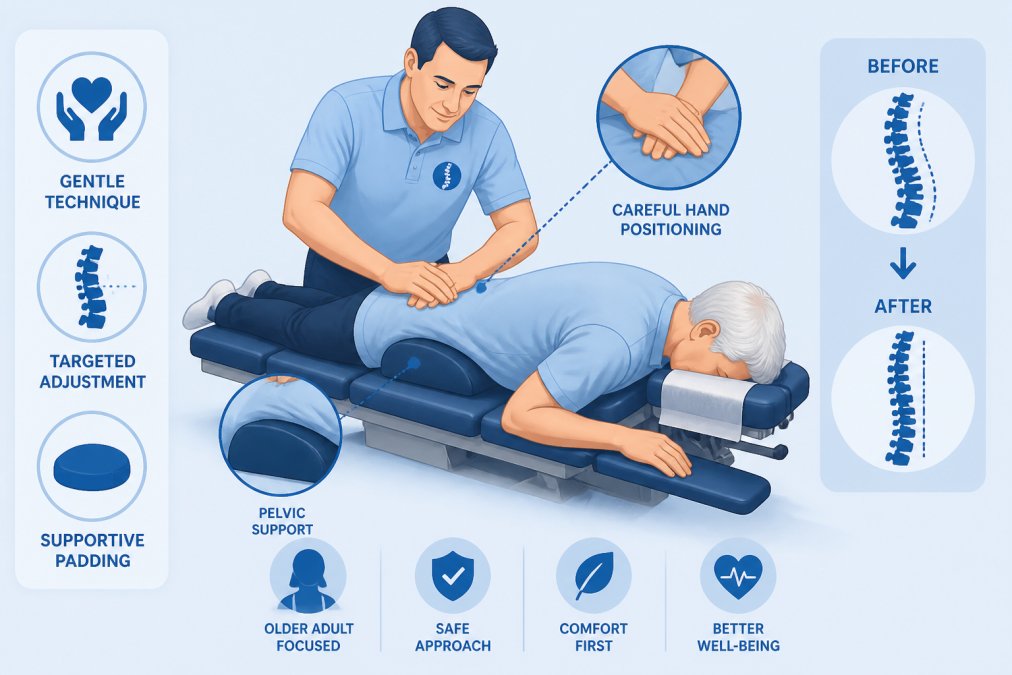
Reduced force represents the primary modification. High-velocity, low-amplitude thrust adjustments are often replaced with gentler approaches. Low-force techniques apply sustained pressure or slower movements to achieve alignment changes without sudden impact.
Increased assessment time precedes any adjustment. A thorough intake includes detailed health history, current medications, previous injuries, and imaging results if available. Practitioners perform orthopedic and neurological tests specific to geriatric populations and may request recent X-rays to identify contraindications before proceeding.
Positioning and support matter significantly. Practitioners use pillows, bolsters, and specialized tables to ensure comfort and safety. Proper positioning reduces strain on arthritic joints and protects vulnerable areas.
Alternative techniques supplement or replace traditional adjustments entirely. Mobilization, soft tissue therapy, therapeutic ultrasound, and electrical stimulation achieve therapeutic outcomes without manipulation. A skilled practitioner selects the right tool for each patient's specific situation.
Gentle Chiropractic Techniques for Elderly Patients
Gentle techniques represent the evolution of chiropractic care for aging populations. These methods prioritize safety while maintaining effectiveness for common senior conditions.
Mobilization techniques move joints through their available range of motion without sudden force. The practitioner applies slow, controlled pressure, allowing tissues to gradually relax and improve mobility.
Soft tissue therapy targets muscles, tendons, and fascia directly. Techniques like myofascial release, trigger point therapy, and therapeutic massage reduce muscle tension and improve circulation.
Instrument-assisted techniques use specialized tools to deliver controlled force. Devices like the Activator apply precise, low-force impulses to specific points, making them ideal for patients with osteoporosis.
Flexion-distraction therapy uses specialized tables that gently stretch the spine while applying controlled pressure. This technique is particularly effective for lower back pain related to disc problems and spinal stenosis.
Drop-table techniques use tables with sections that drop slightly during the adjustment, creating a gentle separation effect without the force of a traditional thrust.
Avoid practitioners who dismiss your concerns about force or who insist that traditional high-velocity adjustments are necessary for your condition. A practitioner unwilling to adapt their techniques to your age and health status is a red flag. Your comfort and safety should never be compromised for technique preference.
Risks and Contraindications for Seniors
Understanding potential risks allows you to make informed decisions and communicate effectively with your healthcare team. Most risks are manageable through proper screening and technique selection, but some conditions genuinely contraindicate spinal manipulation.
Cervical artery dissection represents the most serious potential complication, though it remains rare. Certain cervical manipulation techniques can cause tearing of the vertebral or carotid artery, leading to stroke. Risk factors include age over 60, high blood pressure, and certain connective tissue disorders. Qualified practitioners screen for these factors and use modified techniques or avoid cervical manipulation entirely when risk is elevated.
Vertebral fracture risk increases substantially with osteoporosis. Seniors with significant bone loss may sustain fractures from manipulation that would cause no injury in younger patients.
Spinal cord compression from severe stenosis can worsen with certain adjustments. If the spinal canal is already narrowed, aggressive manipulation may increase pressure on nerve tissue.
Instability in the spine, whether from previous surgery or severe degenerative changes, contraindicates traditional adjustments. An unstable spine requires stabilization, not mobilization.
Certain medications increase bleeding risk. Seniors taking anticoagulants or antiplatelet medications have higher risk of bruising and bleeding complications from manipulation.
Recent fractures, severe acute pain, or undiagnosed conditions warrant caution. A responsible practitioner may recommend imaging or consultation with your primary care physician before proceeding.
These are risks associated with inappropriate application of chiropractic care, not inherent dangers of the discipline itself. A qualified, cautious practitioner screens for these conditions and adapts their approach accordingly.
Medicare Coverage for Chiropractic Care
Medicare Part B covers chiropractic services, but only for subluxation of the vertebral column. Coverage is limited to manipulation of the spine to correct subluxation and does not extend to X-rays, physical therapy, or other diagnostic or therapeutic procedures performed in a chiropractic office.
The number of visits covered varies based on medical necessity as determined by your healthcare provider and Medicare guidelines. To receive Medicare coverage, you must see a Medicare-enrolled chiropractor. Verify provider enrollment through the Medicare website or by calling Medicare directly.
Supplemental insurance (Medigap) policies vary in their coverage of chiropractic care. Some policies provide additional coverage beyond Medicare's basic benefits, while others do not. Medicare Advantage plans (Part C) may have different coverage rules than Original Medicare. Contact your plan before scheduling treatment to understand your coverage and any authorization requirements.
Seniors with Medicare coverage seeking chiropractic care for vertebral subluxation with documented medical necessity. Verify your specific coverage and provider enrollment before scheduling to avoid unexpected costs.
Chiropractic Adjustments for Osteoporosis and Bone Health
Osteoporosis presents a particular challenge in geriatric chiropractic care. The condition, characterized by decreased bone density and increased fracture risk, requires modified approach and careful technique selection. However, appropriate chiropractic care can support bone health and mobility in seniors with osteoporosis.
Traditional high-velocity spinal manipulation carries unacceptable risk for patients with significant bone loss. A forceful adjustment that would cause no injury in a healthy 50-year-old could fracture vertebrae in a 75-year-old with advanced osteoporosis.
Bone density screening (DEXA scan) provides objective information about fracture risk. Seniors with osteoporosis should share these results with their chiropractor before treatment begins.
Gentle techniques become mandatory for osteoporotic patients. Mobilization, soft tissue therapy, and low-force instrument-assisted methods achieve therapeutic benefit without fracture risk. Weight-bearing exercise and resistance training should complement chiropractic care. Your practitioner can recommend appropriate exercises and monitor your progress.
Nutritional support for bone health extends beyond chiropractic scope but deserves mention. Adequate calcium, vitamin D, and protein intake support bone strength. Some chiropractors specialize in osteoporosis-aware care and have additional training in managing this population.
Post-Adjustment Recovery and Home Care for Seniors
The period following a chiropractic adjustment is critical for recovery and maximizing therapeutic benefit. Seniors require specific guidance for post-adjustment care to ensure safety and support healing.

Immediate post-adjustment care begins in the office. Your practitioner should provide clear instructions about activity level for the remainder of the day. Most practitioners recommend avoiding strenuous activity for 24 hours following adjustment.
Ice or heat application depends on the specific adjustment and your individual response. Follow your practitioner's specific recommendations, as individual responses vary.
Hydration supports tissue recovery and overall healing. Drinking adequate water in the hours and days following adjustment helps flush metabolic waste and supports cellular function.
Gentle movement and stretching accelerate recovery and reinforce the adjustment. Your practitioner may provide specific exercises to perform at home. Consistency matters more than intensity; gentle daily movement outperforms occasional intense activity.
Sleep quality affects healing significantly. Proper pillow support and mattress comfort become even more important after adjustment.
Over-the-counter pain medication may mask symptoms of complications. If you experience unusual pain, numbness, or weakness following adjustment, contact your practitioner or primary care physician rather than simply taking pain medication.
Follow-up appointments allow your practitioner to assess your response and adjust the treatment plan as needed. Communicate honestly about your experience, what improved, what remained unchanged, and any concerning symptoms.
Home care extends beyond the immediate post-adjustment period. Ergonomic modifications, regular gentle exercise, stress management, and proper posture throughout daily activities support the benefits achieved through chiropractic treatment.
Chiropractic care for seniors works best as part of a comprehensive approach to health and mobility. When delivered by a qualified, cautious practitioner who respects the unique needs of aging bodies, it can meaningfully improve pain, mobility, and quality of life. The key is finding a practitioner who prioritizes your safety, communicates clearly about risks and benefits, and adapts their techniques to your individual health profile.
At chiropracticcare.clinic, we understand that seniors deserve evidence-based care that acknowledges both the potential benefits and the real risks of chiropractic treatment. A thorough initial consultation, honest assessment of your conditions, and commitment to gentle, appropriate techniques form the foundation of safe and effective geriatric chiropractic care.
Frequently Asked Questions
Can a 70-year-old or 80-year-old person safely receive chiropractic treatment?
Yes, many seniors in their 70s and 80s can receive chiropractic care safely when treated by a qualified practitioner using age-appropriate techniques. However, safety depends on individual health status, bone density, medical history, and any existing conditions like osteoporosis or cervical artery disease. A thorough health assessment and consultation with your primary care physician before starting treatment is essential. Your chiropractor should modify adjustments based on your specific needs and any contraindications.
Does Medicare cover chiropractic care for seniors?
Medicare Part B covers chiropractic adjustments for acute and chronic conditions, but only when performed by a licensed chiropractor. Coverage is limited to spinal manipulation for conditions that affect the spine. Medicare requires documentation that the treatment is medically necessary and relates to a specific condition. Coverage limits and copayment amounts apply. Contact Medicare or your supplemental insurance provider for current coverage details, as benefits can vary based on your specific plan.
What are the main risks of chiropractic care for elderly patients?
Potential risks for seniors include temporary soreness, muscle stiffness, and headaches after adjustment. More serious but rare complications include cervical artery dissection, vertebral artery injury, and stroke, particularly with neck adjustments in older adults. Seniors with osteoporosis, spinal stenosis, or degenerative disc disease face increased risk of fracture or nerve compression. Those taking blood thinners or with certain cardiovascular conditions require special precautions. A qualified chiropractor will screen for these contraindications and adjust treatment accordingly.
How do chiropractors modify treatments for older adults?
Chiropractors adapt treatment for seniors by using gentler techniques, reduced force during spinal manipulation, shorter adjustment sessions, and more frequent but lighter touches. They may use drop-table techniques, instrument-assisted adjustments, or soft-tissue therapy instead of manual manipulation. Treatment frequency and intensity are customized based on bone density, mobility level, and overall health. A practitioner experienced in geriatric care will take time to understand your health history and adjust their approach to minimize risk while maximizing therapeutic benefit.
Learn more about chiropractic adjustments at our Montgomery, AL clinic, or book an evaluation.
Table of Contents
- Understanding Chronic Neck Pain and Chiropractic Solutions
- How Chiropractic Adjustments Work for Neck Pain
- What to Expect During Your First Chiropractic Session
- How Long Does Chiropractic Treatment Take for Neck Pain
- Chiropractic Adjustment Safety and Risk Considerations
- Exercises to Complement Chiropractic Care
- When to See a Chiropractor and Red Flags to Watch For
- Integrating Chiropractic Care With Other Treatment Approaches
- Frequently Asked Questions
Last Updated: August 12, 2026
Understanding Chronic Neck Pain and Chiropractic Solutions
Chronic neck pain affects millions of adults, often stemming from poor posture, muscle tension, or underlying spinal misalignment. When pain persists for more than three months, it transitions from acute discomfort to a condition that demands a structured treatment approach. At chiropracticcare.clinic, we recognize that chiropractic care for chronic neck pain addresses the root mechanical causes rather than masking symptoms with medication alone.
For a comprehensive exploration of effective techniques and misconceptions in this field, consider our companion post on evidence-based chiropractic strategies for neck pain to enhance your understanding of personalized care options.
The cervical spine, the seven vertebrae in your neck, bears significant responsibility for supporting your head's weight while maintaining range of motion. When vertebrae shift from their proper alignment, a condition known as subluxation occurs, restricting movement and compressing soft tissue. This misalignment triggers inflammation, muscle tension, and the persistent pain that characterizes chronic neck conditions.
Chiropractic care for chronic neck pain works by restoring proper vertebral alignment through targeted adjustments and complementary therapies. Unlike approaches that focus solely on pain management, this method targets the biomechanical dysfunction driving your discomfort, in addition to symptom relief. Many adults find that addressing the underlying structural issue produces relief that lasts longer than they experienced from other approaches, though results vary by individual.
Chronic neck pain lasting over three months typically indicates structural misalignment requiring professional assessment. Chiropractic care targets the mechanical root cause rather than treating symptoms alone.
How Chiropractic Adjustments Work for Neck Pain
Chiropractic adjustments restore proper alignment to cervical vertebrae through controlled, high-velocity movements applied to specific joints. When a chiropractor performs spinal manipulation on your neck, they're working to correct subluxations, misalignments that restrict joint mobility and trigger pain signals.
The adjustment itself involves a precise technique where the chiropractor uses their hands or specialized instruments to apply force to vertebrae that have shifted from their optimal position. This controlled movement restores normal joint mechanics, reducing nerve irritation and allowing muscles to relax. The process isn't random; it's based on assessment findings that identify exactly which vertebrae need correction.
What happens during the adjustment is that the joint capsule, the tissue surrounding the vertebra, receives a sudden stretch. This triggers a neurological response that resets the joint's position and reduces muscle guarding. Many patients report immediate relief in range of motion, though the full benefit develops over multiple sessions as inflammation decreases and muscles adapt to proper alignment.
The therapeutic effect extends beyond the immediate adjustment. By restoring joint mobility, chiropractic care reduces compensatory tension in surrounding muscles. Your neck muscles no longer work overtime trying to stabilize misaligned vertebrae, which means less fatigue and fewer pain flare-ups over time.
Cervical spine manipulation carries specific risks, particularly if you have underlying conditions like osteoporosis, certain types of arthritis, or previous spinal surgery. A thorough assessment before treatment is essential to ensure this approach is appropriate for your situation.
What to Expect During Your First Chiropractic Session
Your first visit for chiropractic care for chronic neck pain will typically last 45 minutes to an hour, with the majority devoted to assessment rather than treatment. The chiropractor begins by taking a detailed history, when your pain started, what makes it worse or better, any previous injuries, and how the condition affects your daily activities.
Physical examination follows, involving tests that assess your neck's range of motion, muscle strength, and neurological function. The chiropractor will palpate your cervical spine, feeling for vertebral misalignments and areas of muscle tension. Some practitioners use specialized instruments to measure spinal mobility or may take X-rays to visualize vertebral positioning and identify structural issues.

Once the assessment is complete, the chiropractor explains their findings and discusses whether chiropractic care for chronic neck pain is appropriate for your specific condition. If treatment proceeds, your first adjustment may occur during this initial visit, though some practitioners prefer to wait until after imaging results clarify the exact nature of your misalignment.
The adjustment itself lasts only seconds, the controlled movement is quick and precise. You may hear or feel a popping sensation, which is simply gas releasing from the joint capsule. This is normal and not indicative of anything breaking or harmful occurring.
After your first session, expect some mild soreness similar to muscle fatigue after exercise. This typically resolves within 24 hours. Your chiropractor will provide specific instructions about activity modifications and may recommend home care strategies to support your recovery.
How Long Does Chiropractic Treatment Take for Neck Pain
The duration of chiropractic care for chronic neck pain varies significantly based on the severity of your condition, how long you've experienced pain, and how well your body responds to treatment. Most practitioners recommend an initial intensive phase lasting 4 to 12 weeks, with visits occurring 2 to 3 times per week initially.
During this intensive phase, your chiropractor is working to correct the underlying misalignment and reduce inflammation. The frequency of visits allows them to make progressive corrections while your body adapts to improved spinal mechanics. You should begin noticing measurable improvement in pain levels and range of motion within the first 2 to 3 weeks if the approach is effective for your situation.
After the intensive phase, many patients transition to a maintenance schedule of 1 to 2 visits per month. This ongoing care prevents the recurrence of misalignment and addresses any new tension before it develops into chronic pain. The maintenance phase often continues indefinitely, as it functions similarly to dental checkups, preventive rather than purely therapeutic.
Some patients experience significant relief within 6 to 8 weeks and discontinue treatment entirely. Others find that maintenance visits provide sufficient benefit to justify continuing. The key variable is your body's healing capacity and how consistently you follow home care recommendations between visits.
Chiropractic care for chronic neck pain works best for patients with structural misalignment and muscular tension, particularly those who've had pain for months but haven't experienced significant relief from other conservative approaches.
Chiropractic Adjustment Safety and Risk Considerations
Chiropractic adjustment safety depends heavily on proper assessment before treatment begins. When performed by a qualified practitioner on an appropriate patient, cervical spine manipulation is generally considered a low-risk intervention. However, specific conditions make this approach inappropriate or require modified techniques.
The most significant risk associated with cervical spine manipulation is vertebral artery dissection, a rare but serious condition where the artery supplying blood to the brain becomes damaged. This risk is extremely low in patients without pre-existing vascular disease, but it's why thorough screening is essential. Your chiropractor should ask about symptoms like dizziness, vision changes, or previous stroke risk factors before proceeding.
Other relative contraindications include osteoporosis, rheumatoid arthritis, certain medications that affect bone density, and previous spinal surgery. If you have any of these conditions, inform your chiropractor immediately. They may modify their technique, use gentler mobilization instead of high-velocity adjustment, or refer you to another provider if your situation falls outside their scope.
Common mild side effects include temporary soreness, stiffness, or mild headache following adjustment. These typically resolve within 24 hours and are not indicators of harm. More persistent symptoms warrant communication with your chiropractor to adjust the treatment approach.
The safety of chiropractic care for chronic neck pain ultimately rests on two factors: honest communication about your health history and your practitioner's commitment to thorough assessment before treatment. A chiropractor who performs adjustments without first evaluating your condition is taking unnecessary risks with your health.
Exercises to Complement Chiropractic Care
Home-based exercises significantly enhance the benefits of chiropractic adjustments by strengthening muscles that stabilize your cervical spine and maintaining the improved mobility your chiropractor establishes. These exercises work best when performed consistently, ideally daily or at minimum 5 days per week.
Gentle neck stretching forms the foundation of complementary exercise. A simple approach involves slowly turning your head to one side until you feel mild tension (not pain) in the opposite side of your neck, holding for 20 to 30 seconds, then repeating on the other side. Perform 3 repetitions per side, twice daily. This maintains range of motion and prevents the muscle tightness that often returns between chiropractic visits.
Shoulder shrugs and shoulder blade squeezes address the upper back muscles that directly influence cervical spine stability. Shrug your shoulders toward your ears, hold for 2 seconds, then release. Perform 15 repetitions. For blade squeezes, pull your shoulder blades together as if trying to pinch something between them, hold for 3 seconds, then release. These exercises engage the postural muscles that support your neck.

Postural awareness exercises prevent the poor positioning that often triggers neck pain recurrence. Throughout your day, consciously check your head position, your ears should align roughly with your shoulders when standing. If you spend extended time at a desk, adjust your monitor to eye level to avoid forward head posture, which places significant strain on cervical muscles.
Isometric neck exercises build strength without moving your joints. Place your hand against your neck and push your head into your hand without allowing movement, holding for 5 seconds. Repeat in four directions: forward, backward, and both sides. Perform 5 repetitions per direction, twice daily. These exercises activate stabilizing muscles without the risk of re-injury from dynamic movement.
A common mistake is performing exercises too aggressively or continuing when experiencing pain. Your chiropractor should provide specific guidance about which exercises suit your condition, as inappropriate exercise can exacerbate certain types of neck pain.
When to See a Chiropractor and Red Flags to Watch For
Seeking chiropractic care for chronic neck pain makes sense when conservative self-care approaches, rest, over-the-counter medication, and posture correction, haven't resolved your discomfort after several weeks. If your pain is interfering with work, sleep, or daily activities, professional assessment is warranted regardless of how long symptoms have persisted.
Certain situations demand immediate medical attention rather than chiropractic care. If you experience severe sudden neck pain following trauma, loss of consciousness, numbness in your arms or hands, or weakness in your legs, seek emergency care. These symptoms suggest serious spinal cord involvement or neurological compromise that requires imaging and medical evaluation before any manipulation.
Red flags that warrant caution with chiropractic treatment include unexplained weight loss, fever accompanying neck pain, night pain that wakes you from sleep, or pain that worsens despite treatment. These symptoms may indicate infection, malignancy, or systemic disease rather than mechanical dysfunction. Your chiropractor should recognize these warning signs and refer you to a physician for further evaluation.
Progressive neurological symptoms, increasing numbness, tingling that spreads, or developing weakness, suggest nerve compression requiring medical imaging. While chiropractic care may eventually help, these symptoms need diagnostic clarity first. A qualified chiropractor will recommend appropriate referral rather than proceeding with adjustment.
Pain following recent significant trauma also warrants caution. Your chiropractor needs imaging to rule out fractures or ligament damage before performing adjustments. Attempting chiropractic care for chronic neck pain on an unstable spine risks serious complications.
Seek immediate emergency care if you experience severe neck pain with neurological symptoms, loss of consciousness, fever, unexplained weight loss, or pain following significant trauma. These situations require medical evaluation before any chiropractic treatment.
Integrating Chiropractic Care With Other Treatment Approaches
Chiropractic care for chronic neck pain works most effectively when integrated with other therapeutic modalities rather than used in isolation. Physical therapy complements chiropractic adjustments by providing progressive strengthening and mobility work that extends the benefits of spinal manipulation.
Massage therapy addresses muscle tension that often accompanies cervical misalignment. When muscles surrounding your neck are chronically tight, they resist the corrections your chiropractor makes. Regular massage releases this tension, allowing adjustments to be more effective and longer-lasting. Many patients benefit from massage 1 to 2 times per month alongside chiropractic care.
Anti-inflammatory approaches including ice therapy, heat application, and appropriate supplementation support the healing process. During acute flare-ups, ice reduces inflammation and pain. In chronic phases, heat improves blood flow and muscle relaxation. Your chiropractor can advise which approach suits your current condition.
Ergonomic modifications prevent the postural habits that trigger pain recurrence. Adjusting your workspace, monitor height, chair position, keyboard placement, removes the daily stressors that constantly challenge your cervical spine. These modifications cost little but yield significant benefits when combined with chiropractic treatment.
Some patients find acupuncture valuable for pain management and inflammation reduction. While the mechanism differs from chiropractic adjustment, acupuncture addresses neuromuscular dysfunction through a different pathway. Many practitioners of both disciplines recognize the complementary value.
Stress management techniques including meditation, breathing exercises, and progressive muscle relaxation reduce the muscle tension that stress triggers. Chronic stress causes people to unconsciously tighten neck and shoulder muscles, perpetuating the cycle that drives pain. Addressing stress alongside structural correction produces better outcomes.
The most important principle is consistency across all modalities. A patient receiving excellent chiropractic care but ignoring posture, skipping home exercises, and remaining highly stressed will see limited improvement. Conversely, a patient who commits to chiropractic treatment, home exercises, ergonomic changes, and stress management typically experiences substantial relief.
Chronic neck pain significantly impacts your quality of life, but effective treatment exists. If you've experienced persistent neck discomfort, chiropractic care for chronic neck pain offers a structured, evidence-informed approach to addressing the mechanical dysfunction driving your symptoms. The combination of professional adjustment, home exercises, and lifestyle modifications creates conditions for meaningful, lasting relief. Consider scheduling an assessment with a qualified chiropractor to determine whether this approach aligns with your specific situation and health history.
Frequently Asked Questions
How many chiropractic sessions are needed for chronic neck pain?
The number of sessions varies based on your condition's severity, underlying cause, and how your body responds to treatment. Some patients notice improvement within a few weeks, while chronic cases may require ongoing care over several months. Your chiropractor will assess your individual situation and develop a treatment plan with realistic timelines. Recovery depends on factors like age, overall health, and whether you follow recommended exercises and lifestyle adjustments between visits.
What are the risks associated with chiropractic neck adjustments?
Chiropractic adjustment safety depends on proper technique and patient selection. Most patients experience mild soreness similar to post-exercise discomfort. Rare but serious risks include vertebral artery dissection, which can occur with any cervical manipulation. Qualified chiropractors screen for contraindications before treatment. Discuss your medical history, previous injuries, and any medications with your provider to ensure cervical spine manipulation is appropriate for your specific situation.
Can a chiropractor fix chronic neck pain that other doctors couldn't resolve?
Chiropractic care offers a different approach focused on spinal alignment, joint mobility, and musculoskeletal function. Some patients find relief through chiropractic treatment after other interventions haven't worked, while others benefit from combining approaches. Success depends on the underlying cause of your pain. A thorough patient assessment by your chiropractor can determine whether spinal manipulation, soft tissue therapy, or other techniques may help your specific condition. Integration with other modalities often produces better outcomes than any single approach alone.
Is chiropractic care covered by insurance for neck pain?
Insurance coverage for chiropractic care varies significantly by plan, provider, and state regulations. Some plans cover a limited number of visits per year, while others exclude chiropractic services entirely. Coverage often depends on whether your condition is work-related or from an accident. Contact your insurance provider directly to verify your specific benefits, deductibles, and any prior authorization requirements. Ask your chiropractor's office about their experience with insurance billing and what out-of-pocket costs you might expect.
Learn more about neck and shoulder pain care at our Montgomery, AL clinic, or book an evaluation.
