
Table of Contents
- Seek Immediate Medical Evaluation After Your Car Accident
- Understanding Your Car Accident Injury Recovery Timeline
- Chiropractic Care for Whiplash Recovery and Soft Tissue Injuries
- Physical Therapy and Rehabilitation for Functional Recovery
- Managing Pain and Inflammation During Recovery
- How to Document Accident Injuries for Insurance Claims
- Supporting Your Recovery: Sleep, Nutrition, and Workplace Ergonomics
- Addressing Mental Health and Trauma After a Car Accident
- Frequently Asked Questions
Last Updated: August 31, 2026
Seek Immediate Medical Evaluation After Your Car Accident
The hours and days following a car accident are critical for your recovery. Many injuries from vehicle collisions don't produce obvious symptoms right away. Whiplash, soft tissue damage, and spinal injuries can develop over hours or days, making prompt professional assessment essential.
When you arrive at an emergency room or urgent care facility, be thorough in describing what happened: the direction of impact, your position in the vehicle, and any sensations you felt during or immediately after the collision. Document the force of impact, whether your head struck anything, and any numbness, tingling, or pain. This medical record becomes essential for both your recovery and insurance documentation.
A qualified healthcare provider will perform a physical examination and may order imaging studies like X-rays or MRI scans to assess for fractures, ligament damage, or other injuries. This baseline evaluation creates a medical record that protects you and informs your treatment plan.
Delaying medical evaluation is one of the biggest mistakes accident victims make. Insurance companies sometimes use gaps in medical treatment to argue that injuries were minor or unrelated to the accident. Seek evaluation promptly after the collision, even if you feel fine.
Understanding Your Car Accident Injury Recovery Timeline
Recovery from a car accident varies significantly based on injury severity, your age, overall health, and how quickly you begin treatment.
Acute phase (first 2-4 weeks): Inflammation peaks and pain is often most severe. Medical intervention focuses on reducing inflammation, managing pain, and preventing secondary injury.
Subacute phase (2-8 weeks): Inflammation decreases, but stiffness and reduced range of motion become more apparent. Physical therapy typically becomes more active during this phase, introducing therapeutic exercises to restore mobility.
Recovery phase (2-12 weeks and beyond): This phase involves progressive strengthening, restoration of functional movement patterns, and return to normal activities. Recovery time varies significantly depending on the type and severity of injury.
Starting physical therapy and rehabilitation within the first few weeks significantly improves outcomes and shortens overall recovery duration. Delayed treatment often extends recovery timelines and increases the risk of chronic pain developing.
Most uncomplicated soft tissue injuries from car accidents improve with appropriate early treatment. Complex injuries or those involving neurological symptoms may require longer recovery periods. Your individual timeline depends on injury type, severity, and how quickly you begin rehabilitation.
Chiropractic Care for Whiplash Recovery and Soft Tissue Injuries
Whiplash occurs when the head and neck are suddenly forced backward and then forward, straining the soft tissues in the neck, including muscles, ligaments, and tendons. Chiropractic care addresses the underlying structural damage that causes whiplash symptoms.
Chiropractors evaluate spinal alignment and mobility to identify restrictions or misalignments that develop after the collision. Spinal adjustments restore proper alignment, reducing nerve irritation and allowing muscles to relax. This is particularly important in whiplash recovery because the injury often creates protective muscle tension that, if left untreated, becomes chronic.
Beyond adjustments, chiropractic care includes soft tissue therapy, stretching protocols, and ergonomic guidance. Many chiropractors use techniques like myofascial release or trigger point therapy to address the muscular component of whiplash injury. Research shows that early intervention produces better outcomes than delayed treatment. A thorough evaluation determines whether adjustments are appropriate or whether conservative care should begin with therapy and gradual mobilization. Your chiropractor will take imaging and perform orthopedic tests to rule out fractures or serious structural damage before proceeding with adjustments.
Physical Therapy and Rehabilitation for Functional Recovery
Physical therapy is essential for restoring the functional movement patterns disrupted by car accident injuries. While chiropractic care addresses structural alignment and mobility restrictions, physical therapy rebuilds strength, endurance, and coordination.

Physical therapy typically begins with passive and active-assisted range of motion exercises, progressing to active exercises as pain decreases. Your therapist designs a program targeting your specific injury pattern. For neck injuries, this might include cervical stabilization exercises. For back injuries, core strengthening becomes the priority.
The goal of rehabilitation is functional recovery — restoring your ability to work, exercise, and perform daily activities with less pain and limitation. This requires progressive challenge to your muscles and nervous system as you improve. Incomplete rehabilitation leaves underlying weakness and movement dysfunction that often leads to re-injury or chronic pain development.
The most important predictor of successful recovery is consistency with your rehabilitation program. Patients who perform home exercises between therapy sessions recover faster and achieve better functional outcomes. Dedicate 15-20 minutes daily to your prescribed exercises.
Managing Pain and Inflammation During Recovery
Pain and inflammation serve protective functions immediately after injury, but when they persist beyond the acute phase, they interfere with recovery.
Cold therapy during the first 48-72 hours reduces inflammation and numbs pain (the NIH). Apply ice for 15-20 minutes at a time, several times daily during the acute phase. Heat therapy becomes more beneficial after the first few days, when acute inflammation has begun to subside. Heat increases blood flow, relaxes muscle tension, and reduces stiffness.
Many accident victims benefit from alternating heat and cold therapy. This contrast therapy stimulates circulation and can reduce overall inflammation more effectively than either modality alone. A typical pattern involves 15 minutes of heat followed by 10 minutes of cold, repeated 2-3 times during your recovery session.
Over-the-counter pain medications manage acute discomfort but should be used strategically rather than continuously. Pain serves as feedback about your healing status; respecting it while gradually increasing activity is the balanced approach. Physical modalities like therapeutic ultrasound, electrical stimulation, and manual therapy provide pain relief while supporting the healing process.
How to Document Accident Injuries for Insurance Claims
Proper documentation of your car accident injury recovery directly impacts your insurance claim and potential legal recovery.
Start documentation immediately after the accident. Photograph any visible injuries, bruising, swelling, or lacerations. Keep a detailed diary noting when symptoms appeared, how they changed over time, and how they affected your daily activities. Collect all medical records from every provider who evaluates or treats you, including emergency room reports, diagnostic imaging results, physical therapy evaluations, and progress notes.
Maintain organized records of all expenses related to your injury recovery, including copays, deductibles, prescription costs, and out-of-pocket therapy expenses. If you missed work due to your injury, document lost wages. Request written summaries from your healthcare providers explaining your injuries, treatment provided, and expected recovery timeline.
Never post about your accident or injuries on social media. Insurance companies routinely review social media accounts, and posts suggesting you're recovering faster than your medical records indicate can be used against your claim. Keep your recovery process private until your claim is fully resolved.
Supporting Your Recovery: Sleep, Nutrition, and Workplace Ergonomics
Recovery from car accident injuries extends beyond formal treatment. Sleep quality, nutritional support, and ergonomic adjustments create the environment your body needs to heal effectively.

Sleep is when your body performs most of its healing. During deep sleep, growth hormone increases, inflammation decreases, and tissue repair accelerates. Establish consistent sleep schedules, keep your bedroom cool and dark, and avoid screens for at least an hour before bed. If your injuries make sleeping difficult, discuss positioning strategies with your physical therapist.
General nutrition habits are a healthy addition alongside your recovery care, though diet on its own isn't a treatment for your injury. Many people find that adequate protein, a varied diet with foods like fatty fish, berries, and leafy greens, and good hydration support their overall wellbeing during recovery.
Workplace ergonomics becomes critical if you return to work during recovery. Ensure your monitor is at eye level, your keyboard and mouse are positioned to keep your wrists neutral, and your chair provides adequate lumbar support. Take frequent breaks to change positions and perform gentle stretches. Use this recovery period to address ergonomic issues that may have contributed to your injury.
Addressing Mental Health and Trauma After a Car Accident
Car accidents often create psychological trauma alongside physical injury. Anxiety, post-traumatic stress symptoms, and depression commonly develop after serious accidents. These mental health impacts directly affect your physical recovery, as stress increases inflammation, disrupts sleep, and reduces your motivation to participate in rehabilitation.
Acknowledging the psychological component of accident recovery is essential. Consider speaking with a mental health professional who has experience with accident trauma. Cognitive-behavioral therapy and other evidence-based approaches effectively address post-accident anxiety and stress.
Returning to driving after an accident can trigger significant anxiety. Gradual exposure to driving, starting with short trips on familiar roads, helps desensitize anxiety responses. Support from family and friends significantly impacts your psychological recovery. Many accident victims benefit from connecting with others who've had similar experiences through support groups, whether in-person or online.
Recovering from a car accident requires coordinated attention to your physical injuries, mental health, and lifestyle factors. The approach outlined in this guide, immediate medical evaluation, professional rehabilitation, proper documentation, and attention to sleep, nutrition, and ergonomics, creates the conditions for optimal healing. Begin your recovery journey with a comprehensive evaluation from a qualified healthcare provider who can assess your specific injuries and design a treatment plan tailored to your needs.
Frequently Asked Questions
How long does it typically take to recover from common car accident injuries?
Recovery timelines vary depending on injury severity. Whiplash and soft tissue injuries often show improvement within 2-6 weeks with proper treatment, though complete healing may take 3-6 months. More severe injuries involving the spine or nervous system may require 6-12 months or longer. Your recovery timeline depends on factors like injury type, your age, overall health, and whether you follow a structured car accident injury recovery plan with physical therapy and chiropractic care.
What role does physical therapy play in a car accident recovery plan?
Physical therapy is essential for restoring mobility, flexibility, and strength after a car accident. A therapist designs therapeutic exercises targeting your specific injuries, helping reduce inflammation and prevent chronic pain. Physical therapy addresses range of motion limitations, musculoskeletal damage, and functional recovery, allowing you to return to daily routines and work safely. Early intervention with physical therapy significantly improves outcomes and reduces the risk of long-term disability.
How should I document my accident injuries for insurance purposes?
Document injuries immediately by obtaining a medical evaluation and keeping detailed records of all treatment. Request copies of medical reports, imaging results, and provider notes. Photograph visible injuries and maintain a recovery journal noting pain levels, limitations, and treatment dates. Get written documentation from your healthcare providers about your diagnosis, treatment plan, and prognosis. Keep receipts for all medical expenses. This documentation supports your insurance claim and protects your legal rights if you pursue compensation for your injuries.
Can chiropractic care help with whiplash recovery?
Yes, chiropractic care can be an effective component of whiplash recovery. Chiropractors use spinal adjustments, soft tissue therapy, and therapeutic exercises to address the musculoskeletal damage caused by whiplash. Treatment focuses on reducing inflammation, restoring mobility, and alleviating pain. Chiropractic care for whiplash recovery works best when combined with physical therapy and other conservative treatment approaches. Early intervention is important, beginning treatment within days of your accident improves outcomes and reduces the risk of chronic neck pain.
This article provides general information about car accident recovery. Individual injuries and circumstances vary. Always seek professional medical evaluation after an accident, and consult a licensed attorney for legal advice regarding your claim.
Learn more about car accident injury care at our Montgomery, AL clinic, or book an evaluation.
Table of Contents
- Chiropractor vs Spine Surgeon: Core Differences at a Glance
- Training, Credentials, and Scope of Practice
- Treatment Philosophies: Manual Therapy vs Surgical Intervention
- When to See a Spine Surgeon for Back Pain
- Non-Surgical Back Pain Treatment Options
- Spine Surgery Recovery Timeline and Post-Surgical Care
- Collaborative Care: How Chiropractors and Spine Surgeons Work Together
- Insurance Coverage and Cost Considerations
- Frequently Asked Questions
Last Updated: August 30, 2026
Chiropractor vs Spine Surgeon: Core Differences at a Glance
When you're dealing with persistent back or neck pain, the choice between seeing a chiropractor or a spine surgeon can feel overwhelming. The two professions approach spinal health from fundamentally different angles: one emphasizes manual therapy and structural realignment, the other focuses on diagnostic imaging and surgical intervention when conservative care fails. Understanding which practitioner fits your condition, and when, requires knowing what each actually does, how they're trained, and where their methods diverge most significantly.
Many individuals arrive confused about whether they need surgery or whether non-invasive care can resolve their issue. The distinction matters enormously. A spine surgeon will typically recommend surgery only after conservative treatments have failed or when imaging reveals structural pathology requiring immediate intervention. A chiropractor, by contrast, uses manual therapy and spinal manipulation to address what they identify as vertebral subluxation and neuromuscular dysfunction. Neither approach is universally "better", context determines which is appropriate.
This comparison cuts through the confusion. We'll examine the training each profession requires, the treatment philosophies that guide their practice, the conditions each handles best, and critically, when they should work together rather than compete. The goal isn't to crown a winner but to help you understand which professional, or which combination, actually addresses your specific problem.
Training, Credentials, and Scope of Practice
Chiropractor Education and Licensure
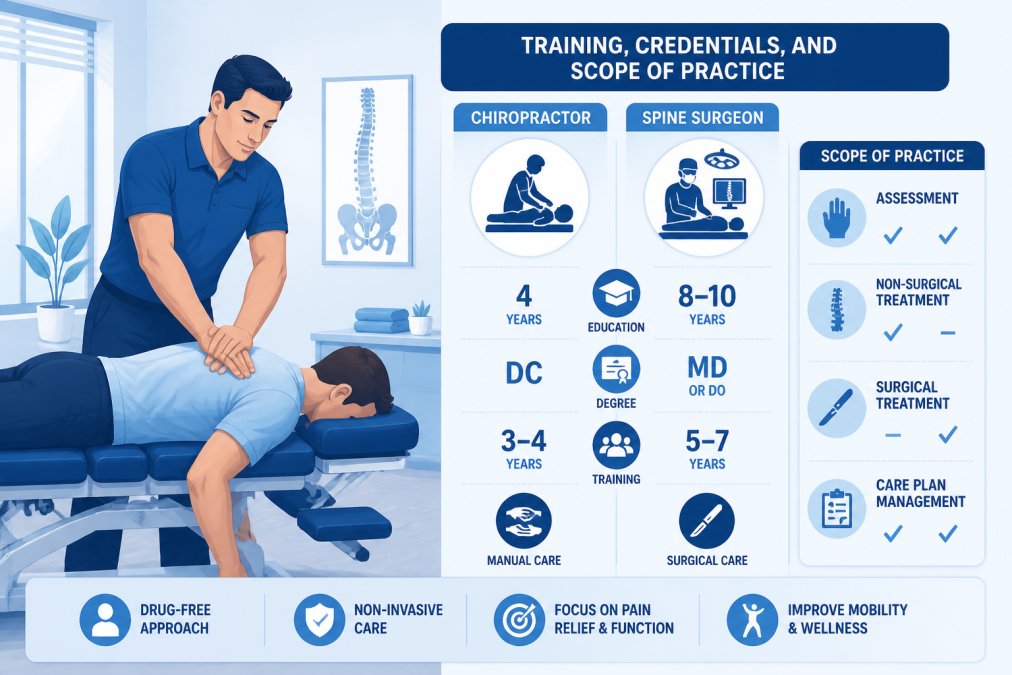
Chiropractors complete a Doctor of Chiropractic (D.C.) degree from an accredited chiropractic college, typically requiring four years of full-time study after earning a high school diploma or equivalent. The curriculum covers anatomy, physiology, biochemistry, and clinical sciences, alongside specialized training in spinal manipulation, radiography, and patient assessment. After graduation, chiropractors must pass the National Board of Chiropractic Examiners (NBCE) licensing exam and meet individual state requirements to practice.
Scope of practice varies by state. In most states, chiropractors can perform spinal manipulation, order and interpret X-rays, and recommend therapeutic exercises. Some states permit chiropractors to order MRI scans or perform other diagnostic procedures. However, chiropractors cannot prescribe medications or perform surgery in any U.S. state. Their licensure focuses on manual therapy and conservative care, tools designed to treat musculoskeletal conditions without pharmaceutical or surgical intervention.
Spine Surgeon Education and Board Certification
Spine surgeons follow a much longer training pathway. After completing medical school (four years), they pursue an orthopedic surgery residency (five years) or neurosurgery residency (seven years), followed by a spine surgery fellowship (one to two additional years) (acgme.org). This 12-15 year commitment includes extensive training in surgical anatomy, operative technique, and post-operative management. Board certification requires passing rigorous exams administered by the American Board of Orthopaedic Surgery (ABOS) or American Board of Neurological Surgery (ABNS).
Spine surgeons are licensed physicians who can prescribe medications, order advanced diagnostic imaging, and perform surgical procedures. Their scope encompasses the full spectrum of spinal care: from conservative management and diagnostic evaluation to complex spinal fusion, laminectomy, and other surgical interventions. They're trained to recognize when a condition requires surgery and when it doesn't, a critical distinction that prevents unnecessary procedures.
The educational disparity reflects the complexity of surgical intervention. Spine surgeons must understand not just how to operate but when surgery is medically justified, how to minimize complications, and how to manage patients across the entire treatment continuum.
Treatment Philosophies: Manual Therapy vs Surgical Intervention
The philosophical gulf between these professions shapes everything they do. Chiropractors operate from a model emphasizing manual therapy and spinal realignment. Their core belief centers on vertebral subluxation, the idea that misalignments of vertebrae interfere with nerve function and cause pain or dysfunction. Treatment focuses on correcting these misalignments through spinal manipulation, adjustments, and related manual techniques. This approach is non-invasive and emphasizes the body's capacity for self-healing when structural alignment improves.
Spine surgeons, by contrast, base their practice on anatomical pathology identified through diagnostic imaging. They look for structural problems, herniated discs, spinal cord compression, degenerative disc disease, nerve impingement, that imaging reveals. If conservative treatment (physical therapy, medication, injections) fails to resolve symptoms or if imaging shows severe structural damage, surgery becomes the logical next step. Their philosophy is evidence-based practice grounded in what imaging demonstrates and what clinical outcomes data supports.
Neither philosophy is inherently wrong. The issue arises when the wrong approach is applied to the wrong patient. Someone with mild muscular back pain may benefit enormously from chiropractic care. Someone with severe spinal cord compression causing progressive neurological deficit needs surgery, not manipulation.
When to See a Spine Surgeon for Back Pain
A spine surgeon should be your first choice, or at minimum, your second opinion, when specific red flags appear. If imaging reveals structural pathology like a herniated disc compressing the spinal cord, a severe stenosis limiting the spinal canal, or instability between vertebrae, surgical consultation is warranted. Progressive neurological symptoms, weakness, numbness, or loss of bowel/bladder control, demand urgent evaluation by a spine surgeon.

Chronic pain that's failed conservative treatment after 6-12 weeks also justifies surgical evaluation. This doesn't mean surgery will happen, many patients improve without it, but a spine surgeon can determine whether structural pathology exists and whether intervention might help. Acute traumatic injuries to the spine, such as fractures from falls or motor vehicle accidents, require immediate spine surgeon evaluation to assess stability and rule out spinal cord injury.
Age alone isn't a barrier. Seniors can undergo spine surgery successfully when the indication is clear and medical fitness allows. The real question isn't age but whether the patient's condition is amenable to surgical correction and whether the risks of surgery are justified by the expected benefit.
Non-Surgical Back Pain Treatment Options
Most back pain resolves without surgery. Physical therapy remains the gold standard for conservative care, addressing muscular weakness, poor biomechanics, and reduced functional mobility. Therapeutic exercises restore strength and flexibility while teaching proper body mechanics to prevent recurrence. Physical therapists work collaboratively with both chiropractors and spine surgeons, often providing the foundation for recovery in both surgical and non-surgical cases.
Anti-inflammatory medications, muscle relaxants, and targeted injections (epidural steroid injections, facet joint injections) provide pain relief while allowing rehabilitation to progress. These interventions are temporary bridges, they reduce pain enough for physical therapy to be tolerable. They're not permanent solutions but valuable tools in the conservative treatment arsenal.
Chiropractic care, spinal manipulation, and manual therapy address pain through different mechanisms. Some patients experience immediate relief from manipulation; others benefit from the mobilization and soft tissue work that accompanies adjustments. The evidence supporting spinal manipulation for acute lower back pain is reasonably strong, though outcomes for chronic conditions are more variable (peer-reviewed research). The key is finding what works for your body, and recognizing when a particular approach isn't producing results after a reasonable trial period.
| Treatment Approach | Best For | Timeline | When to Escalate |
|---|---|---|---|
| Physical therapy | Most acute and chronic pain | 4-8 weeks | If no improvement after 8 weeks |
| Chiropractic care | Acute musculoskeletal pain, mobility | 2-6 weeks | If pain persists or worsens |
| Anti-inflammatory medication | Pain management alongside therapy | Ongoing as needed | If masking progressive neurological symptoms |
| Epidural injections | Radiculopathy, acute flare-ups | 2-4 weeks relief | If pain returns or neurological symptoms develop |
| Spine surgery | Structural pathology, failed conservative care | Varies by procedure | Consider if conservative care fails 6-12 weeks |
Spine Surgery Recovery Timeline and Post-Surgical Care
Spine surgery recovery is neither quick nor simple. Most patients spend 1-2 days in the hospital post-operatively, followed by 4-6 weeks of restricted activity (aans.org). Heavy lifting, bending, and twisting are off-limits during this period. Return to light work may occur within 2-3 weeks; return to full activity typically requires 8-12 weeks or longer depending on the procedure's complexity.
Physical therapy begins within days of surgery. Early mobilization prevents stiffness and promotes healing. Therapists guide patients through progressive exercises, starting with gentle range-of-motion work and advancing to strengthening as healing progresses. This rehabilitation is non-negotiable, skipping it significantly increases the risk of poor outcomes and chronic pain.
Pain management post-surgery involves a combination of approaches. Opioid medications are typically used short-term (first 1-2 weeks) then transitioned to non-opioid pain control. Many patients benefit from epidural steroid injections if pain persists beyond the initial healing phase. Some patients report improvement in pain within days; others experience gradual improvement over weeks or months as inflammation resolves and nerves decompress.
Post-surgical chiropractic care can be valuable. Once the surgeon clears the patient (typically 6-8 weeks post-op), gentle spinal manipulation and manual therapy can address residual stiffness, improve mobility, and support the physical therapy process. This isn't about "fixing" the surgery, it's about optimizing recovery and preventing compensatory patterns that create new pain.
Collaborative Care: How Chiropractors and Spine Surgeons Work Together
The best outcomes often emerge when chiropractors and spine surgeons stop viewing themselves as competitors and start functioning as collaborators. A spine surgeon evaluates a patient, determines that surgery isn't indicated, and refers them to a chiropractor for conservative care. The chiropractor provides manual therapy and exercises for 6-8 weeks. If the patient isn't improving, the chiropractor refers them back to the surgeon for re-evaluation. This cycle, conservative care, reassessment, escalation when necessary, represents evidence-based practice.
Post-surgical collaboration is equally valuable. The surgeon performs the procedure and manages immediate post-operative care. Once healing is sufficient, a chiropractor or physical therapist provides ongoing manual therapy and rehabilitation. The spine surgeon remains available for complications or setbacks. This multidisciplinary approach recognizes that surgery is one tool among many and that optimal outcomes require coordinated expertise.
Communication is essential. When a chiropractor and spine surgeon are discussing the same patient, outcomes improve. The chiropractor understands the surgical anatomy and what the surgeon is trying to accomplish. The surgeon appreciates that conservative care, when properly executed, resolves many cases that might otherwise proceed to surgery. Both professionals benefit from knowing what the other is doing.
Patient-centered care means choosing the right professional for the right problem at the right time. Sometimes that's a chiropractor. Sometimes it's a spine surgeon. Often, it's both, sequentially or in parallel. The worst outcome occurs when professional ego prevents the right referral at the right moment.
Insurance Coverage and Cost Considerations
Insurance coverage for chiropractic care varies widely. Some plans cover chiropractic services with a copay and deductible, similar to other medical care. Others exclude chiropractic entirely or limit coverage to a specific number of visits per year. Medicare covers chiropractic adjustments (spinal manipulation only) when deemed medically necessary for spinal subluxation, though coverage details and limits vary — confirm with Medicare or your plan. Workers' compensation often covers chiropractic care for work-related injuries. The key is understanding your specific policy before beginning treatment.
Spine surgery is typically covered by insurance when medically indicated, though authorization and prior approval may be required. The surgery itself is covered; post-operative physical therapy is usually covered as well. Out-of-pocket costs depend on your deductible, coinsurance percentage, and whether you've met your annual out-of-pocket maximum.
Cost-benefit analysis matters. A patient spending money out-of-pocket on chiropractic care that resolves their pain is getting good value. A patient spending the same amount on chiropractic care that produces no improvement is wasting money. The question isn't the cost in isolation but whether the treatment is producing results. If after 4-6 weeks of chiropractic care you're not seeing meaningful improvement, the cost-benefit equation shifts. That's the moment to seek a second opinion from a spine surgeon or pursue different conservative approaches.
Surgery carries higher upfront costs but may be cost-effective if it resolves a problem that conservative care couldn't address. A patient who undergoes spine surgery and returns to full function may consider it a sound investment. A patient who undergoes that amount and remains in pain may consider it a poor one. The distinction depends on case selection, ensuring surgery is performed only when truly indicated.
Choosing between a chiropractor and spine surgeon shouldn't be a binary decision. Your back pain likely doesn't care which professional's philosophy is "correct", it responds to treatment that addresses its underlying cause. If conservative care including chiropractic manipulation, physical therapy, and targeted injections resolves your pain, you've found your answer. If structural pathology on imaging or progressive neurological symptoms appear, spine surgery consultation becomes essential. The best outcomes emerge when both professions are available, respected, and deployed appropriately. The question isn't which is better, it's which is right for you, right now.
Frequently Asked Questions
What are the primary differences in training between a chiropractor and a spine surgeon?
Chiropractors complete a Doctor of Chiropractic (DC) degree, typically 4 years of graduate study after undergraduate education, focusing on spinal manipulation and musculoskeletal care. Spine surgeons are medical doctors (MDs or DOs) who complete medical school, a 5-7 year orthopedic or neurosurgery residency, and often additional fellowship training in spine surgery. Spine surgeons are licensed to perform surgery and prescribe medications; chiropractors focus on non-invasive manual therapy and rehabilitation.
When is it appropriate to seek a consultation with a spine surgeon for back pain?
Consult a spine surgeon if you have severe neurological symptoms (numbness, weakness, loss of bowel or bladder control), significant spinal cord compression visible on imaging, progressive nerve damage, or structural abnormalities like herniated discs or spinal stenosis that haven't improved with conservative treatment over 6-12 weeks. Spine surgeons evaluate whether surgery is necessary or if non-surgical options remain viable.
Can chiropractic care be used as a post-surgical recovery tool after spine surgery?
Yes, chiropractic care can support post-surgical recovery when coordinated with your surgeon. After the acute healing phase (typically 6-12 weeks post-surgery), gentle manual therapy, rehabilitation exercises, and spinal mobilization may help restore function and reduce stiffness. Always obtain your surgeon's clearance before beginning chiropractic treatment following spine surgery, as certain manipulations may compromise surgical repairs early in recovery.
How do conservative treatment plans differ from surgical interventions for disc issues like herniated discs?
Conservative treatment includes physical therapy, manual therapy, anti-inflammatory medication, activity modification, and ergonomic adjustments to manage pain and inflammation without surgery. Surgical intervention (such as discectomy or fusion) is considered when conservative methods fail after 6-12 weeks, when nerve compression causes severe or worsening neurological deficits, or when structural damage significantly limits function. Most disc issues resolve with conservative care alone.
What should I expect regarding insurance coverage for chiropractic care versus spine surgery?
Insurance coverage varies significantly by plan. Many plans cover chiropractic care for acute musculoskeletal injuries but may limit the number of visits or require referrals. Spine surgery is typically covered when medically necessary, though prior authorization is often required. Contact your insurance provider to understand your specific benefits, deductibles, and whether referrals are needed for either treatment type. Out-of-pocket costs depend on your plan's structure and the provider's fees.
If you would like this looked at in person, you can book an evaluation at our Montgomery, AL clinic.
Table of Contents
- Understanding Spinal Alignment During Sleep
- Best Sleeping Positions for Lower Back Pain
- Best Mattress for Lower Back Pain
- Stretches for Lower Back Pain Before Bed
- When to See a Doctor for Chronic Back Pain
- Pillow Placement Techniques and Bedding Accessories
- Creating a Sleep Environment That Supports Recovery
- Conclusion
- Frequently Asked Questions
Last Updated: August 29, 2026
Understanding Spinal Alignment During Sleep
How you sleep directly affects your spine's health. During sleep, your vertebrae need support to maintain neutral alignment, a position where your head, shoulders, and hips form a straight line. When your spine stays neutral, muscles and ligaments relax, reducing inflammation and allowing tissue repair. Poor alignment forces muscles to work overtime, perpetuating chronic lower back pain.
Your mattress, pillows, and sleeping position work together as an integrated system. A worn mattress that sags can't support neutral alignment, and a pillow that's too high or low tilts your cervical spine, sending stress down your entire spinal column. Your body's pressure points, shoulders, hips, and heels, concentrate where you contact the bed. If your mattress can't distribute weight evenly, pressure builds unevenly, forcing your spine to compensate by curving or rotating, which aggravates lower back pain.
Best Sleeping Positions for Lower Back Pain
Not all sleeping positions are equal for supporting chronic lower back pain. Your goal is to find a position that keeps your spine in neutral alignment while allowing muscles to fully relax. Three positions work well; others should be avoided entirely.

Supine Position With Knee Support
Sleeping on your back distributes weight evenly across your entire body, allowing your spine to maintain its natural curves without twisting. Place one pillow under your head to support your cervical spine at a neutral angle, with your chin slightly tucked. The critical step is placing a second pillow under both knees.
This knee pillow is essential. When your knees are slightly elevated, your pelvic tilt changes, reducing tension in your lumbar spine and relaxing your hip flexors. The pillow should be firm enough to maintain its shape but not so rigid it creates a hard edge. If you're accustomed to other positions, start by spending 20-30 minutes in this position before bed. Over two to three weeks, your muscles will adapt, and the position will feel natural.
Side-Sleeping With Pillow Placement
Side-sleeping can work for chronic lower back pain with proper pillow placement. Your head pillow should fill the space between your shoulder and ear, keeping your cervical spine aligned with your thoracic spine. Your shoulder should rest on the mattress itself, not the pillow.
Place a pillow between your knees to prevent your top leg from pulling your pelvis out of alignment. Without this pillow, your top leg drops toward the bed, rotating your pelvis and creating a sideways curve in your lumbar spine. Side-sleeping is particularly helpful if you have pain radiating down one leg or if one side of your lower back is more painful.
Positions to Avoid
Stomach-sleeping is the worst position for chronic lower back pain. Your spine rotates and arches excessively, your head must turn to one side, and your hip flexors shorten, pulling your pelvis forward and increasing the curve in your lower back. The fetal position also creates problems by compressing your lower back and closing the space between vertebrae. Avoid any position where your spine twists or your pelvis rotates out of alignment.
Best Mattress for Lower Back Pain
Your mattress is the foundation of your sleep setup. A poor mattress undermines even the best sleeping position, while a good mattress amplifies the benefits of proper positioning.
Mattress Firmness and Material Considerations
The ideal firmness level is medium-firm, typically rating between 6 and 7 on a 1-to-10 scale. At this level, your heavier areas (shoulders and hips) sink slightly for pressure relief, while lighter areas (lower back and legs) stay supported. Excessive firmness creates pressure points rather than alleviating them.
Material matters. Memory foam conforms closely for pressure distribution but can trap heat. Innerspring mattresses offer more support and airflow but can create pressure points. Hybrid mattresses combine benefits of both. Latex is naturally responsive, durable, and cooler than memory foam. Your body weight influences the best choice: lighter individuals (under 150 pounds) may find softer medium-firm mattresses work better, while heavier individuals (over 200 pounds) often benefit from firmer medium-firm mattresses.
Evaluating Lumbar Support Features
Test a mattress by lying on it in your typical sleeping position for at least 10-15 minutes. Pay attention to whether your lower back feels supported or if there's a gap between your lower back and the mattress surface. Edge support matters more than many realize, poor edge support will sag, pulling your spine out of alignment.
Most quality mattresses last 7-10 years before materials break down and lose support. If your mattress is older than 8 years, it's likely contributing to your chronic lower back pain.
Stretches for Lower Back Pain Before Bed
Gentle stretching before bed reduces tension that accumulates during the day. Perform these stretches slowly and gently, this is not the time for aggressive stretching. The goal is to lengthen muscles and reduce muscle guarding.

Gentle Stretching Routine for Pain Relief
Begin your routine 20-30 minutes before bed.
Knee-to-chest stretch: Lie on your back. Bend one knee and gently pull it toward your chest. Hold for 20-30 seconds, then repeat with the other leg. Perform 2-3 repetitions per side.
Supine twist: Bend both knees and gently lower them to one side while keeping your shoulders flat. Hold for 20-30 seconds, then repeat on the other side.
Hip flexor stretch: Kneel on one knee with the other foot forward in a low lunge. Gently press your hips forward until you feel a stretch in the front of your hip. Hold for 20-30 seconds per side.
Cat-cow stretch: On hands and knees, slowly arch your back while lifting your gaze (cow), then round your spine while tucking your chin (cat). Move slowly between positions for 1-2 minutes.
Perform this routine every night. Consistency matters more than intensity. Over 2-3 weeks, your muscles will relax more quickly and sleep quality will improve.
Sleep Hygiene Practices for Chronic Pain
Keep your bedroom temperature between 60-67 degrees Fahrenheit. A cooler room promotes deeper sleep stages where tissue repair happens most actively. Eliminate light sources using blackout curtains or a sleep mask. Avoid screens 30-60 minutes before bed, as blue light suppresses melatonin and activates your nervous system.
Avoid alcohol and caffeine in the evening. Alcohol disrupts sleep architecture, and caffeine remains in your system for 5-6 hours. Create a consistent sleep schedule by going to bed and waking at the same time every day, which trains your body to expect sleep at those times.
When to See a Doctor for Chronic Back Pain
Seek immediate medical attention if you experience sudden severe pain accompanied by numbness, tingling, or weakness in your legs, particularly if it affects your ability to control your bowel or bladder.
Contact a healthcare provider if your chronic lower back pain persists despite consistent efforts to improve your sleep setup, perform stretches, and maintain good sleep hygiene for 4-6 weeks. See a doctor if your pain radiates down your leg below the knee, if you have unexplained weight loss accompanying your pain, or if your pain worsens progressively despite conservative treatment.
If you have a history of osteoporosis, cancer, or are taking corticosteroids, seek professional evaluation for any new or worsening back pain. Professional evaluation can determine whether your pain stems from mechanical issues, nerve compression, inflammatory conditions, or other causes.
Pillow Placement Techniques and Bedding Accessories
Strategic use of additional pillows and accessories can significantly improve your spinal alignment during sleep.
For supine sleepers, a pillow under your knees is essential. Consider adding a small rolled towel under your neck if your main pillow doesn't adequately support your cervical curve. For side sleepers, the pillow between your knees should extend from your hip to your knee. Body pillows help side sleepers maintain position throughout the night, preventing you from rolling onto your back or stomach.
Wedge pillows can help some people with chronic lower back pain, particularly if you also experience acid reflux or breathing difficulties. Mattress toppers can modify the feel of an existing mattress without replacing it entirely, a memory foam topper adds conformity to a mattress that's too firm, while a firmer topper adds support to one that's too soft.
Creating a Sleep Environment That Supports Recovery
Your bedroom environment influences both sleep quality and pain perception. Darkness is critical, even dim light reduces melatonin production and worsens sleep quality. Use blackout curtains, remove electronic displays, and consider a sleep mask.
Noise disruption fragments sleep. Use earplugs or white noise machines to mask disruptive sounds. Mattress firmness and condition matter more than price. An affordable medium-firm mattress in good condition outperforms an expensive mattress that's broken down.
Bedding materials affect temperature regulation. Cotton sheets breathe better than synthetic materials. Avoid heavy blankets that trap excessive heat. Pillow quality directly affects spinal alignment, invest in a pillow that maintains its shape throughout the night. Ensure your mattress sits on a firm, supportive surface, as a sagging bed frame will undermine even an excellent mattress.
Conclusion
How to sleep with chronic lower back pain requires attention to three interconnected factors: your sleeping position, your mattress, and your pre-sleep routine. The supine position with knee support works best for most people, though side-sleeping with proper pillow placement is an effective alternative. Your mattress must be medium-firm to support neutral spinal alignment without creating pressure points. Gentle stretching and consistent sleep hygiene practices prepare your body for restorative sleep where healing occurs.
If your chronic lower back pain persists despite these efforts, professional evaluation can identify underlying issues and guide more targeted treatment. Start with the positioning and stretching recommendations outlined here; consistency over weeks produces measurable results. If pain continues, schedule a consultation to explore whether additional intervention would benefit your specific situation.
Frequently Asked Questions
What is the best position to sleep in if I have lower back pain?
Sleeping on your back with a pillow under your knees is often the most effective position for chronic lower back pain. This position maintains neutral spine alignment and reduces pressure on the lumbar spine. Sleeping on your side with a pillow between your knees is the second-best option. Both positions support spinal alignment better than sleeping on your stomach, which can strain the cervical spine and create muscle tension.
How does mattress firmness affect chronic lower back pain?
Mattress firmness significantly impacts sleep quality and pain management. A medium-firm mattress typically provides the best balance of support and comfort for chronic lower back pain, as it maintains spinal alignment while allowing pressure point relief at the hips and shoulders. Very soft mattresses can cause your spine to sag, increasing vertebrae stress, while overly firm mattresses may create pressure points. The best mattress for lower back pain depends on your body weight and sleeping position.
Should I do stretches for lower back pain before bed?
Yes. Stretches for lower back pain before bed can help reduce nocturnal pain and improve sleep quality. Gentle stretching routines 15-30 minutes before sleep promote muscle relaxation and pelvic tilt correction. Focus on low-intensity stretches like knee-to-chest holds and hamstring stretches rather than intense flexibility work. This pre-sleep routine supports sleep architecture and helps transition your body into a restorative state.
When should I see a doctor for chronic back pain?
Contact a healthcare provider when to see a doctor for chronic back pain if pain persists beyond six weeks, worsens despite conservative treatment, or is accompanied by numbness, tingling, or loss of bowel/bladder control. Seek immediate care if pain follows a fall or accident. A qualified professional can rule out underlying conditions and recommend appropriate treatment options, including physical therapy, chiropractic care, or other interventions.
If you would like this looked at in person, you can book an evaluation at our Montgomery, AL clinic.
Table of Contents
- What Evidence-Based Chiropractic Care Actually Means
- The Three Pillars of Evidence-Based Practice in Chiropractic
- Chiropractic Clinical Practice Guidelines for Mechanical Spine Pain
- Effectiveness of Chiropractic Adjustments: What Research Shows
- Chiropractic Treatment Protocols and Therapeutic Trial Approaches
- How to Identify an Evidence-Based Chiropractor
- Common Misconceptions About Evidence-Based Chiropractic Care
- Frequently Asked Questions
Last Updated: August 28, 2026
What Evidence-Based Chiropractic Care Actually Means
Evidence-based chiropractic care integrates three core elements: clinical expertise, best available research evidence, and patient preferences. This approach distinguishes itself from practice patterns based purely on tradition, intuition, or convenience. At chiropracticcare.clinic, we recognize that evidence-based chiropractic care requires practitioners to stay current with peer-reviewed literature while applying sound clinical judgment to individual patient situations.
Not all chiropractic interventions carry equal research support. Some techniques have strong evidence behind them; others remain investigational or lack sufficient data. A practitioner committed to evidence-based chiropractic care actively evaluates which treatments align with current best available research for specific conditions, rather than applying the same protocol to every patient.
This model emerged from evidence-based medicine principles that have reshaped how healthcare providers across all disciplines approach patient care. For patients, this translates to more targeted treatment plans, clearer communication about what to expect, and honest conversations about when chiropractic care is the right choice versus when referral to another provider makes sense.
The Three Pillars of Evidence-Based Practice in Chiropractic
Evidence-based practice in chiropractic rests on three equally important pillars. Understanding how these three elements interact helps you evaluate whether a chiropractor is truly practicing evidence-based care.
Clinical Expertise and Professional Judgment
Clinical expertise represents the accumulated knowledge and decision-making ability a practitioner develops through education, training, and experience. A chiropractor with strong clinical expertise recognizes patterns in how patients present and knows when standard protocols need modification for individual circumstances.
This pillar is essential because research findings are population-level data. A study might show that spinal manipulation is effective for mechanical low back pain in a cohort of 200 patients aged 25-55, but your presentation might differ in important ways, you might be 62, have osteoporosis, or have undergone previous spinal surgery. Clinical expertise means the practitioner adapts evidence-based recommendations to fit your actual situation.

A practitioner demonstrating strong clinical expertise will ask detailed questions about your health history, perform a thorough examination, and explain their reasoning for recommending a specific approach.
Best Available Research Evidence
This pillar focuses on systematically reviewing and interpreting peer-reviewed literature to determine what treatments have scientific support. "Best available" means the highest-quality evidence currently available, which typically comes from systematic reviews and randomized controlled trials rather than single case reports or anecdotal observations.
The chiropractic clinical practice guidelines for mechanical low back pain are built on systematic reviews evaluating spinal manipulation, exercise, patient education, and other interventions. These guidelines synthesize what the evidence shows about which treatments help, how long treatment typically takes, and when imaging or referral becomes necessary.
A practitioner committed to evidence-based chiropractic care stays current with this literature through continuing education and professional engagement with clinical research.
Patient Preferences and Values
The third pillar acknowledges that patients are not passive recipients of care. Your values, preferences, goals, and life circumstances matter. A treatment might be evidence-based and appropriate for your condition, but if it conflicts with your values or isn't feasible given your schedule or budget, it won't work.
Patient-centered care means the practitioner understands your priorities and explains what a treatment involves, what evidence supports it, what alternatives exist, and what risks or limitations apply. You should never feel pressured into a course of treatment you don't understand or didn't agree to.
Chiropractic Clinical Practice Guidelines for Mechanical Spine Pain
Clinical practice guidelines synthesize the best available research into recommendations practitioners can apply to common conditions. For mechanical low back pain, guidelines consistently recommend conservative management as the first-line approach, including manual therapy, exercise, patient education, and reassurance. Imaging is not routinely recommended for uncomplicated mechanical low back pain, particularly in the acute phase (the CDC).
The rationale reflects research findings: imaging doesn't improve outcomes for most patients with mechanical low back pain and can lead to unnecessary anxiety or overtreatment.
Diagnostic Imaging and When It's Necessary
Imaging decisions should follow evidence-based reasoning. A chiropractor practicing evidence-based care understands when imaging adds diagnostic value and when it doesn't.
Red flags that warrant imaging or referral include unexplained weight loss, fever, progressive neurological deficits, recent significant trauma, or signs suggesting infection or malignancy. Uncomplicated mechanical low back pain in an otherwise healthy patient typically doesn't require imaging initially. X-rays are appropriate for ruling out fracture or severe degenerative changes, while MRI provides soft tissue detail useful when nerve compression is suspected.
Red Flags That Require Referral
Evidence-based practice includes knowing the boundaries of chiropractic care. Red flags requiring referral to another healthcare provider include signs of serious spinal pathology (infection, malignancy, fracture), progressive neurological deficits, severe or rapidly worsening symptoms, or symptoms inconsistent with mechanical dysfunction. A practitioner committed to evidence-based chiropractic care recognizes these presentations and refers appropriately rather than attempting to treat conditions outside the scope of chiropractic expertise.
Effectiveness of Chiropractic Adjustments: What Research Shows
Spinal manipulation, the core technique in chiropractic care, has been studied extensively. The research shows genuine effects for certain conditions, limitations for others, and ongoing questions about optimal dosage and patient selection.
Low Back Pain and Neck Pain Outcomes
For mechanical low back pain, research supports spinal manipulation as one effective conservative treatment option, particularly in the short term (peer-reviewed research). Studies show that spinal manipulation can provide pain relief and functional improvement comparable to other evidence-based treatments like exercise or physical therapy.
The effectiveness appears greatest for acute or subacute mechanical low back pain. For chronic low back pain lasting months or years, the evidence is more mixed. Spinal manipulation may provide benefit, but the magnitude of improvement is often modest, and benefits may not persist long-term without accompanying exercise or other interventions.
Neck pain research similarly shows spinal manipulation can provide short-term pain relief for mechanical neck pain, though the evidence base is smaller than for low back pain.
Cervicogenic Headaches and Other Conditions
Cervicogenic headaches, headaches originating from the cervical spine, represent one condition where spinal manipulation has shown promise in research. When headaches are accompanied by neck pain and movement restrictions suggesting cervical spine involvement, manipulation may reduce headache frequency or intensity.
For other conditions like migraines without cervical involvement or tension headaches, the evidence for spinal manipulation is weaker. The research consistently shows that spinal manipulation works best as part of a comprehensive approach that includes exercise, postural education, and stress management rather than as a standalone intervention.
Chiropractic Treatment Protocols and Therapeutic Trial Approaches
Evidence-based treatment planning involves establishing clear goals, defining what constitutes improvement, and setting parameters for how long to continue a given approach before reassessing or modifying the plan.
Dosage, Frequency, and Treatment Duration
Treatment frequency and duration should reflect clinical reasoning based on the condition, severity, patient response, and research guidance. A patient with acute mechanical low back pain might benefit from 2-3 visits per week initially, with gradual reduction as symptoms improve. A therapeutic trial approach involves committing to a defined course of treatment, typically 2-4 weeks, then objectively assessing whether the patient is improving (peer-reviewed research).
Evidence-based practitioners discuss expected timelines with patients upfront. You should understand approximately how many visits might be needed, what improvement timeline to expect, and what would prompt a change in approach.
Functional Improvement and Outcomes Assessment
Outcomes should be measured in terms that matter to you: pain reduction, improved mobility, ability to return to work or activities, or better sleep. Practitioners committed to evidence-based chiropractic care track these outcomes systematically through standardized questionnaires like the Oswestry Disability Index for low back pain, which measures how much pain or dysfunction is interfering with daily activities.
Regular reassessment ensures treatment remains effective. If you're not improving after a reasonable trial period, the plan should change.
How to Identify an Evidence-Based Chiropractor
Not all chiropractors practice evidence-based care to the same degree. Knowing what to look for helps you identify practitioners genuinely committed to evidence-based chiropractic care.
Questions to Ask About Credentials and Approach
Start by asking about education and credentials. All licensed chiropractors complete accredited chiropractic education, but continuing education varies widely. Ask whether the practitioner regularly pursues continuing education in evidence-based practice or clinical research.

Ask about their approach to diagnosis and treatment planning. How do they decide whether imaging is necessary? Can they explain their clinical reasoning? Inquire about their familiarity with clinical practice guidelines and their willingness to refer you to another provider if your condition falls outside their expertise.
Ask about their approach to treatment duration and outcomes. Do they establish clear goals upfront? How often will they reassess whether treatment is working? What's their protocol if you're not improving after a defined trial period?
What Informed Consent Looks Like
Informed consent means the practitioner explains what a treatment involves, what evidence supports it, what alternatives exist, and what risks or limitations apply. Before beginning spinal manipulation, you should understand what the procedure involves, what it's intended to accomplish, what research shows about its effectiveness for your condition, and what risks are involved.
A practitioner providing genuine informed consent doesn't minimize risks or oversell benefits. They acknowledge uncertainty where it exists and don't claim manipulation will "cure" a condition or guarantee specific outcomes. Pay attention to whether they listen to your concerns and respect your autonomy.
Common Misconceptions About Evidence-Based Chiropractic Care
Misconception: Evidence-based care means only treatments with perfect evidence are acceptable. In reality, evidence exists on a spectrum. Evidence-based practice means using the best evidence available while acknowledging its limitations.
Misconception: If a treatment isn't proven by randomized controlled trials, it shouldn't be used. While randomized controlled trials represent high-quality evidence, other research designs and clinical experience also contribute to the evidence base.
Misconception: Evidence-based practitioners never recommend spinal manipulation. Research supports spinal manipulation for certain conditions, particularly mechanical low back pain. Evidence-based practitioners use manipulation where evidence supports it.
Misconception: Evidence-based care ignores patient preferences. The opposite is true. Evidence-based practice explicitly incorporates patient values and preferences as one of three essential pillars.
Misconception: Chiropractors who emphasize evidence-based practice don't treat chronic conditions. Evidence-based practitioners absolutely treat chronic pain and dysfunction, typically emphasizing self-management strategies, exercise, and maintenance care rather than expecting manipulation alone to resolve long-standing problems.
Choosing chiropractic care requires understanding what evidence supports, what questions to ask, and how to evaluate whether a practitioner is genuinely committed to evidence-based chiropractic care. When you're ready to explore whether chiropractic care fits your situation, look for practitioners who can explain their reasoning, discuss what research shows, respect your autonomy, and remain accountable to measurable outcomes. That's what evidence-based chiropractic care looks like in practice.
Frequently Asked Questions
Q: Is there evidence that chiropractic care works?
A: Yes, peer-reviewed research supports the effectiveness of spinal manipulation for certain conditions, particularly mechanical low back pain and neck pain. Systematic reviews in medical literature demonstrate that evidence-based chiropractic care, when aligned with clinical practice guidelines, produces measurable functional improvements in many patients. However, effectiveness depends on proper diagnosis, appropriate treatment selection, and adherence to clinical decision-making standards. Results vary by condition and individual patient factors.
Q: What are the evidence-based practices of chiropractic care?
A: Evidence-based chiropractic practice combines three elements: clinical expertise from the practitioner, best available research evidence, and patient preferences. Common evidence-based interventions include spinal manipulation for mechanical spine pain, therapeutic exercises, ergonomic counseling, and conservative management protocols. Treatment protocols follow diagnostic imaging guidelines and include outcomes assessment to measure functional improvement. Practitioners should base treatment duration and dosage decisions on clinical audit data and peer-reviewed literature rather than arbitrary visit schedules.
Q: How do I know if my chiropractor follows evidence-based standards?
A: Ask your chiropractor about their diagnostic process, including when they use imaging and why. Evidence-based practitioners explain their clinical reasoning, discuss treatment duration upfront, and adjust plans based on your progress. They should reference clinical practice guidelines, avoid unnecessary long-term treatment contracts, and welcome questions about their approach. They also recognize red flags that require referral to another provider and don't claim to treat conditions outside their scope of practice.
Q: What should I watch for as red flags in chiropractic care?
A: Red flags include excessive imaging without clear clinical justification, pressure to commit to long-term treatment plans before trying a therapeutic trial, claims that chiropractic care cures serious diseases, and reluctance to discuss your treatment plan or progress. Practitioners who don't assess functional improvement or adjust treatment based on outcomes may not follow evidence-based protocols. Additionally, avoid those who discourage communication with your primary care provider or recommend care for conditions unrelated to musculoskeletal disorders.
Q: How long does evidence-based chiropractic treatment typically take?
A: Treatment duration varies based on your condition, severity, and response to care. Evidence-based practice uses therapeutic trial protocols, typically 2-4 weeks of treatment, to assess whether you're improving. If you show functional improvement, treatment continues with adjustments to dosage and frequency. If there's no measurable progress, your chiropractor should discuss alternative approaches or refer you to another provider. The goal is conservative management with clear outcomes assessment, not indefinite treatment.
Q: Can chiropractic care help with cervicogenic headaches and migraines?
A: Research supports spinal manipulation for cervicogenic headaches, which originate from the neck. However, not all headaches are cervicogenic. Evidence-based chiropractors perform thorough diagnostic assessments to determine if neck dysfunction is the source. If your headaches are stress-related or have another cause, your chiropractor should recognize this and refer you appropriately. Treatment protocols for cervicogenic headaches typically involve manipulation combined with therapeutic exercises and ergonomic modifications.
Q: What's the difference between evidence-based chiropractic care and other approaches?
A: Evidence-based chiropractic care integrates clinical practice guidelines, peer-reviewed research, and patient-centered decision-making into every treatment plan. Practitioners use diagnostic imaging judiciously, set realistic treatment timelines, and measure functional improvement objectively. They recognize when referral to another provider is appropriate and don't claim cures for conditions outside their scope. This approach contrasts with practices that rely on unlimited treatment plans, unnecessary imaging, or claims unsupported by clinical research.
Learn more about chiropractic adjustments at our Montgomery, AL clinic, or book an evaluation.
Table of Contents
- Is Chiropractic Care Safe for Seniors?
- Common Conditions Treated with Chiropractic Adjustments in Older Adults
- Gentle Chiropractic Techniques for Seniors
- Chiropractic Contraindications for Elderly Patients
- How Medicare Coverage for Chiropractic Adjustments Works
- What to Expect During Your First Visit
- Choosing a Qualified Chiropractor for Senior Care
- Frequently Asked Questions
Last Updated: August 27, 2026
Is Chiropractic Care Safe for Seniors?
Chiropractic adjustments for seniors can be safe when performed by a qualified licensed practitioner who understands age-related spine changes and takes appropriate precautions. Safety depends entirely on proper patient screening, accurate diagnostic imaging, and modified techniques suited to aging bodies.
The spine changes with age: bone density decreases, discs lose hydration, and vertebrae develop degenerative changes. These changes don't automatically disqualify someone from chiropractic care, they simply require a different approach. A chiropractor experienced in geriatric care will adjust technique, reduce force, and screen carefully for contraindications before treatment. Maintaining strength is vital for active Montgomery life; explore our senior mobility guide for gentle support.
The real risk is receiving care from someone who hasn't assessed whether it's appropriate for your specific situation. Your first step should always be a thorough consultation including your complete medical history, current medications, imaging results, and any previous spine surgeries or diagnoses.
Before scheduling chiropractic adjustments, ask the practitioner directly: "Have you worked with patients my age with my specific condition? What techniques do you use for seniors?" A qualified chiropractor will have a clear answer and won't treat all patients identically.
Common Conditions Treated with Chiropractic Adjustments in Older Adults
Seniors commonly seek chiropractic care for lower back pain from degenerative disc disease, cervical spine stiffness and neck pain, chronic arthritis pain, postural instability, and reduced range of motion.
Degenerative disc disease is particularly prevalent. As discs lose water content and develop tears, they flatten and compress. Chiropractic adjustments combined with therapeutic exercise can restore mobility and reduce pain, though they cannot reverse degeneration itself.
Arthritis in the spine creates joint stiffness and inflammation. Gentle mobilization and low-force techniques help maintain functional mobility. Many seniors report improved range of motion and reduced morning stiffness after consistent treatment.
Spinal stenosis, a narrowing of the spinal canal, sometimes responds well to conservative care including chiropractic treatment focused on decompression and postural correction, though severe cases may require surgery.
Chronic neck pain from poor posture, previous injuries, or cervical spondylosis responds well to evidence-based chiropractic care. Seniors often see improvement in headaches, shoulder tension, and arm symptoms when neck alignment improves.
Conditions most responsive to chiropractic care in seniors involve joint stiffness, muscle tension, and reduced mobility, not conditions requiring surgical intervention or severe nerve compression.
Gentle Chiropractic Techniques for Seniors
Low-force techniques are the foundation of safe chiropractic adjustments for seniors. These methods deliver therapeutic benefit without high-velocity thrusts that can be risky in aging spines with compromised bone density.
Activator Method uses a small handheld instrument delivering precise, controlled impulses to specific vertebrae. The gentle, consistent force is ideal for seniors with osteoporosis or those uncomfortable with manual manipulation.

Flexion-distraction therapy uses a specialized table that gently stretches and mobilizes the lumbar spine. This decompresses spinal discs and relieves pain from stenosis or disc herniation.
Soft tissue therapy addresses muscle tension accompanying spinal problems. Therapeutic massage, myofascial release, and trigger point therapy improve blood flow, reduce inflammation, and restore muscle function.
Mobilization techniques involve slow, controlled movements through the joint's range of motion. Unlike high-velocity adjustments, mobilization respects the joint's natural limits and allows gradual nervous system adaptation.
Instrument-assisted adjustments allow precise force application without manual manipulation, reducing unpredictability and improving comfort for anxious patients.
Effective treatment doesn't require aggressive force. Gentle, consistent techniques combined with therapeutic exercise produce better outcomes for seniors with significantly lower risk.
Chiropractic Contraindications for Elderly Patients
Certain conditions make chiropractic adjustments inappropriate or require extreme caution.
Severe osteoporosis with known vertebral fractures is a major contraindication (peer-reviewed research). Spinal manipulation carries unacceptable fracture risk. If you have osteoporosis, your chiropractor must have bone density imaging before proceeding.
Vertebral artery dissection history is a serious contraindication for cervical spine manipulation (peer-reviewed research). A tear in the vertebral artery wall can lead to stroke. Anyone with previous dissection or symptoms suggesting current dissection should not receive cervical manipulation.
Spinal cord compression from severe stenosis or myelopathy may worsen with manipulation. Imaging showing significant cord compression with neurological symptoms may make conservative chiropractic care inappropriate.
Uncontrolled hypertension requires caution. Some adjustment techniques can temporarily elevate blood pressure. Seniors with uncontrolled high blood pressure should have their condition managed medically first.
Recent spinal surgery (within 6-12 weeks) is typically a contraindication. The healing spine needs time before mechanical manipulation.
Active infection or malignancy affecting the spine contraindicates manipulation. These conditions require medical management first.
Anticoagulation therapy requires careful consideration. Seniors on blood thinners have increased bleeding risk, though many can receive low-force techniques with proper precautions.
Never hide medical history from your chiropractor. Conditions you think are unrelated, previous strokes, blood clots, bone density issues, and medications directly affect whether spinal manipulation is safe for you. Incomplete disclosure puts you at real risk.
How Medicare Coverage for Chiropractic Adjustments Works
Medicare Part B covers chiropractic adjustments for seniors, but with specific limitations. Coverage applies only to spinal manipulation for subluxation (misalignment) of the spine, not for other conditions or techniques.
Medicare requires the chiropractor to document medical necessity for the specific spinal subluxation being treated. Confirm current requirements with Medicare or your plan, as rules can vary.
The covered service is limited to manipulation of the spine. Medicare does not cover therapeutic exercise, soft tissue therapy, or ergonomic counseling, even when performed by the same chiropractor.
Medicare does not publish a fixed national visit cap for medically necessary chiropractic manipulation, though your specific plan or supplemental coverage may apply its own limits — confirm current details directly with Medicare or your plan.
Medicare Part B applies standard coinsurance after your annual deductible is met, and the approved amount varies by geographic region — contact Medicare or your plan for your specific out-of-pocket amount.
Documentation requirements are strict. Your chiropractor must maintain records showing medical necessity for each visit, the specific vertebral subluxation being treated, and the technique used.
Prior authorization is not required, but your chiropractor should verify your current Medicare coverage before your first visit, as plan-specific or supplemental limits may apply.
Supplemental insurance (Medigap) policies vary in coverage. Check your specific policy to understand your coinsurance coverage.
Medicare-covered chiropractic care works best for seniors with documented spinal subluxation causing pain or reduced mobility. No physician referral is required for Medicare Part B chiropractic coverage, though your chiropractor should confirm current requirements with Medicare or your plan.
What to Expect During Your First Visit
Your first appointment is primarily a comprehensive assessment. Plan to spend 45 minutes to an hour.
The consultation begins with your complete health history. You'll be asked about current pain, previous injuries, surgeries, medical conditions, medications, and family history. Bring a list of current medications and supplements.

Physical examination follows. The chiropractor will assess your posture, spinal alignment, range of motion, and muscle strength. They'll perform orthopedic and neurological tests to identify problem areas.
Diagnostic imaging is often necessary. X-rays or MRI may be ordered to visualize your spine and identify structural issues. Some chiropractors have imaging on-site; others refer to imaging centers.
Treatment planning comes after assessment and imaging review. Your chiropractor will explain findings, show you specific problem areas on imaging, and outline a proposed treatment plan including estimated visits, specific techniques, and realistic expectations.
The first actual adjustment may occur during this visit or be scheduled for the next appointment, depending on assessment findings. You should never feel pressured to receive treatment before you're ready.
Discuss your goals clearly. Are you seeking pain relief, improved mobility, prevention of future problems, or coordination with other healthcare providers? Your chiropractor should tailor their approach accordingly.
Ask about home care. Effective treatment includes what you do between visits: stretches, posture corrections, ergonomic modifications. Your chiropractor should provide specific guidance and demonstrate exercises.
Choosing a Qualified Chiropractor for Senior Care
Finding the right chiropractor makes the difference between effective care and wasted time and money.
Credentials matter. All chiropractors must be licensed, but requirements vary by state. Look for a Doctor of Chiropractic (DC) degree from an accredited chiropractic college. Your state's licensing board website lists licensed practitioners and any disciplinary history.
Experience with seniors is crucial. Ask directly: "What percentage of your patients are over 65? What continuing education have you completed in geriatric care?" A chiropractor who regularly treats seniors will have developed modified techniques and understands age-related conditions.
Diagnostic capability matters. Does the chiropractor have X-ray or other imaging on-site? Can they read and interpret imaging? The ability to assess your specific structural problems before treatment is important.
Communication style should match your needs. A good chiropractor adapts to your preferred communication style and takes time to answer questions.
Willingness to coordinate with other providers is essential. Your primary care doctor, physical therapist, orthopedic surgeon, and other specialists need to communicate about your care. A chiropractor who resists this coordination is a red flag.
Treatment philosophy should align with evidence-based practice. Ask about their approach to osteoporosis, arthritis, and stenosis. Do they recommend low-force techniques for seniors? Do they combine adjustments with therapeutic exercise? Are they honest about conditions they cannot treat?
Medicare acceptance and billing practices should be transparent. Does the chiropractor accept Medicare assignment? Will they handle prior authorization if needed? Do they clearly explain your out-of-pocket costs before treatment?
Patient reviews from other seniors can be informative. Look for patterns rather than individual comments. Consistent mentions of patience, clear communication, and effective treatment are positive signs.
Chiropractic adjustments for seniors require careful selection of both the treatment approach and the practitioner. When you find a qualified chiropractor who understands the unique needs of aging bodies, combines evidence-based techniques with therapeutic exercise, and coordinates with your other healthcare providers, chiropractic care can meaningfully improve mobility, reduce pain, and enhance quality of life. The key is starting with honest assessment, clear communication about your goals and health history, and realistic expectations about what chiropractic care can accomplish. Your spine deserves specialized attention that accounts for the changes that come with age. Schedule a consultation to discuss whether chiropractic adjustments for seniors are appropriate for your specific situation.
Frequently Asked Questions
Can an 80-year-old person safely receive chiropractic adjustments?
Age alone does not disqualify someone from chiropractic care. However, an 80-year-old requires careful screening for contraindications such as osteoporosis, spinal stenosis, or vertebral artery disease. A qualified chiropractor will perform diagnostic imaging and take a thorough patient history before recommending chiropractic adjustments. Low-force techniques are often used for older adults. Consultation with your primary care physician is advisable, especially if you have multiple comorbidities.
Does Medicare cover chiropractic adjustments for seniors?
Medicare Part B covers chiropractic adjustments when performed by a licensed chiropractor and deemed medically necessary for a neuromusculoskeletal condition. Coverage is typically limited to spinal manipulation for acute and chronic conditions, with specific guidelines on frequency and duration. You should verify current Medicare guidelines with your provider or contact Medicare directly, as coverage criteria and limits may change. Out-of-pocket costs depend on your specific plan.
What are the main contraindications for chiropractic adjustments in older adults?
Key contraindications include osteoporosis, spinal stenosis, vertebral artery dissection risk, uncontrolled hypertension, and certain medications that affect bone density or blood clotting. Degenerative disc disease, arthritis, and previous spinal surgery require modified techniques or may preclude adjustment altogether. A comprehensive patient history, diagnostic imaging, and informed consent are essential before treatment. Your chiropractor should discuss these risks and recommend alternative therapies if adjustment is not appropriate.
What should I look for when choosing a chiropractor for senior care?
Verify that the chiropractor is licensed and in good standing with your state board. Ask about their experience treating older adults and whether they use low-force techniques. Inquire about their approach to diagnostic imaging, contraindication screening, and coordination with your primary care physician. Red flags include pressure to commit to long-term treatment plans upfront, reluctance to discuss risks, or dismissal of your medical history. A qualified practitioner will prioritize informed consent and evidence-based practice.
Learn more about chiropractic adjustments at our Montgomery, AL clinic, or book an evaluation.
Table of Contents
- Why Chiropractic Care Matters for Senior Mobility
- Common Age-Related Spinal and Joint Issues That Affect Movement
- Gentle Chiropractic Techniques for Seniors
- Improving Range of Motion in Seniors Through Targeted Care
- Medicare Coverage for Chiropractic Care
- Safety Considerations and Medical Screening for Older Adults
- Maintaining Mobility at Home: Exercises and Daily Habits
- Frequently Asked Questions
Last Updated: August 26, 2026
Why Chiropractic Care Matters for Senior Mobility
Mobility is independence. When seniors lose it, everything else follows: the ability to live alone, to visit friends, to do meaningful work. Yet many assume stiffness, pain, and reduced range of motion are simply the price of aging. They aren't. Chiropractic care for seniors mobility addresses the mechanical foundation of movement, spinal alignment, joint flexibility, and neuromuscular function, in ways that can meaningfully restore what seems lost.
Over decades, the spine and joints undergo predictable changes: vertebral subluxation (misalignment), degenerative changes in cartilage, loss of spinal disc height, and chronic soft tissue tension. A senior who moves less because of pain loses muscle mass. Reduced muscle mass means less spinal support. Less support means more pain. The cycle accelerates unless something breaks it.
Chiropractic care targets the mechanical root: restoring spinal alignment, improving joint mobility, and rebuilding functional independence. Many seniors experience meaningful improvements in their ability to move, bend, and perform daily activities through conservative, non-surgical care.
At chiropracticcare.clinic, we recognize that seniors face unique challenges. Their bones are more fragile. Their medical histories are complex. Their goals are specific: not athletic performance, but the ability to get out of bed without pain, to walk without limitation, to maintain the independence they've built over a lifetime. This guide covers what you need to know about chiropractic care for seniors mobility, how it works, what to expect, how to evaluate safety, and how to integrate it with other care.
A common misconception is that chiropractic adjustments are the same for everyone. Seniors require gentler techniques, modified pressure, and often different positioning. The best chiropractors adjust their approach based on age, bone density, medical history, and specific mobility goals, not one technique fits all.
Common Age-Related Spinal and Joint Issues That Affect Movement
Understanding what's actually happening to your spine and joints as you age helps explain why movement becomes difficult and why targeted care can help restore it.
Vertebral subluxation refers to misalignment of the vertebrae. Over decades, poor posture, repetitive strain, and previous injuries accumulate. The vertebrae shift slightly out of their normal position, restricting spinal mobility and potentially compressing nerves, leading to pain, numbness, or weakness.
Age-related degeneration is the natural breakdown of cartilage and disc material in the spine. Discs lose water content and height. Cartilage becomes rough and thin. Bone spurs develop as the body tries to stabilize unstable joints. This process, called spondylosis or osteoarthritis of the spine, isn't reversible, but its effects on mobility and pain can be managed effectively.
Reduced spinal flexibility emerges as ligaments and tendons lose elasticity and supporting muscles weaken. A senior who could touch their toes at 40 may struggle to bend forward at 70. This combination of structural changes, soft tissue tension, and reduced neuromuscular coordination makes everyday tasks harder: putting on shoes, looking over your shoulder while driving, reaching for items on shelves.
Chronic soft tissue tension develops in muscles, tendons, and fascia around the spine and joints. Poor posture, repetitive movements, and protective guarding all contribute. Over time, these tissues become chronically tight, blood flow decreases, and metabolic waste accumulates.
Joint stiffness affects the spine, hips, knees, shoulders, and neck. Seniors often wake up stiff and take time to "loosen up." This stiffness comes from reduced synovial fluid in joints, changes in cartilage, and the nervous system's protective response to perceived instability.
Many seniors have multiple issues simultaneously. A 72-year-old might have cervical spondylosis, thoracic subluxation, and chronic hip tension, all contributing to limited mobility and pain. Comprehensive chiropractic care for seniors mobility looks at the whole kinetic chain.
Age-related mobility loss isn't inevitable decline. It's the cumulative effect of structural misalignment, tissue changes, and reduced movement patterns, all things that respond to targeted intervention. Understanding what's actually happening to your spine and joints is the first step toward addressing it.
Gentle Chiropractic Techniques for Seniors
Chiropractic care for seniors mobility requires a fundamentally different approach than care for younger patients. Techniques must account for bone fragility, reduced disc height, potential osteoporosis, and other medical conditions. A chiropractor experienced with seniors uses gentler adjustments, modified positioning, and often incorporates soft tissue work alongside spinal manipulation.

Low-force adjustments are the foundation of senior chiropractic care. Rather than high-velocity, high-amplitude thrusts used on younger patients, gentle adjustments use slower, controlled movements with lighter force. Activator methods (using a handheld instrument to deliver precise, low-force impulses) and drop-table techniques (where sections of the table drop slightly to facilitate movement) are common. These approaches restore spinal alignment without the jarring impact that can be risky for seniors with fragile bones or disc degeneration.
Mobilization techniques differ from manipulation. Instead of a rapid thrust, mobilization involves slow, controlled movement of a joint through its available range. A chiropractor might gently move your neck through flexion, extension, and rotation, taking the joint to the point of resistance, holding, and releasing. This restores mobility without sudden force.
Soft tissue therapy addresses chronic muscle tension and fascial restrictions that accompany aging. Techniques like myofascial release, therapeutic massage, and trigger point therapy work on muscles and connective tissue supporting the spine. This reduces pain, improves blood flow, and prepares the area for spinal adjustment.
Spinal decompression techniques gently stretch the spine to reduce pressure on discs and nerves. A chiropractor might use gentle traction or positioning to decompress the cervical or lumbar spine. This is particularly helpful for seniors with disc-related pain or nerve compression symptoms.
Postural correction and ergonomic adjustment are often overlooked but critical. A chiropractor can assess your posture, identify unnecessary stress on your spine, and teach you how to move differently. Small changes in daily movement patterns can dramatically reduce pain and improve mobility over time.
The choice of technique depends on your specific condition, bone density, medical history, and tolerance. A responsible chiropractor will perform medical screening before treatment and adjust their approach based on your response.
Improving Range of Motion in Seniors Through Targeted Care
Range of motion, the degree to which a joint can move, is fundamental to independence. Limited range of motion in the neck makes it hard to check your blind spot while driving. Limited range in the lower back makes it difficult to put on socks or pick something up off the floor. Stiffness in the hips affects walking, climbing stairs, and getting in and out of chairs.
Chiropractic adjustments restore mobility by correcting vertebral subluxation and reducing joint restriction. When vertebrae are misaligned, they mechanically limit motion of adjacent segments. An adjustment realigns the vertebra, removing the mechanical block and stimulating mechanoreceptors that signal the nervous system the joint is stable and mobile. This neural feedback reduces protective muscle guarding, allowing further movement.
Stretching and therapeutic exercises complement chiropractic adjustments. A chiropractor will often teach you specific stretches and exercises to maintain and build on mobility gains. These might include gentle neck flexion and extension, thoracic rotation, hip flexor stretches, or hamstring stretches. Consistent, moderate-intensity stretching over weeks and months produces lasting improvements in flexibility.
Active range of motion exercises require you to move the joint yourself, without external assistance. These are safer for seniors and build strength alongside mobility. Examples include shoulder circles, gentle spinal twists, or walking with exaggerated hip motion.
Passive range of motion involves a therapist or chiropractor moving your joint for you. This is useful when active movement is too painful or when you need to understand what full mobility feels like.
Functional movement training teaches you how to move in ways that preserve and build mobility. This might include instruction on proper bending mechanics, how to safely lift objects, how to get in and out of a car, or how to climb stairs without stressing your spine.
Improvement typically takes time. Mobility lost over decades doesn't return in weeks. However, many seniors report noticeable improvements in range of motion within 4-6 weeks of consistent chiropractic care combined with home exercises.
Aggressive stretching or forcing a joint beyond its comfortable range can cause injury in seniors. Pain is a signal to stop. The goal is gentle, gradual improvement in mobility, not forcing joints to move like they did at 30. If a stretch or exercise causes sharp pain or increases your symptoms, stop and discuss it with your chiropractor.
Medicare Coverage for Chiropractic Care
Medicare coverage for chiropractic care is limited compared to other healthcare services. Understanding what is and isn't covered is essential for planning treatment and managing out-of-pocket costs.
Medicare Part B covers chiropractic services, but only for spinal manipulation. Specifically, Medicare covers spinal manipulation for the treatment of subluxation of the spine. Medicare does not cover other chiropractic services like soft tissue therapy, postural assessment, ergonomic training, or therapeutic exercises.
Coverage requires that a medical doctor or other qualified healthcare provider has documented the subluxation through examination or imaging. Additionally, the manipulation must be medically necessary for your condition.
Medicare Part B chiropractic coverage is based on documented medical necessity; confirm current visit-frequency guidance and your specific copay percentage with Medicare or your chiropractor's billing office.
Not all chiropractors accept Medicare. When seeking chiropractic care as a Medicare beneficiary, confirm that the chiropractor accepts Medicare and understands the coverage limitations.
Supplemental insurance (Medigap) may cover some costs that Medicare doesn't, depending on your specific plan. Medicare Advantage plans (Part C) sometimes offer additional chiropractic coverage beyond what Original Medicare provides. Coverage varies by plan, so check your specific plan's benefits.
Services not covered by Medicare, such as soft tissue therapy, postural correction, and therapeutic exercises, are billed separately. Ask your chiropractor's office for current fee information.
The key takeaway: Medicare covers spinal manipulation for documented subluxation when medically necessary; coverage is not based on a fixed number of visits per year, so confirm current visit-frequency guidance and your specific copay percentage with Medicare or your chiropractor's billing office. Other chiropractic services are not covered. Plan accordingly and confirm coverage with your chiropractor before beginning treatment.
Safety Considerations and Medical Screening for Older Adults
Chiropractic care for seniors mobility is generally safe when performed by a qualified, experienced chiropractor who performs thorough medical screening. However, certain conditions require special precautions or may contraindicate chiropractic treatment entirely.
Medical screening before treatment is non-negotiable. A responsible chiropractor will ask detailed questions about your medical history, current medications, previous surgeries, and any imaging you've had. They'll perform orthopedic and neurological tests to assess your condition. This screening identifies potential contraindications and informs the choice of technique.
Osteoporosis causes bones to become brittle and fracture-prone. High-force adjustments can potentially cause fractures in people with severe osteoporosis. However, this doesn't mean chiropractic care is contraindicated; it means the chiropractor must use gentler techniques. Bone density testing (DEXA scan) before treatment helps clarify the risk level.
Spinal fusion or other spinal surgery changes spinal biomechanics. Segments above and below a fusion experience increased stress. A chiropractor experienced with post-surgical patients will understand these considerations and modify their approach accordingly.
Severe degenerative disc disease with significant loss of disc height or bone spurs may contraindicate certain techniques. However, gentle mobilization and soft tissue therapy are often helpful and safe.
Anticoagulation therapy (blood thinners like warfarin or newer anticoagulants) increases bleeding risk. A chiropractor aware of your anticoagulation therapy will modify their approach accordingly.
Vertebral artery dissection is a rare but serious condition where the artery supplying blood to the brain tears. Careful screening and gentle techniques reduce any theoretical risk.
Recent fractures or acute injuries typically contraindicate chiropractic manipulation until healing is sufficient. However, gentle mobilization and soft tissue therapy may be appropriate during early healing.
A qualified chiropractor will know these contraindications and screen for them. If your chiropractor doesn't ask detailed questions about your medical history or seems dismissive of your concerns, that's a red flag.
Maintaining Mobility at Home: Exercises and Daily Habits
The benefits of chiropractic care extend only as far as your daily habits support them. A senior who receives excellent chiropractic treatment but then sits in a recliner all day will gradually lose mobility gains. Conversely, a senior who combines chiropractic care with consistent home exercises and movement-conscious daily habits experiences lasting improvement in mobility and independence.

Daily movement is the foundation. This doesn't mean intense exercise. It means moving regularly throughout the day. A 10-minute walk after meals, gentle stretching while watching television, or moving around the house while doing chores all contribute. Aim to move every hour.
Stretching protocols prescribed by your chiropractor should become part of your daily routine. These are typically simple, gentle stretches held for 20-30 seconds, repeated 2-3 times. Common stretches for seniors include neck flexion and extension, thoracic rotation, hip flexor stretches, hamstring stretches, calf stretches, and lower back stretches. Perform these daily, preferably after a warm shower when muscles are more pliable.
Posture awareness during daily activities prevents the postural degradation that leads to mobility loss. When sitting, maintain a neutral spine with shoulders back and feet flat on the floor. When standing, stand tall with shoulders back and weight distributed evenly. When lifting, bend at the knees, not the waist. These habits, practiced consistently, preserve spinal alignment.
Balance training reduces fall risk and improves functional independence. Simple balance exercises include standing on one leg for 20-30 seconds, walking heel-to-toe in a straight line, standing from a chair without using your hands, and gentle lunges or step-ups. Perform balance exercises daily, near a wall or sturdy chair in case you need support.
Strengthening exercises maintain the muscle mass that supports your spine and joints. Bodyweight exercises work: squats (hold a chair for support if needed), wall push-ups, glute bridges, planks (modified on knees if needed), and step-ups. Perform strengthening exercises 2-3 times per week, with a day of rest between sessions.
Sleep posture affects spinal alignment and pain levels. Sleep on your side or back, not your stomach. Use a pillow that supports your neck in neutral alignment. A pillow between your knees (when side-sleeping) or under your knees (when back-sleeping) reduces stress on your lower back.
Ergonomic setup at home prevents postural stress. If you spend time at a desk, ensure your monitor is at eye level, your chair supports your lower back, and your feet are flat on the floor. If you watch television, sit upright with good back support rather than slouching.
Hydration and nutrition support joint and disc health. Discs are largely water; dehydration contributes to disc degeneration. Anti-inflammatory foods support tissue health.
Maintaining mobility at home requires consistency. A senior who does prescribed stretches and exercises daily, maintains good posture, moves regularly, and sleeps well will experience sustained improvements in mobility and independence.
Start small with home exercises. If a chiropractor prescribes 10 exercises and you do none of them, that's worse than doing 3 consistently. Pick 3 exercises you can realistically do every day. Once those become habit, add more. Consistency beats perfection.
Chiropractic care for seniors mobility addresses the mechanical foundation of movement, spinal alignment, joint flexibility, and neuromuscular function. When combined with consistent home exercises, good posture habits, and regular movement, it can meaningfully restore independence and quality of life. The key is finding a qualified chiropractor experienced with seniors, understanding what Medicare covers, and committing to the daily habits that sustain mobility gains.
At chiropracticcare.clinic, we understand the specific needs of seniors seeking to maintain independence and function. If you're experiencing mobility limitations, chronic pain, or reduced range of motion, a consultation can clarify whether chiropractic care is appropriate for your situation. Contact chiropracticcare.clinic to schedule a consultation.
| Exercise Type | Frequency | Duration | Best For |
|---|---|---|---|
| Daily stretching | Daily | 10-15 minutes | Maintaining flexibility and range of motion |
| Balance training | Daily | 5-10 minutes | Fall prevention and functional stability |
| Strengthening | 2-3x per week | 15-20 minutes | Maintaining muscle mass and spinal support |
| Walking or light cardio | Daily | 20-30 minutes | Overall mobility and cardiovascular health |
| Posture awareness | Continuous | Throughout day | Preventing postural degradation and pain |
EXTERNAL SOURCES:
Medicare Part B covers spinal manipulation for subluxation based on documented medical necessity; confirm current visit-frequency guidance and copay percentage with Medicare directly.
Research from the American Chiropractic Association on geriatric care best practices emphasizes the importance of medical screening and gentle technique modification for seniors with age-related spinal changes and bone density concerns.
The National Institute on Aging guidance on fall prevention and mobility maintenance identifies consistent balance training, strengthening exercises, and postural awareness as evidence-based strategies for maintaining functional independence in older adults.
Frequently Asked Questions
Q: Is chiropractic care safe for seniors over 80?
A: Chiropractic care can be appropriate for older adults when preceded by thorough medical screening. A qualified chiropractor will assess your medical history, current medications, bone density, and any existing conditions before treatment. Gentle adjustment techniques and soft tissue therapy are often safer options than high-velocity manipulations for very elderly patients. Always consult with your primary care physician before starting chiropractic care, especially if you have osteoporosis, spinal stenosis, or other age-related conditions.
Q: Does Medicare cover chiropractic care for seniors?
A: Medicare Part B covers chiropractic care, but only for spinal manipulation to correct a vertebral subluxation. Coverage is based on documented medical necessity rather than a fixed number of visits per year; confirm current visit-frequency guidance directly with Medicare. The chiropractor must be Medicare-enrolled, and your treatment must be medically necessary. Your specific coverage depends on your plan and whether you've met your deductible. Contact your Medicare provider directly or visit Medicare.gov to verify your coverage details.
Q: How often should seniors receive chiropractic adjustments for mobility?
A: Frequency depends on your condition, age, and treatment goals. Your chiropractor will recommend a schedule based on your spinal health, range of motion improvements, and functional goals. Regular reassessment ensures the plan remains appropriate as your mobility improves.
Q: Can chiropractic care help me regain mobility after years of limited movement?
A: Chiropractic care addresses spinal alignment, joint stiffness, and soft tissue tension that restrict movement. Combined with therapeutic exercises and consistent home maintenance, many seniors experience improved range of motion and functional independence. However, results vary based on the underlying cause of mobility loss, your overall health, and commitment to prescribed exercises. Chiropractic care works best as part of a broader wellness approach that may include physical therapy, exercise, and coordination with your primary care physician.
Learn more about chiropractic adjustments at our Montgomery, AL clinic, or book an evaluation.
Table of Contents
- What Is Chiropractic Treatment for Chronic Pain?
- How Chiropractic Adjustments Address Chronic Pain
- Conditions Treated with Chiropractic Care
- How Long Does Chiropractic Treatment Take for Chronic Pain?
- Chiropractic Care Safety and Risks
- Integration with Conventional Medicine and Self-Care
- What to Expect During Your First Visit
- Frequently Asked Questions
Last Updated: August 25, 2026
What Is Chiropractic Treatment for Chronic Pain?
Chiropractic treatment for chronic pain is a non-invasive, drug-free approach to managing persistent musculoskeletal discomfort through manual therapy, spinal manipulation, and therapeutic techniques. Rather than relying on medication or surgery, chiropractors focus on restoring proper joint alignment, reducing inflammation, and addressing the underlying biomechanical issues that contribute to long-term pain.
Chronic pain is generally defined as pain that persists for three months or longer, often outlasting the initial injury. At chiropracticcare.clinic, we recognize that chronic pain involves complex interactions between spinal alignment, nerve pressure, muscle tension, and functional movement patterns. When vertebrae are not moving or positioned optimally, sometimes described as a subluxation, this may contribute to nerve irritation, reduced range of motion, and localized inflammation, though the underlying mechanisms are still debated in the research literature. Chiropractic treatment targets these root causes rather than treating pain as an isolated symptom.
Many patients arrive at chiropractic care after trying other treatments without lasting relief. Physical therapy, injections, or surgical consultations may have provided some relief, and chiropractic care can offer a different, complementary approach focused on biomechanics. This is where the holistic nature of chiropractic care becomes valuable.
Chiropractic treatment for chronic pain requires a patient-centered approach that identifies and corrects the biomechanical dysfunction driving long-term discomfort, not just masking symptoms.
How Chiropractic Adjustments Address Chronic Pain
Chiropractic adjustments work by restoring proper joint alignment and reducing the mechanical stress that drives chronic pain. When vertebrae become misaligned, they alter how forces distribute through your body, how nerves transmit signals, and how muscles compensate for poor positioning.
Spinal Manipulation and Joint Alignment
Spinal manipulation involves applying controlled force to vertebrae that have lost proper positioning or mobility. The goal is to restore normal range of motion and alignment. When joints move correctly, surrounding muscles don't have to work as hard to stabilize them, inflammation decreases, and nerve pressure reduces.

The adjustment typically produces an audible "crack" or "pop," which is the release of gas bubbles from synovial fluid in the joint, not bone cracking. Many patients find this sensation relieving because it often corresponds with immediate improvement in range of motion and reduction in localized tension. Beyond the immediate sensation, many patients report that improved joint mobility is associated with reduced muscle tension and discomfort, which may help ease pain patterns common in chronic conditions.
For chronic pain, spinal manipulation breaks the pain cycle. Misaligned vertebrae can contribute to muscle tension, and muscle tension may in turn worsen misalignment. A series of adjustments gradually restores proper alignment, allowing muscles to relax and stabilize naturally, interrupting the cycle that sustains chronic pain.
Soft Tissue Therapy and Inflammation Reduction
Beyond spinal manipulation, chiropractors employ soft tissue therapy targeting muscles, ligaments, and fascia surrounding the spine. Common methods include trigger point therapy, myofascial release, and therapeutic massage. These techniques address the muscular component of chronic pain, which is often overlooked in purely structural approaches.
Chronic pain frequently involves muscle tension that has become habitual. When muscles stay contracted for months or years, they develop trigger points, localized areas of sustained contraction that refer pain to other locations. Soft tissue therapy directly addresses these patterns, releasing tension and restoring normal muscle function.
Chronic inflammation perpetuates pain and slows healing. Manual therapy techniques reduce inflammation by improving circulation, promoting lymphatic drainage, and allowing tissues to recover. This is why many patients report gradual but sustained improvement over a series of treatments.
Soft tissue work is not optional in chronic pain treatment. The structural adjustment addresses alignment, but the muscular component requires separate attention. Patients who combine spinal manipulation with regular soft tissue therapy often report faster and more lasting improvement, though results vary by individual.
Conditions Treated with Chiropractic Care
Chiropractic treatment for chronic pain addresses a range of musculoskeletal conditions involving structural misalignment, nerve pressure, or muscular dysfunction.
Chronic Back Pain
Lower back pain is the most common reason patients seek chiropractic care. The lumbar spine bears significant load and is vulnerable to misalignment from poor posture, repetitive strain, or previous injury. Treatment typically combines spinal manipulation to restore alignment, soft tissue therapy to release muscular tension, and ergonomic recommendations to prevent recurrence. Many patients with years of lower back pain report improvement after consistent chiropractic treatment.
For some patients, chiropractic care for lower back pain may offer a conservative option to explore alongside, or before, more invasive interventions. As with any treatment approach, individual results vary, and your chiropractor should coordinate with your physician on the best overall plan.
Neck Pain and Migraines
Neck pain and migraines are frequently interconnected. The cervical spine is particularly vulnerable to misalignment because it supports the head's weight while allowing significant mobility. Cervical misalignment can compress nerves, restrict blood flow, and trigger muscle tension that radiates into the head.
Chiropractic treatment involves careful assessment of cervical alignment and surrounding musculature. Adjustments to cervical vertebrae restore proper positioning and reduce nerve pressure. Some patients whose migraines are linked to neck tension or cervical dysfunction report that cervical adjustment and soft tissue therapy may help reduce migraine frequency or intensity. Migraines have many possible causes, so a physician evaluation is recommended to rule out other contributing factors.
Post-Injury and Work-Related Pain
Workplace injuries, auto accidents, and sports injuries frequently result in chronic pain that persists long after the acute phase. Chiropractic treatment addresses both the structural damage and the compensatory patterns that developed afterward.
Work-related musculoskeletal pain is particularly common among office workers and anyone performing repetitive tasks. Rather than waiting for pain to become severe, many patients benefit from regular chiropractic maintenance, periodic adjustments and soft tissue work that prevent chronic pain from developing.
Post-injury pain that persists beyond the typical healing timeline often indicates ongoing structural dysfunction. Early intervention with chiropractic care typically produces better outcomes than waiting until pain becomes severe or disabling.
How Long Does Chiropractic Treatment Take for Chronic Pain?
The timeline for chiropractic treatment for chronic pain varies significantly based on the severity of the condition, how long the pain has persisted, and how consistently the patient follows treatment recommendations.
Many patients begin to notice improvement within the first 2-4 weeks of consistent treatment. However, chronic pain that has persisted for years typically requires 8-12 weeks of regular treatment before significant, lasting improvement becomes evident. These timelines are general guidelines only; individual results vary based on condition severity, overall health, and treatment adherence. A typical treatment plan involves 2-3 visits per week for the first 4-6 weeks, then gradually reducing frequency as improvement occurs. After 8-12 weeks, many patients transition to maintenance visits, perhaps 1-2 times per month, to prevent recurrence.
Individual factors like age, overall health, compliance with home care recommendations, and the presence of other conditions all influence the timeline. One common mistake is expecting improvement without consistent attendance. Chiropractic treatment works through cumulative effect, each adjustment builds on the previous one. Patients who commit to the recommended frequency typically see faster and more complete improvement than those who space treatments weeks apart.
Chiropractic Care Safety and Risks
Chiropractic care is generally considered a low-risk treatment when performed by a qualified practitioner. Serious complications are considered rare when spinal manipulation is performed by a qualified practitioner on an appropriate candidate. The most common minor side effects include temporary soreness, stiffness, or mild headache following treatment, typically resolving within 24-48 hours.
However, certain conditions require modified treatment or referral to another provider. Patients with severe osteoporosis, spinal cord compression, or certain neurological conditions may not be appropriate candidates for traditional spinal manipulation. A thorough clinical assessment before treatment is essential to identify contraindications.
Age is not a contraindication to chiropractic care. Seniors often report meaningful benefit from chiropractic treatment for chronic pain, when appropriate for their individual health status. However, treatment approach may differ for older patients, using gentler techniques or lower force adjustments when appropriate.
If you've had recent spinal surgery, severe disc herniation, or other significant spinal pathology, inform your chiropractor before treatment begins. Imaging may be necessary to guide safe treatment.
Avoid chiropractors who recommend extensive treatment packages upfront without first assessing your specific condition, or who claim to treat conditions outside the musculoskeletal system. Red flags include pressure to commit to dozens of visits before demonstrating improvement, or resistance to referring you to another provider when appropriate.
Integration with Conventional Medicine and Self-Care
Chiropractic treatment for chronic pain works best as part of a comprehensive approach that includes conventional medical care when necessary, physical therapy, and consistent self-care. Consider chiropractic care as complementary to conventional medicine, addressing different aspects of chronic pain.
Many patients benefit from coordinating chiropractic care with their primary care physician. Your doctor can order imaging to identify structural issues and ensure that chiropractic treatment aligns with your overall health management. Some insurance plans actually cover chiropractic care when referred by a physician.
Physical therapy and chiropractic care are highly complementary. Chiropractors restore alignment and reduce pain through manual techniques. Physical therapists build strength and stability through exercise. Many patients see optimal results when combining both approaches.
Self-care is equally important. Between chiropractic visits, maintain proper posture, perform recommended stretches and exercises, and avoid positions or activities that aggravate your condition. Home care strategies might include ergonomic adjustments to your workspace, regular stretching routines, core-strengthening exercises, and postural awareness. Patients who actively participate in their own recovery through consistent self-care see better long-term outcomes.
What to Expect During Your First Visit
Understanding what happens during your first chiropractic visit reduces anxiety and helps you prepare mentally for treatment. The first appointment is primarily diagnostic.

Your first visit typically begins with a detailed health history. The chiropractor will ask about your pain, when it started, what makes it better or worse, whether it radiates to other areas, and what treatments you've already tried. They'll ask about your work, daily activities, exercise habits, and any previous injuries.
Next comes the physical examination. The chiropractor will assess your posture, range of motion, and spinal alignment. They'll perform orthopedic and neurological tests to identify where dysfunction is occurring and whether nerve involvement is present. This examination typically takes 15-20 minutes.
Imaging may be necessary. Your chiropractor will explain if imaging is needed and why.
After the examination, the chiropractor will discuss their findings and propose a treatment plan. They should explain what they found, what is causing your pain, and how chiropractic treatment will address it. A realistic treatment plan includes an estimate of how many visits you'll likely need, how frequently you should come in, and what results you might expect. Be cautious of chiropractors who recommend extensive treatment before demonstrating any improvement.
The first treatment may occur during this initial visit or at a follow-up appointment. If treatment begins immediately, expect the appointment to last 45-60 minutes total. Subsequent visits are typically shorter, 20-30 minutes.
Chiropractic treatment for chronic pain offers a drug-free, non-invasive approach to managing persistent musculoskeletal discomfort. By addressing spinal alignment, reducing inflammation, and restoring proper joint function, chiropractic care targets the root causes of chronic pain rather than masking symptoms. At chiropracticcare.clinic, we understand that chronic pain requires a structured, patient-centered treatment plan combined with self-care and realistic expectations. If you've struggled with chronic pain despite other treatments, a consultation with a qualified chiropractor can help determine whether chiropractic treatment for chronic pain is appropriate for your specific condition.
Frequently Asked Questions
Can chiropractic treatment help with chronic pain that hasn't responded to other approaches?
Chiropractic treatment approaches chronic pain through joint alignment, spinal manipulation, and soft tissue therapy to address musculoskeletal causes. Many patients experience significant relief, though outcomes depend on the underlying cause, severity, and individual factors. If previous treatments haven't worked, chiropractic care offers a different mechanism, focusing on biomechanics and nerve pressure rather than medication or surgery. A consultation can determine whether your specific condition is suitable for chiropractic management.
How long does chiropractic treatment take for chronic pain to improve?
Recovery timelines vary significantly based on pain severity, duration, and individual healing capacity. Acute conditions may show improvement within 2-4 weeks, while chronic pain often requires 8-12 weeks or longer of consistent treatment. Most patients begin noticing functional improvement within the first 3-4 weeks. Your chiropractor will develop a personalized treatment plan with realistic expectations and periodic assessments to track progress and adjust the approach as needed.
What are the main risks and side effects of chiropractic care for chronic pain?
Common side effects after adjustment include temporary soreness, stiffness, or mild discomfort, typically resolving within 24-48 hours. Serious complications are rare when performed by qualified practitioners. However, risks exist for certain conditions: severe osteoporosis, spinal cord compression, or specific neurological issues may require caution or alternative approaches. Older adults and those with pre-existing conditions should disclose their full medical history. A thorough clinical assessment before treatment minimizes risk and ensures chiropractic care is appropriate for your situation.
Will chiropractic treatment interfere with an injury claim or legal case?
Seeking chiropractic care generally does not complicate injury claims. In fact, documented treatment and clinical assessments can support your medical record. However, consult your attorney before beginning any new treatment to understand how it may be documented and presented in your case. Chiropractors maintain detailed clinical records that become part of your medical history, which can be valuable evidence. Your legal counsel can advise on timing and documentation to protect your claim.
Is chiropractic treatment safe for older adults with severe neck pain?
Chiropractic care can be appropriate for older adults, though treatment must be tailored to age-related factors like bone density, arthritis, and neurological sensitivity. Severe neck pain requires careful clinical assessment to rule out conditions that contraindicate manipulation. Chiropractors use modified techniques, reduced force, and may emphasize soft tissue therapy and therapeutic exercise for seniors. A thorough evaluation, including imaging if needed, ensures safety. Many older patients benefit significantly from improved joint mobility and reduced inflammation.
Can chiropractic treatment help with migraines if the cause is stress, not neck problems?
Migraines have multiple causes, and stress-related migraines can still involve musculoskeletal components like neck tension, poor posture, or reduced cervical range of motion. Chiropractic treatment addresses these biomechanical factors, which may reduce migraine frequency or severity even when stress is a primary trigger. Treatment often combines spinal manipulation, posture correction, and ergonomic guidance. Results vary by individual. A clinical assessment can determine whether your migraines have addressable musculoskeletal components.
What's the difference between chiropractic treatment and physical therapy for chronic pain?
Chiropractic care emphasizes joint manipulation, spinal alignment, and hands-on techniques to restore biomechanics and reduce nerve pressure. Physical therapy focuses on strengthening, stretching, and functional movement through exercise and therapeutic techniques. Both address chronic pain but through different mechanisms. Many patients benefit from a combined approach: chiropractic treatment to restore alignment and reduce acute inflammation, followed by physical therapy to build strength and prevent recurrence. Your healthcare provider can recommend the best fit for your condition.
Learn more about our full range of services at our Montgomery, AL clinic, or book an evaluation.
Table of Contents
- What Is a Chiropractic Adjustment and How It Addresses Joint Stiffness
- How Chiropractic Care Works for Arthritis and Chronic Joint Pain
- What to Expect During Your First Chiropractic Adjustment Session
- Safety, Risks, and Who Should Avoid Chiropractic Adjustment
- How Long Does Chiropractic Relief Last and Treatment Frequency
- Exercises to Complement Chiropractic Care and Improve Results
- Post-Adjustment Home Care and Recovery Practices
- Frequently Asked Questions
What Is a Chiropractic Adjustment and How It Addresses Joint Stiffness
A chiropractic adjustment for joint stiffness is a hands-on treatment in which a licensed chiropractor applies controlled force to joints that have lost normal mobility. The goal is to restore range of motion, reduce pain, and improve joint function. Joint stiffness develops when the normal gliding motion between bone surfaces deteriorates due to poor posture, repetitive strain, aging, arthritis, or injury. When joints lose mobility, surrounding muscles tighten to compensate, creating a cycle of restricted movement and discomfort.
A chiropractic adjustment interrupts this cycle by applying high-velocity, low-amplitude (HVLA) force to restore normal biomechanics. Controlled force applied to a restricted joint restores synovial fluid movement that lubricates the joint space, reduces inflammation, and signals the nervous system to relax protective muscle guarding. This is why many patients report improved mobility immediately after treatment, though sustained results depend on follow-up care and home exercises.
The treatment differs from massage or stretching because it targets the joint itself, not just surrounding soft tissue. A chiropractor assesses the specific direction and degree of restriction, then applies force along that plane to restore normal motion. This precision is why training matters; improper technique can worsen stiffness rather than resolve it.
Joint stiffness that persists beyond a few weeks often signals a mobility problem, not just muscle tightness. If stretching and rest haven't helped, a professional assessment can identify whether your joints have truly lost their gliding motion.
How Chiropractic Care Works for Arthritis and Chronic Joint Pain
Chiropractic care addresses arthritis and chronic joint pain through manual therapy and movement restoration. While chiropractic adjustment cannot reverse cartilage loss or stop autoimmune progression in rheumatoid arthritis, it can improve the mechanical function of affected joints and reduce pain from restricted motion.
When a joint moves through its full range of motion regularly, it maintains better synovial fluid distribution and reduces inflammation. A chiropractor's job is to restore that motion through manual therapy, which decreases localized inflammation and improves proprioception, your body's sense of where your joints are in space. For arthritis specifically, the approach is gentler than for acute injuries, using lower-force techniques to maintain existing motion rather than forcing new motion.
The neuromusculoskeletal system responds to consistent movement. When you stop moving a joint, your nervous system "forgets" how to move it smoothly. This is why patients with chronic pain often see better results with ongoing care than with a single adjustment. The joint needs repeated signals to maintain improved function.
Chiropractic care works best for arthritis when it's part of a comprehensive approach that includes movement, home exercises, and postural awareness. Adjustments can significantly improve how well your joints move and function, though they will not halt arthritis progression.
What to Expect During Your First Chiropractic Adjustment Session
Your first visit includes a thorough assessment before any treatment. The chiropractor will ask about your medical history, current symptoms, and what movements affect your stiffness. They'll perform orthopedic and neurological tests to identify which joints have lost mobility and whether nerve involvement is present. X-rays or other imaging may be taken to rule out fractures or severe degenerative changes.
Once the assessment is complete, the chiropractor will explain their findings and what the adjustment will involve. A typical chiropractic adjustment for joint stiffness takes 10 to 20 minutes of hands-on treatment, though the full appointment often lasts 30 minutes including intake and explanation. You'll be positioned on an adjustment table, usually face-down or on your side depending on which joints are being treated.

The adjustment involves the chiropractor applying quick, controlled pressure to the restricted joint. You may hear a popping or cracking sound, this is the release of gas bubbles from synovial fluid and is normal, though not every adjustment produces an audible crack. Some patients feel immediate relief; others notice improvement over the next 24 to 48 hours as inflammation decreases and muscle guarding relaxes.
After the adjustment, the chiropractor will provide guidance on movement and activity, typically recommending you avoid certain positions for a few hours. Many patients experience mild soreness similar to muscle soreness after exercise, which resolves within a day. If soreness persists beyond two days or worsens, mention it at your next visit.
Safety, Risks, and Who Should Avoid Chiropractic Adjustment
Chiropractic adjustment is generally safe when performed by a licensed practitioner, but it does carry specific risks. The most commonly cited risk is vertebral artery dissection, a rare but serious condition where the artery in the neck tears. Serious complications from cervical adjustment are rare; chiropractors screen for risk factors before treating the neck.
Certain conditions contraindicate chiropractic adjustment: severe osteoporosis, bone cancer, acute fractures, spinal cord compression, or severe degenerative disc disease with myelopathy. A competent chiropractor will identify these contraindications during the initial assessment and refer you to another provider if adjustment isn't appropriate.
People taking blood thinners should inform their chiropractor before treatment, as adjustment can cause minor bruising. If you've had recent spinal surgery, obtain clearance from your surgeon before beginning chiropractic care. Pregnancy is not an absolute contraindication but requires modified technique and positioning.
Age alone is not a barrier. Seniors often benefit from chiropractic care because age-related joint stiffness is one of the most common reasons people seek treatment. However, older adults may have other conditions requiring adjusted technique.
If you experience severe headache, dizziness, vision changes, or weakness after a cervical adjustment, seek immediate medical attention. These symptoms could indicate a serious complication, though they are rare. Always report any concerning symptoms to your chiropractor and primary care physician.
How Long Does Chiropractic Relief Last and Treatment Frequency
How long chiropractic relief lasts depends on the underlying cause of stiffness and how consistently you maintain mobility between visits. For acute stiffness caused by recent injury or poor posture, relief may last 2 to 4 weeks after a single adjustment, especially if you modify the behavior that caused the problem. For chronic conditions like arthritis, relief typically lasts 1 to 2 weeks without follow-up care.
Treatment frequency recommendations vary. A treatment schedule is typically front-loaded, with visits decreasing in frequency as improvement plateaus; your chiropractor can recommend a specific schedule based on your evaluation. Once you've regained most mobility, maintenance visits might be monthly or quarterly.
The most important factor in how long relief lasts is what you do between appointments. Patients who perform home exercises, maintain good posture, and stay active experience longer-lasting relief. Patients who return to sedentary habits need more frequent adjustments. This is why home exercises are critical, they often determine whether you need adjustments every 2 weeks versus every 2 months.
If you're not seeing improvement after 4 to 6 visits, reassess your approach. Some stiffness responds better to physical therapy, yoga, or other interventions. A good chiropractor will recognize when their approach isn't working and refer you to another provider.
Exercises to Complement Chiropractic Care and Improve Results
The exercises you perform between chiropractic visits often determine whether your improvement persists. These are movement patterns designed to reinforce the mobility your chiropractor restored and prevent stiffness from returning. Consistency matters more than intensity. Performing these exercises 4 to 5 days per week is more effective than doing them once weekly.

Cervical rotation (for neck stiffness): Sit upright and slowly turn your head to the right, holding for 3 to 5 seconds. Return to center and repeat on the left. Perform 10 repetitions per side, twice daily.
Lumbar extension (for lower back stiffness): Lie face-down or stand and gently arch your back, supporting yourself with your hands if needed. Hold for 3 to 5 seconds and return to neutral. Perform 10 repetitions, twice daily.
Hip flexor stretch (for hip and lower back stiffness): Kneel on one knee with the other foot forward. Gently lean forward until you feel a stretch in the front of the back leg's hip. Hold for 30 seconds per side, once or twice daily.
Scapular retraction (for shoulder and upper back stiffness): Sit upright and squeeze your shoulder blades together, holding for 3 to 5 seconds. Relax and repeat 15 times, twice daily.
Thoracic rotation (for mid-back stiffness): Sit upright with arms crossed. Rotate your torso to the right, holding for 3 to 5 seconds. Return to center and repeat on the left. Perform 10 repetitions per side, twice daily.
Five minutes per day of consistent movement is more effective than 30 minutes once weekly. Most patients who maintain these exercises need chiropractic adjustments far less frequently.
| Exercise | Duration | Frequency | Best For |
|---|---|---|---|
| Cervical rotation | 3-5 sec hold, 10 reps | 2x daily | Neck stiffness |
| Lumbar extension | 3-5 sec hold, 10 reps | 2x daily | Lower back stiffness |
| Hip flexor stretch | 30 sec hold | 1-2x daily | Hip and lower back stiffness |
| Scapular retraction | 3-5 sec hold, 15 reps | 2x daily | Shoulder stiffness |
| Thoracic rotation | 3-5 sec hold, 10 reps per side | 2x daily | Mid-back stiffness |
Post-Adjustment Home Care and Recovery Practices
The 24 to 48 hours after a chiropractic adjustment are critical for maximizing results. During this window, your nervous system is relearning how to control the joint in its new, more mobile position.
Heat is generally more helpful than ice after an adjustment. Applying a heating pad to the treated area for 15 to 20 minutes helps muscles relax and supports improved mobility. Movement is better than rest; light walking, gentle stretching, and home exercises all support recovery. Avoid heavy lifting, intense exercise, or movements that stress the adjusted joint.
Posture becomes even more important after adjustment. If you return to poor posture immediately after treatment, you're signaling your nervous system to re-tighten muscles and re-restrict the joint. Sleep position matters too, side sleeping is generally better than stomach sleeping for the spine. If you sleep on your back, a pillow under your knees reduces lower back strain.
Hydration supports recovery. The discs in your spine and cartilage in your joints absorb water, and adequate hydration helps them maintain cushioning and mobility. If you experience increasing pain, swelling, or neurological symptoms after adjustment, contact your chiropractor or seek medical attention.
The most common mistake patients make is returning to intense exercise too soon after adjustment. Give yourself at least 48 hours before resuming heavy lifting, running, or high-impact activity. Gentle movement during this window supports lasting improvement.
Chronic joint stiffness limits your movement, independence, and quality of life. If you've tried stretching, rest, and over-the-counter pain relief without lasting improvement, a professional assessment can identify whether your joints have truly lost mobility. A licensed chiropractor can restore that mobility through spinal manipulation therapy combined with exercises you perform at home. The goal isn't indefinite treatment, it's regaining the function and comfort you've lost. Contact chiropracticcare.clinic to learn more about the services offered.
Frequently Asked Questions
Q: Who should not get a chiropractic adjustment?
A: Certain conditions contraindicate chiropractic adjustment, including severe osteoporosis, spinal cord compression, acute fractures, and severe ligament damage. People taking blood thinners, those with certain cancers affecting the spine, and individuals with active infections in the adjustment area should consult their physician first. Age alone is not a barrier, older adults often benefit from adjustment, but pre-existing conditions require professional evaluation. Always disclose your complete medical history and current medications to your chiropractor before beginning treatment.
Q: How often should you get adjusted for joint stiffness?
A: Frequency depends on the severity of stiffness, underlying conditions, and your body's response. Acute joint stiffness may benefit from 2-3 visits per week initially, while chronic stiffness typically improves with 1-2 visits weekly for 4-6 weeks. After improvement, many patients maintain results with monthly or bi-monthly adjustments. Your chiropractor will develop an evidence-based treatment plan based on your assessment and adjust frequency as your condition improves. Consistency matters more than frequency, regular adjustments combined with home exercises produce better long-term outcomes.
Q: Does chiropractic adjustment reduce inflammation in stiff joints?
A: Chiropractic adjustment can help reduce inflammation by restoring joint mobility and proper biomechanics. When vertebrae or joints are misaligned, surrounding tissues experience friction and irritation, triggering inflammatory responses. By applying controlled force to restore proper alignment, adjustment reduces mechanical stress on joints and soft tissues. This improved joint function allows inflammatory markers to decrease naturally. However, adjustment works best when combined with home care, gentle movement, and sometimes other therapies. Results vary by individual and condition severity.
Q: Can chiropractic adjustment help with arthritis-related joint stiffness?
A: Yes, chiropractic care for arthritis can help manage stiffness and improve function, though it cannot reverse joint degeneration. For osteoarthritis, adjustment maintains remaining joint space and improves range of motion. For rheumatoid arthritis, gentle manual therapy may reduce muscle tension around affected joints, though treatment must be modified to avoid exacerbating inflammation. Your chiropractor will tailor techniques based on your arthritis type and severity. Chiropractic care works best as part of a broader treatment plan that may include physical therapy, home exercises, and medical management under your physician's guidance.
Learn more about joint pain care at our Montgomery, AL clinic, or book an evaluation.
Table of Contents
- Verify Chiropractor License Verification Through Your State Board
- Research Clinical Experience and Specialty Credentials
- Ask These Questions During Your Initial Consultation
- Recognize Chiropractic Treatment Red Flags
- Understand Cost of Chiropractic Care Without Insurance
- Evaluate Patient Testimonials and Communication Style
- How to Find a Reputable Chiropractor: Your Action Checklist
- Frequently Asked Questions
Last Updated: August 23, 2026
Verify Chiropractor License Verification Through Your State Board
Every state requires chiropractors to hold a Doctor of Chiropractic (DC) degree and pass licensing exams before practicing legally. A diploma on the wall doesn't confirm current licensure or standing.
Start with your state's chiropractic licensing board, which maintains a public registry searchable by name. Verify three things: the license is active, the graduation date matches their experience level, and there are no disciplinary actions listed. If you can't find someone in the registry, they either lack a valid license or may be operating illegally. For those finding a chiropractor after an injury, proper alignment and supportive care are key steps toward recovery.
If your recovery from an injury requires expert guidance, refer to our companion post on choosing a chiropractor for injuries for insights into selecting one with the appropriate expertise and experience.
If your chiropractor trained or practiced elsewhere, cross-check those state boards too. This reveals whether they've been disciplined in another jurisdiction. Disciplinary records are public documents and often include details about violations and sanctions.
A DC (Doctor of Chiropractic) is the standard credential. Verify that any specialty credentials come from recognized organizations, not self-awarded titles.
If a chiropractor cannot or will not provide their license number, or if you find their license is inactive or expired, do not proceed. This indicates they are not legally permitted to practice.
Research Clinical Experience and Specialty Credentials
A valid license confirms qualification to practice. Clinical experience tells you whether they've actually done the work. Someone with 15 years treating musculoskeletal conditions differs significantly from someone fresh out of school.
Ask directly: How long have they been in practice? What populations do they typically treat? Do they specialize in any particular condition or technique? A chiropractor who has spent five years treating acute sports injuries has different expertise than one focusing on chronic pain management in older adults.
Look for evidence-based credentials. Board certification through the American Chiropractic Board of Specialty Practitioners (ACBSP) or similar organizations indicates additional training and testing beyond the basic DC degree. Continuing education in orthopedic assessment, diagnostic imaging interpretation, or therapeutic exercise demonstrates deepened knowledge.
Be skeptical of vague claims like "holistic practitioner" or "wellness expert." Instead, ask what specific techniques they use and why. A reputable chiropractor can explain their approach concretely: "I use spinal manipulation combined with therapeutic exercise for acute lower back pain."
Clinical experience with your specific condition matters most. If you have chronic neck pain from a desk job, a chiropractor who primarily treats sports injuries may not be the best fit.
Request references or case studies from patients with conditions similar to yours. A confident, experienced practitioner should be willing to share examples of how they've helped people in your situation.
Ask These Questions During Your Initial Consultation
The initial consultation reveals whether a chiropractor practices patient-centered care and evidence-based treatment. This is your opportunity to assess their communication style, clinical reasoning, and whether they're focused on your actual needs.
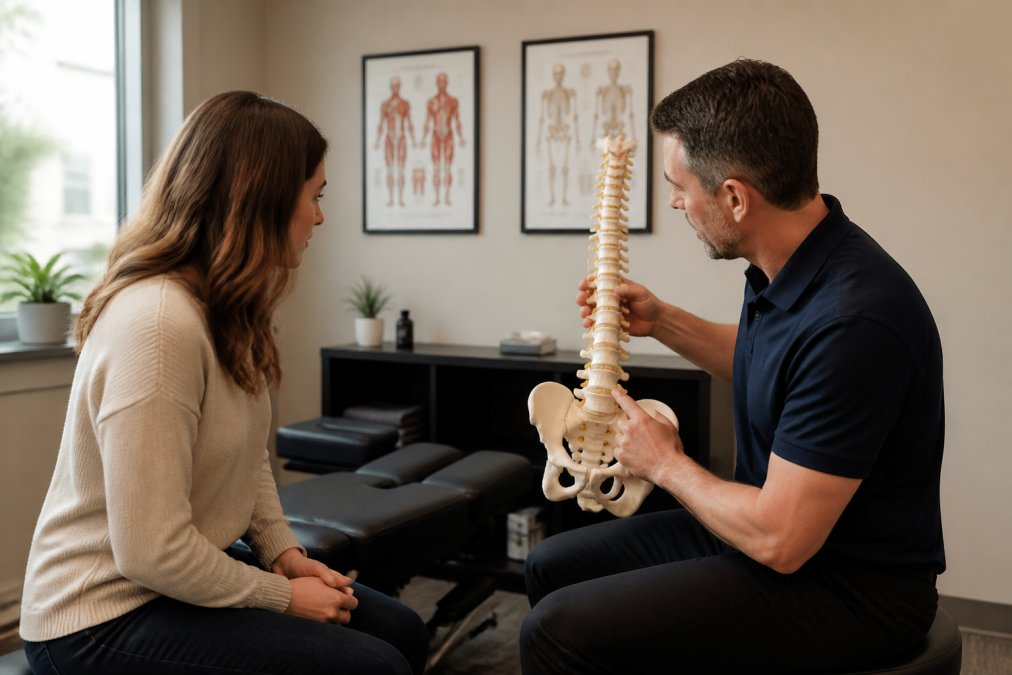
Start with diagnostic clarity. Ask: "What specific tests or imaging will you perform before recommending treatment?" A thorough chiropractor will assess your range of motion, perform orthopedic tests, and potentially order imaging if warranted. Recommending treatment immediately without assessment is a warning sign.
Ask about treatment plan structure. "How many visits do you expect this will take, and how will you measure progress?" A legitimate plan includes specific goals, a timeline, and clear criteria for determining whether treatment is working.
Inquire about evidence-based care. "Do you recommend treatment based on current clinical evidence, or do you use other methods?" This reveals whether they stay current with research or rely on outdated techniques.
Ask what happens if you don't improve. "If I'm not seeing results after four weeks, what's your next step?" This shows whether they're willing to adjust their approach or refer you elsewhere.
Discuss their stance on imaging and referrals. "When do you recommend X-rays or MRI, and when would you refer me to another provider?" A balanced approach suggests clinical judgment rather than financial incentive.
Ask about informed consent. "Will you explain the risks and benefits of spinal manipulation before treating me?" Legitimate practitioners discuss potential side effects, contraindications, and alternatives.
Recognize Chiropractic Treatment Red Flags
Red flags emerge when a chiropractor's business model prioritizes revenue over patient outcomes.

Beware of aggressive treatment recommendations. If a chiropractor recommends 20-30 visits without diagnostic assessment or baseline measurement, that's a red flag. A common predatory tactic is recommending long-term "wellness care" for asymptomatic patients.
Watch for pressure to sign long-term contracts or prepay for packages. Ethical practitioners allow you to pay per visit or in short-term blocks so you can reassess progress.
Be cautious about claims that chiropractic can treat conditions outside the musculoskeletal system. While spinal manipulation can address neck and back pain, claims that it cures migraines, improves digestion, boosts immunity, or treats ear infections lack scientific support.
Red flags also include refusing to communicate with your primary care physician or other providers. A collaborative approach indicates professional integrity. Practitioners who discourage you from seeing other doctors are prioritizing their own authority over your health.
Notice whether they perform unnecessary or excessive imaging. Imaging should be ordered when it will change treatment decisions, not routinely.
Pricing opacity is another warning sign. If they won't clearly explain fees upfront or pressure you to decide on treatment before discussing cost, that's predatory.
If a chiropractor recommends "maintenance care" indefinitely, uses high-pressure sales tactics, refuses to discuss your progress objectively, or claims to treat non-musculoskeletal conditions, seek a second opinion immediately. These are hallmarks of practices designed to maximize billing rather than optimize your health.
Understand Cost of Chiropractic Care Without Insurance
Chiropractic care costs vary widely depending on location, the chiropractor's experience, condition complexity, and insurance coverage. Without insurance, understanding pricing is essential before committing to treatment.
Initial consultations with diagnostic assessment typically cost more than follow-up visits. A first visit with X-rays might range higher than a standard adjustment-only visit. Urban areas and regions with higher cost of living generally charge more than rural areas.
Ask about their fee structure before treatment begins. Some chiropractors charge per visit, while others offer package discounts. Package deals can save money if you're confident about the treatment plan, but they lock you in financially. Request an itemized estimate breaking down initial assessment, each treatment type, imaging, and other services.
Understand what's included in each visit. Does the fee cover just the adjustment, or does it include therapeutic exercise and soft tissue therapy? Clarity upfront prevents billing surprises.
Ask whether they offer payment plans or sliding scale fees based on income. Many practitioners are willing to negotiate, especially for long-term patients.
Consider the total cost of your projected treatment. If a chiropractor recommends 12-20 visits, ask for a total cost estimate and how they'll measure whether treatment is working.
Before starting treatment, you should have a clear written estimate of costs, a realistic timeline for your condition, and a plan for how progress will be measured. If a chiropractor cannot or will not provide this, find someone else.
Evaluate Patient Testimonials and Communication Style
Patient testimonials and online reviews offer insight into whether a chiropractor delivers consistent, quality care. But not all reviews are equally reliable, and communication style reveals a lot about how they'll treat you long-term.
Look for patterns in reviews rather than isolated comments. Multiple reviews mentioning billing issues, pressure to continue treatment, or feeling dismissed indicate a problematic pattern. Read reviews on multiple platforms, Google, Yelp, Healthgrades, for a fuller picture.
Pay attention to specific details in reviews. Detailed feedback ("He listened to my concerns, explained my condition clearly, and adjusted my treatment plan when my pain didn't improve after two weeks") is more informative than vague praise.
Assess their communication style during your first interaction. Do they listen to your concerns, or push their predetermined treatment plan? Do they explain things clearly, or use jargon without clarifying? A chiropractor who communicates clearly and listens actively is more likely to deliver patient-centered care.
Notice whether they ask about your goals and expectations. A good practitioner wants to understand what you hope to achieve and whether your expectations are realistic.
Evaluate their willingness to answer questions. If you ask about the evidence for a treatment or the risks of spinal manipulation, does the chiropractor provide a straightforward answer or become defensive? Practitioners confident in their approach welcome questions.
Check whether they involve you in decision-making. Do they present options and ask your preference, or dictate treatment? Shared decision-making is a hallmark of ethical practice.
How to Find a Reputable Chiropractor: Your Action Checklist
Finding a reputable chiropractor requires systematic evaluation across multiple dimensions. Use this checklist to assess candidates and compare your options before making a decision.
| Evaluation Area | What to Check | Red Flags |
|---|---|---|
| License & Credentials | Active state license, DC degree, board certifications | Inactive/expired license, no verifiable credentials, vague titles |
| Clinical Experience | Years in practice, experience with your condition, specialty training | Fresh graduate with no relevant experience, no answer to direct questions |
| Initial Consultation | Diagnostic assessment, individualized plan, clear timeline | Immediate treatment without assessment, vague timeline, pressure to prepay |
| Treatment Approach | Evidence-based methods, willingness to adjust plan, coordination with other providers | Unproven techniques, refuses to modify approach, discourages other providers |
| Communication | Listens actively, explains clearly, answers questions, involves you in decisions | Dismissive, uses jargon without explanation, defensive about methods |
| Pricing | Clear fee structure, itemized estimate, transparent total cost | Vague pricing, pressure to sign long contracts, hidden fees |
| Patient Feedback | Specific positive reviews, patterns of satisfaction, detailed testimonials | Vague reviews, multiple billing complaints, reports of pressure to continue treatment |
| Ethical Practices | Respects informed consent, no unnecessary imaging, no wellness care pressure | Refuses to discuss risks, orders excessive imaging, pushes indefinite treatment |
Step 1: Verify License
Search your state's chiropractic board database. Confirm the license is active and check for disciplinary history. This is non-negotiable.
Step 2: Research Experience
Ask about clinical experience, specialty training, and experience with your specific condition. Request information about treatment outcomes or patient success rates if available.
Step 3: Schedule Initial Consultation
Use the consultation to assess their diagnostic approach, communication style, and whether they listen to your concerns. Ask the key questions outlined above.
Step 4: Evaluate Treatment Plan
Request a written treatment plan with specific goals, timeline, and cost estimate. Ensure it's individualized to your condition, not a generic plan offered to all patients.
Step 5: Check References and Reviews
Read multiple reviews on different platforms. Ask the chiropractor for references from patients with conditions similar to yours.
Step 6: Assess Fit
Consider whether you feel heard, whether their approach aligns with evidence-based practice, and whether you trust them with your care. Trust your instincts.
Step 7: Start with Short-Term Commitment
Begin with a few visits before committing to a longer treatment plan. This allows you to assess whether treatment is working and whether you're comfortable with the practitioner.
Frequently Asked Questions
How do I verify a chiropractor's license in my state?
Contact your state's chiropractic licensing board directly through their official website. Search the chiropractor's name in the state board's database to confirm current licensure status, disciplinary history, and whether they hold a Doctor of Chiropractic (DC) degree. Most state boards allow online searches. If you cannot find the board online, call your state's health department for contact information. Never rely on a chiropractor's self-reported credentials, verify independently.
What questions should I ask a chiropractor during the first visit?
Ask about their treatment plan duration and expected outcomes, whether they use evidence-based techniques, what diagnostic imaging they perform and why, their experience treating your specific condition, whether they work with primary care physicians or specialists, and how they handle cases that don't respond to chiropractic care. Request a written treatment plan with clear goals. Ask how they determine when to refer patients to other providers. These questions reveal whether they practice patient-centered care or pressure you into ongoing visits.
What are red flags when choosing a chiropractor?
Watch for chiropractors who guarantee permanent cures, recommend extensive upfront packages without initial assessment, pressure you into long-term contracts, discourage communication with your primary care physician, or claim they can treat unrelated conditions like migraines or ear infections through spinal manipulation alone. Avoid practitioners who order unnecessary X-rays, refuse to discuss evidence-based limitations of chiropractic care, or use high-pressure sales tactics for 'wellness' visits. Unethical practices often involve billing tactics designed to maximize insurance claims or out-of-pocket spending.
How much does chiropractic care cost without insurance?
Chiropractic costs vary widely depending on your location, the chiropractor's experience, the complexity of your condition, and the type of treatment required. Initial consultations may cost differently than follow-up visits, and some practitioners charge more for diagnostic imaging or additional modalities. Contact chiropractors directly for their current pricing. Ask whether they offer payment plans, sliding scale fees, or discounts for multiple visits. Understand the total estimated cost of your treatment plan before committing to care.
Finding a reputable chiropractor means verifying credentials, assessing clinical competence, and ensuring ethical practice. The stakes are your health and your money. At chiropracticcare.clinic, we understand that choosing the right provider requires careful evaluation. Use this guide to ask the right questions, recognize red flags, and make an informed decision. A qualified, ethical chiropractor will welcome your scrutiny and support your informed choice about your care. Experience spinal wellness and movement focused care; book now to schedule your visit today.
Learn more about what to expect as a new patient at Chiropractic Care Clinic in Montgomery, AL.
Table of Contents
- Addressing Musculoskeletal Sources of Headache
- Common Chiropractic Techniques for Headache Relief
- Safety Considerations for Headache and Neck Pain Patients
- How Long Does It Take for the Cervicogenic Component to Improve
- Integrative Approaches to Headache Management
- What the Research Says About Chiropractic and Cervicogenic Headache
- Home Care and Preventative Strategies
- Frequently Asked Questions
Last Updated: August 22, 2026
Addressing Musculoskeletal Sources of Headache
Cervicogenic headaches originate from musculoskeletal dysfunction in the joints, muscles, and soft tissues of the cervical spine (neck). It is important to understand that this is distinct from migraine, which is a neurological diagnosis. The two conditions can present with overlapping symptoms, and in some people they coexist. At Chiropractic Care Clinic, we evaluate the structural and functional health of the neck to determine whether a musculoskeletal component is contributing to a patient's headache presentation, before any care is initiated.
Your cervical spine contains seven vertebrae, and restricted or misaligned segments can affect surrounding nerves and soft tissue. This condition, called cervicogenic headache, is diagnosed through a clinical evaluation, not assumed from headache symptoms alone. Spinal manipulation is used to restore movement to restricted or mispositioned vertebrae, with the goal of reducing the musculoskeletal contribution to a patient's symptoms. This is not a treatment for migraine as a neurological condition, and a qualified chiropractor will assess whether your headaches have a cervicogenic component before recommending care.
Not all migraines are cervicogenic. Some originate from tension, hormonal changes, or neurological factors. A qualified chiropractor will assess whether your migraines have a spinal component before recommending treatment.
The role of the cervical spine in headache concerns
Cervicogenic headaches originate from dysfunction in the neck's joints, muscles, or nerves rather than brain-based causes. A subset of people with chronic headache symptoms have a cervical spine component contributing to their presentation. Identifying that connection requires a thorough clinical evaluation by a qualified provider, not a self-assessment based on symptoms alone.
When vertebrae lose proper alignment, surrounding muscles can tighten to compensate, which may restrict local blood flow and place additional tension on nearby soft tissue. For patients whose headaches have a cervicogenic component, addressing this mechanical imbalance in the neck may help reduce the musculoskeletal contribution to their symptoms. This is a supportive, targeted approach, not a claim that spinal correction resolves migraine as a neurological condition.
Spinal manipulation and nerve function
Spinal manipulative treatment applies controlled force to vertebrae that have lost normal movement, restoring motion and alignment while reducing nerve compression and muscle tension. As your cervical spine regains proper movement patterns, your nervous system recalibrates. Muscles relax, blood flow improves, and this process typically continues for days after a single adjustment.
Different adjustment techniques create slightly different effects. A diversified adjustment applies force in a specific direction to restore movement. A Gonstead technique uses precise imaging and positioning to target specific vertebrae. Both can be effective for reducing the musculoskeletal contribution to cervicogenic headache symptoms when applied correctly. Neither treats migraine as a neurological condition.
Common Chiropractic Techniques for Headache Relief
Chiropractors use several evidence-based techniques to address spinal dysfunction that may contribute to cervicogenic headache symptoms, combining spinal manipulation with soft tissue therapy tailored to your specific findings.

Diversified and Gonstead techniques
The diversified technique is the most widely taught adjustment method, using a rapid, controlled thrust to restore movement to a restricted vertebra. For cervical spine work related to headache symptoms, the chiropractor identifies which vertebrae have lost motion and applies force to restore normal movement.
The Gonstead technique uses precise X-ray analysis and palpation to identify exactly which vertebrae are misaligned and in what direction. The adjustment is then performed with the patient positioned to isolate that vertebra. Both techniques require proper training and certification.
Soft tissue therapy and trigger point release
While spinal manipulation addresses vertebral alignment, soft tissue therapy addresses muscle tension that develops around misaligned vertebrae. Trigger points, tight knots in muscle tissue, are common in people with chronic neck-related headache symptoms, especially in the neck, shoulders, and upper back.
A chiropractor trained in soft tissue techniques will use myofascial release, trigger point therapy, or massage to relax these muscles, which may help reduce overall tension contributing to headache symptoms. This work also serves a preventative function by keeping muscles relaxed and supple, reducing the likelihood that vertebrae will become misaligned again.
For headaches with a cervicogenic component, chiropractic care typically combines spinal adjustment to restore vertebral alignment with soft tissue therapy to address muscle tension.
Safety Considerations for Headache and Neck Pain Patients
Chiropractic care, when performed by a qualified practitioner, is generally safe. However, certain conditions require caution or contraindicate treatment entirely.
Red flags and contraindications
Before beginning chiropractic treatment, a qualified chiropractor will screen for conditions that make spinal manipulation unsafe, including certain types of cancer, severe osteoporosis, spinal infections, and unstable vertebral fractures.
Migraines themselves are not a contraindication. However, if your migraines are caused by something other than cervical spine dysfunction, such as a brain tumor or aneurysm, spinal manipulation won't help and could delay proper treatment. Red flags suggesting your migraines may not be cervicogenic include sudden onset without prior neck problems, migraines accompanied by neurological symptoms like vision loss or weakness, or migraines that worsen despite appropriate spinal treatment. If you experience any of these, seek neurological evaluation before continuing chiropractic care.
If you're taking blood thinners or have a bleeding disorder, inform your chiropractor. Spinal manipulation can cause bruising, and certain conditions make this riskier. Your chiropractor may still treat you but will modify their approach.
Safety considerations for older adults
Adults over 50 often have degenerative changes in their cervical spine, bone spurs, or reduced bone density. These don't automatically contraindicate chiropractic care but require a more conservative approach.
An experienced chiropractor will use gentler techniques and may avoid high-velocity adjustments in favor of lower-force mobilization. They'll take X-rays or other imaging to understand the extent of degeneration before proceeding. Osteoporosis is a specific concern; if you have significant bone loss, high-velocity spinal manipulation carries increased fracture risk. In these cases, a chiropractor may use mobilization techniques instead, gentler movements that restore motion without the sudden thrust of an adjustment.
How Long Does It Take for the Cervicogenic Component to Improve
The timeline varies significantly based on how long you've had the problem and how severe your spinal dysfunction is.
Timeline expectations and frequency of visits
Some patients notice improvement within the first few visits; others require weeks of consistent care. A typical initial treatment plan involves 2-3 visits per week for 4-6 weeks, followed by reassessment.
During the initial phase, your chiropractor works to restore vertebral alignment and reduce nerve irritation. As your spine improves, visit frequency typically decreases. Many patients transition to maintenance care, typically 1-2 visits per month, to prevent relapse. If your cervicogenic symptoms have been present for many years, expect a longer timeline, often 8-12 weeks of consistent care, before noticing a change in the musculoskeletal component of your symptoms.
Measuring progress and adjusting treatment
Track your headache frequency and intensity from day one: how many headache days per week, how long they last, and severity on a scale of 1-10. After 4 weeks of care, compare your baseline to your current status.
You may notice a change by week 4 if a cervicogenic component is contributing: fewer headache days, shorter duration, or lower intensity of the musculoskeletal component. If you see no change after 4 weeks of consistent care, your chiropractor should reassess whether your migraines are cervicogenic or whether a different approach is needed. The key is consistent progress; if you're not seeing improvement after 6-8 weeks, discuss whether to continue or pursue other options.
If your migraines worsen after chiropractic adjustments or if you develop new neurological symptoms, stop treatment immediately and consult a neurologist.
Integrative Approaches to Headache Management
Managing headaches with a musculoskeletal component often works best when chiropractic care is combined with other evidence-based approaches and coordinated with your physician.
Combining chiropractic with physical therapy and posture correction
Physical therapy and chiropractic care can complement one another as part of a coordinated care plan. While your chiropractor restores spinal alignment and mobility, a physical therapist teaches exercises that strengthen the muscles supporting your cervical spine.
Posture correction is especially important if you spend hours at a desk. Poor posture puts constant stress on your cervical vertebrae, which can contribute to the kind of neck dysfunction associated with cervicogenic headaches. Common exercises to support the cervicogenic component include neck stabilization, shoulder blade strengthening, and gentle cervical range-of-motion work. Some patients find that adding 10-15 minutes of daily exercises supports their chiropractic care, though individual results vary.
Lifestyle modifications and trigger identification
Common migraine triggers include dehydration, sleep disruption, stress, and certain foods; a physician or neurologist can help you identify and manage these. For the cervicogenic component specifically, addressing neck-related contributors like posture and ergonomics is the focus of chiropractic care.
Ergonomic adjustments are particularly important. Adjust your monitor height so it's at eye level. Position your keyboard and mouse so your elbows are at 90 degrees. Take regular breaks to stand and move. Stress management also matters; practices like meditation, deep breathing, or gentle yoga reduce overall tension and complement your chiropractic care.
What the Research Says About Chiropractic and Cervicogenic Headache
Clinical evidence supports a role for chiropractic care in certain headache presentations that have a cervical spine component.
Clinical evidence for spinal manipulation
Clinical research on spinal manipulation for neck pain and cervicogenic headache shows a possible benefit for patients with identifiable cervical spine dysfunction. This is separate from migraine, which is a neurological diagnosis outside chiropractic scope. Patients whose headaches are accompanied by neck pain or restricted neck movement are the group most likely to have a cervicogenic component worth evaluating.
Research consistently shows that spinal manipulation works best for patients with clear spinal findings, vertebral misalignment, restricted movement, or muscle tension in the cervical region. Patients without identifiable spinal dysfunction show less consistent benefit. Combining spinal manipulation with soft tissue therapy, exercise, and ergonomic correction improves both the speed and magnitude of improvement.
Coordinating cervicogenic care with physician-directed treatment
Migraine medication is prescribed and managed by a physician or neurologist and is outside chiropractic scope. When a cervicogenic component is present, chiropractic addresses that musculoskeletal contributor directly. It is not a substitute for physician-directed migraine treatment, and patients with both often benefit from coordinated care. Some patients choose chiropractic care alongside their physician-directed treatment plan when a cervicogenic component is present. Any change to medication should be discussed with the prescribing physician. Many patients benefit from an integrated approach that includes both chiropractic and neurology-based treatments.
Home Care and Preventative Strategies
What you do between chiropractic visits matters as much as the treatment itself.

Exercises and stretches for neck-related headache support
Simple neck exercises performed daily may help support neck function for people whose headaches have a cervicogenic component. A typical routine takes 10-15 minutes and can be done at home without equipment.
Gentle neck stretches reduce tension and improve range of motion. Hold each stretch for 20-30 seconds without bouncing. Perform stretches 2-3 times daily, especially if you spend long hours at a desk. Neck stabilization exercises strengthen the deep muscles that support your cervical spine, reducing the workload on your spinal joints and nerves. Your chiropractor or physical therapist can teach you a personalized routine based on your specific findings. Consistency matters more than intensity.
Ergonomic adjustments and daily habits
Ensure your monitor is at eye level, not below or above. Position your keyboard and mouse close enough that your elbows bend at 90 degrees. Your feet should rest flat on the floor or a footrest.
Take regular breaks every hour to stand, stretch your neck gently, and walk. Avoid sleeping on your stomach, which forces your neck into rotation; side or back sleeping is preferable. Use a pillow that supports your cervical curve without forcing your neck into an unnatural angle. Use speakerphone, earbuds, or a headset instead of holding your phone to your ear. If texting or scrolling, hold your phone at eye level rather than looking down.
One change many desk workers find helpful is adjusting their monitor height. Positioning your monitor at eye level can help reduce neck strain, which may help reduce headache frequency for some people with a cervicogenic component to their symptoms.
Living with frequent headaches is difficult, especially after trying multiple approaches without lasting relief. If your headaches are accompanied by neck pain, restricted neck movement, or a history of neck injury, a cervicogenic component may be worth evaluating. At chiropracticcare.clinic, we assess whether the cervical spine is a relevant factor in your headache pattern and, when it is, address it as one part of a broader care plan coordinated with your physician. Chiropractic care is not a substitute for a migraine diagnosis or neurological evaluation. Schedule a consultation to determine whether a cervicogenic evaluation is appropriate for your situation.
Frequently Asked Questions
Can chiropractic care actually cure chronic migraines?
Chiropractic care does not cure migraines, and does not treat migraine as a neurological condition. When a headache has a cervicogenic component, spinal manipulation and manual therapy targeting cervical spine dysfunction may help reduce that musculoskeletal contribution. Results vary based on the underlying cause. Some headaches stem from cervicogenic sources that may respond to chiropractic care, while others need care from a physician or neurologist instead, or alongside it. Consult a qualified chiropractor to determine whether your headaches are likely to have a component that would respond to treatment.
How long does it typically take to see improvement from chiropractic treatment for cervicogenic headaches?
Timeline varies among patients. Some notice a change within 1-2 weeks, while others need 4-8 weeks of consistent treatment before any meaningful change. Initial frequency often involves 2-3 visits per week, gradually decreasing as symptoms improve. The speed of any change depends on how long you've had symptoms and whether the underlying cause is cervical spine-related. Your chiropractor should establish clear benchmarks to measure progress and adjust treatment frequency accordingly, and refer you back to your physician if the cervicogenic component is not the main driver.
Is chiropractic safe for someone with severe neck pain and chronic migraines?
Chiropractic care can be safe for most people with chronic headaches, but certain conditions require caution. Red flags include vertebral artery dissection risk, severe osteoporosis, or unstable spine injuries. Older adults and those with significant neck pain should receive thorough evaluation before treatment begins. A qualified chiropractor will screen for contraindications through history and examination. If you're over 55, have severe symptoms, or recently experienced trauma, discuss safety concerns directly with your healthcare provider before starting treatment.
How does integrative headache management combine chiropractic with other treatments?
Integrative approaches to migraine management combine spinal manipulative treatment with physical therapy, posture correction, ergonomic advice, and lifestyle modifications. This approach addresses the musculoskeletal contributors to a cervicogenic headache: cervical dysfunction through chiropractic adjustment, muscle tension through soft tissue therapy, and postural habits through home exercises. Migraine-specific triggers and treatment remain the responsibility of your physician or neurologist. Coordinated care between chiropractors and physicians can help ensure patients receive appropriate evaluation for both musculoskeletal and neurological contributors to headache. Discuss with your chiropractor how they coordinate with your primary care physician or neurologist to ensure comprehensive, evidence-based treatment.
Learn more about headache care at our Montgomery, AL clinic, or book an evaluation.
