

Yoga Poses to Avoid With Chronic Back Pain
Yoga poses to avoid with chronic back pain: Learn which yoga poses aggravate chronic back pain, why they're risky, and safe modifications to keep.
Read More →
Last Updated: August 7, 2026
Chiropractic care for neck pain works by restoring mobility to restricted joints in the cervical spine through manual adjustment techniques. When vertebrae become misaligned or lose their normal range of motion, surrounding muscles tighten and nerves can become irritated, creating stiffness and discomfort. A chiropractor applies controlled force to these joints to improve alignment and reduce nerve irritation, which often alleviates pain and restores function.
The cervical spine is remarkably complex, seven vertebrae stacked with precise spacing, supported by dozens of muscles and ligaments. Poor posture, repetitive strain, or sudden trauma disrupts this delicate balance. Chiropractic adjustments target the root mechanical problem rather than just masking symptoms. When joint mobility improves, muscles often relax and pain signaling from the area may decrease.
Not every neck pain case responds the same way. Some patients see relief within days; others require several weeks of treatment. The difference depends on how long the problem has existed, what caused it, and how well your body responds to manual therapy.
Cervical spine adjustment safety deserves a direct answer: the procedure carries real but uncommon risks. The most serious potential complication is vertebral artery dissection, where the artery wall tears, potentially leading to stroke. This is a rare complication. Published risk estimates vary, and your chiropractor should discuss what is known about the risk with you individually before treatment.
Certain conditions make cervical manipulation contraindicated: severe osteoporosis, active inflammatory arthritis, spinal cord compression confirmed by imaging, anticoagulation therapy, or recent neck trauma. A thorough evaluation before treatment is essential. Qualified chiropractors perform screening tests and review imaging to identify these red flags.
Common side effects are mild and temporary: brief soreness, muscle stiffness, or mild headache following adjustment, typically resolving within 24 to 48 hours. Serious adverse reactions are exceptionally rare when treatment is provided by a licensed, trained professional who follows proper protocols.
The evidence supports that cervical manipulation, when appropriately indicated, is generally safe. This means proper patient screening, accurate diagnosis, and skilled technique. Not all neck pain warrants adjustment; some cases respond better to soft tissue therapy, stretching exercises, or ergonomic correction alone.
Neck pain stems from many sources, and understanding the cause determines whether chiropractic care is appropriate. The most common culprit is postural strain from hours hunched over phones and computers, pulling the cervical spine forward and creating muscular imbalance. This type of pain responds exceptionally well to chiropractic adjustment combined with ergonomic correction and strengthening exercises.
Whiplash injuries from car accidents create sudden acceleration-deceleration motion that tears soft tissue and causes joint dysfunction. Chiropractic care addresses the biomechanical component, restoring joint mobility and reducing muscle guarding. However, multimodal treatment combining adjustment, soft tissue work, and rehabilitation typically produces better outcomes than adjustment alone.
Degenerative disc disease and cervical arthritis present more complex scenarios. As discs lose hydration or joints develop bone spurs, available space for nerves narrows. Chiropractic adjustment can improve remaining mobility and temporarily reduce symptoms, but cannot reverse structural degeneration. In these cases, chiropractic care works best as part of a broader pain management strategy.
Muscle strain from repetitive activities or poor sleeping position often responds quickly to adjustment combined with postural correction. Tension headaches originating from cervical dysfunction also improve significantly with chiropractic treatment, as restoring normal cervical biomechanics reduces the muscle tightness triggering headaches.
Acute mechanical problems and postural dysfunction respond well to chiropractic care. Chronic structural changes or neurological conditions require a more cautious approach and often benefit from collaboration with medical professionals.

Your first visit to a chiropractic clinic follows a predictable structure designed to gather information, assess your condition, and determine appropriate treatment. Expect to spend 45 to 60 minutes in the office, though actual hands-on treatment typically lasts 15 to 20 minutes.
The appointment begins with a detailed intake form covering your medical history, current symptoms, past injuries, and lifestyle factors. A thorough chiropractor asks specific questions: When did the pain start? What makes it better or worse? Does it radiate into your arms? Have you had imaging done?
The physical examination includes range of motion testing, palpation to identify areas of restriction or misalignment, and orthopedic tests to check for nerve involvement. Many chiropractors perform postural analysis, comparing your head and shoulder position to ideal alignment.
Imaging may be recommended. X-rays reveal bone alignment and degenerative changes; MRI shows soft tissue detail. Not every case requires imaging, but when structural questions exist, imaging provides crucial information.
After examination, the chiropractor explains their findings in plain language, describing what they found, what's causing your pain, and their recommended treatment approach. This is your opportunity to ask questions before any treatment begins.
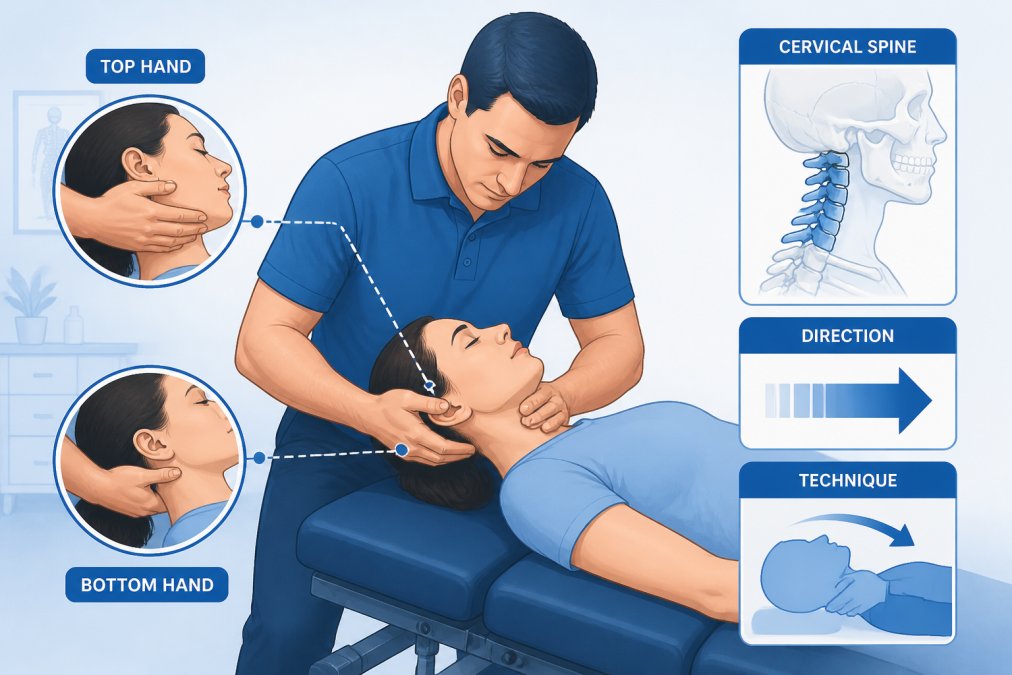
The first adjustment typically happens during this visit. You'll lie on a padded treatment table, usually face-down or on your side. The chiropractor positions your head and neck, then applies a quick, controlled thrust to a specific vertebra. Most patients report relief or relaxation immediately following adjustment.
Chiropractic treatment duration for neck pain varies based on the underlying cause, how long the problem has existed, and individual healing capacity. Acute injuries often show improvement within 2 to 4 weeks of consistent treatment. Chronic pain lasting months or years typically requires 8 to 12 weeks before meaningful, lasting improvement emerges.
A typical treatment plan for acute neck pain involves 2 to 3 visits per week for the first 2 to 3 weeks, then tapering to 1 visit weekly as improvement occurs. For chronic conditions, many patients benefit from twice-weekly treatment initially, transitioning to weekly visits as mobility improves.
Recovery after a single adjustment is usually immediate, with most people feeling freer movement and reduced pain within hours. This improvement often plateaus after 24 to 48 hours as the body adapts. Subsequent adjustments build on this improvement, gradually restoring fuller function.
The real timeline question is: how long until lasting improvement without treatment? This depends on addressing the cause. If your neck pain stems purely from postural strain, correcting posture and strengthening muscles might resolve it in 6 to 8 weeks. If it involves degenerative changes, you may need ongoing maintenance care, perhaps monthly visits, to manage symptoms long-term.
Some patients plateau and stop improving after several weeks. This suggests either that chiropractic adjustment alone isn't sufficient, or that additional interventions like therapeutic exercises, ergonomic changes, or medical evaluation are needed. A competent chiropractor recognizes these situations and adjusts the treatment approach.
Chiropractic adjustment alone produces temporary relief, but lasting improvement requires active participation through home care and therapeutic exercises. The exercises recommended depend on what caused your neck pain and what movement patterns need correction.
For postural neck pain, gentle cervical stretches are foundational. A simple forward neck flexion stretch involves sitting upright and slowly bringing your chin toward your chest, holding for 20 to 30 seconds. Lateral neck flexion, tilting your ear toward your shoulder, stretches the opposite side. Perform stretches 2 to 3 times daily, especially after prolonged desk work.
Strengthening exercises become important once acute pain improves. Isometric neck exercises, where you resist movement without actually moving, build muscular support without straining healing tissues. Place your hand against your head and push gently without allowing any movement, holding for 5 seconds. Repeat in all four directions.
Ergonomic correction addresses the root cause of postural neck pain. Your monitor should be at eye level, not below it. Your chair should support your lower back curve. Your phone should come to ear level rather than forcing your neck into forward flexion. Many people spend hundreds on chiropractic care while maintaining the exact posture that caused the problem; fixing this dramatically accelerates recovery.
Ice application helps during the first 24 to 48 hours after injury or adjustment, reducing inflammation. Heat becomes more useful after acute inflammation subsides, as it relaxes muscles and improves circulation. Apply for 15 to 20 minutes at a time.
Sleep position matters significantly. Your pillow should support your neck's natural curve without forcing it into flexion or extension. A pillow that's too flat leaves your neck unsupported; one that's too thick forces your head upward. Side sleepers and back sleepers have different optimal pillow heights.
Stress management indirectly supports neck pain recovery. Emotional stress creates muscle tension, particularly in the neck and shoulders. Activities like walking, gentle yoga, or meditation reduce both stress and muscle guarding.
Chiropractic care and medical treatment address neck pain from different angles. Understanding when each approach is most appropriate prevents unnecessary delays and improves outcomes.
Medical doctors, particularly those trained in physical medicine and rehabilitation or orthopedic spine care, excel at diagnosis and ruling out serious conditions. They order and interpret imaging, prescribe medications for inflammation or pain, and manage complex cases. If your neck pain involves neurological symptoms, numbness, tingling, or weakness, medical evaluation is essential to rule out nerve compression.
Chiropractors specialize in musculoskeletal mechanics. They excel at identifying and correcting joint dysfunction, muscle imbalance, and postural problems. For purely mechanical neck pain without neurological involvement, chiropractic care often provides faster relief than medical management alone.
The ideal scenario for many patients is collaborative care. A medical doctor confirms the diagnosis and rules out serious pathology. A chiropractor provides hands-on treatment and rehabilitation. Physical therapists design and supervise progressive strengthening programs.
When to see a doctor first: sudden severe pain, pain following trauma, numbness or tingling in arms or hands, weakness, loss of bladder or bowel control, fever, unexplained weight loss, or pain that wakes you at night.
When chiropractic care is appropriate first: postural neck stiffness, mild to moderate mechanical pain without neurological symptoms, pain that worsens with certain movements, or pain that improves with movement and stretching.
The research supports both approaches for appropriate cases. Some clinical guidance on manual therapy and exercise for musculoskeletal pain generally supports conservative approaches as a reasonable first step — ask your provider for evidence specific to neck pain. Systematic reviews of spinal manipulation suggest modest benefits for acute neck pain, particularly when combined with exercise, though ask your provider for sources specific to your case. The National Center for Complementary and Integrative Health notes that chiropractic care is among the most commonly used complementary approaches for neck and back pain.
The critical distinction is matching the treatment to the problem. Not every neck pain needs a doctor. Not every neck pain responds to chiropractic adjustment alone. Accurate diagnosis determines the right path forward.
Neck pain disrupts daily life, limits your ability to work comfortably, and creates anxiety about whether the problem will worsen. Chiropractic care addresses the mechanical root of many neck pain cases, restoring mobility and function without medication or surgery. At chiropracticcare.clinic, we evaluate each patient's specific condition and develop a treatment plan targeting the actual cause rather than just managing symptoms.
The evidence supports chiropractic care for mechanical neck pain, particularly when combined with home care and ergonomic correction. Understanding what works, what the risks are, and when to seek alternative care ensures you make informed decisions about your health. Start with a thorough evaluation from a qualified practitioner, follow through with recommended exercises and postural changes, and track your progress. Most mechanical neck pain improves significantly with appropriate conservative care.
| Scenario | Best Initial Approach | Why |
|---|---|---|
| Postural neck stiffness, no neurological symptoms | Chiropractic care | Addresses mechanical dysfunction directly |
| Acute pain following trauma | Medical evaluation first | Rules out serious injury before treatment |
| Chronic pain with numbness or tingling | Medical evaluation first | Neurological symptoms require diagnostic imaging |
| Pain that worsens with specific movements | Chiropractic care | Indicates joint dysfunction treatable with adjustment |
| Pain unresponsive to 6 weeks of conservative care | Medical re-evaluation | May indicate structural problem requiring different approach |
Chiropractic care can reduce neck pain, stiffness, and improve range of motion in many patients, particularly those with musculoskeletal causes like poor posture or muscle tension. However, effectiveness depends on the underlying cause. Conditions like nerve compression, arthritis, or post-injury pain may respond differently. A qualified chiropractor will assess your specific condition and discuss realistic outcomes. If symptoms persist after several weeks of treatment, consultation with a medical doctor is advisable to rule out serious underlying conditions.
Treatment duration varies based on the cause and severity of your neck pain. Acute pain from muscle tension may improve in 2-4 weeks with 2-3 visits per week. Chronic conditions typically require 6-12 weeks of treatment, with frequency tapering as improvement occurs. Your chiropractor will develop a personalized plan and reassess progress regularly. Some patients benefit from ongoing maintenance visits monthly or quarterly, while others achieve lasting relief and discontinue treatment. Discuss expected timelines and visit frequency during your initial consultation.
Cervical spine adjustments carry rare but serious risks, including vertebral artery dissection, which can lead to stroke. More common side effects include temporary soreness, headache, or dizziness lasting hours to days. Certain conditions, such as osteoporosis, arthritis, or spinal cord compression, may contraindicate manipulation. Inform your chiropractor of all health conditions, medications, and prior injuries. Chiropractors trained in proper technique and screening protocols significantly reduce adverse reactions. If you experience severe headache, vision changes, or neurological symptoms after adjustment, seek immediate medical attention.
Exercises can be effective for mild to moderate neck pain caused by muscle tightness and poor posture, but they work best when combined with professional assessment. A chiropractor can identify the root cause, provide hands-on treatment to restore joint mobility, and teach you exercises tailored to your condition. Self-directed stretching alone may not address joint misalignment or nerve irritation. Many patients benefit most from initial chiropractic treatment followed by a structured home exercise program to prevent recurrence and maintain long-term relief.


