

Yoga Poses to Avoid With Chronic Back Pain
Yoga poses to avoid with chronic back pain: Learn which yoga poses aggravate chronic back pain, why they're risky, and safe modifications to keep.
Read More →
Last Updated: August 13, 2026
Chiropractic care can be safe and beneficial for older adults when delivered by a qualified, licensed practitioner who understands geriatric needs. Safety depends entirely on proper assessment, appropriate technique selection, and honest communication about existing health conditions. The aging spine undergoes significant changes, bone density decreases, discs lose hydration and elasticity, and joints develop stiffness. These changes create both opportunity and risk. Chiropractic adjustments, when properly modified, can address mobility limitations and chronic pain, but techniques effective for younger patients can cause harm in older adults with osteoporosis or cervical artery concerns.
For further insights on how chiropractic adjustments are specifically adapted to enhance safety and comfort for seniors, explore our adapting techniques for older adults guide.
Safety rests on three pillars: thorough health history screening, evidence-based gentle techniques, and clear contraindications. A practitioner must know your complete medical picture before adjusting your spine. Conditions like severe osteoporosis, vertebral artery disease, or spinal stenosis may contraindicate certain manipulations. Modern chiropractic has evolved beyond one-size-fits-all adjustments, with alternatives available for nearly every situation.
Seniors seek chiropractic care most often for chronic pain from musculoskeletal conditions. Lower back pain from degenerative disc disease dominates, followed by cervical pain from years of poor posture and generalized joint stiffness affecting range of motion and functional independence.
Lower back pain stems from decades of repetitive movement, occupational stress, and age-related disc degeneration. Chiropractic treatment targeting the lumbar spine can reduce pain and improve mobility when the underlying condition is appropriate for manipulation. However, if pain stems from severe spinal stenosis or unstable vertebrae, manipulation may worsen symptoms.
Neck pain and cervical stiffness represent the second major complaint. Gentle cervical adjustments can restore range of motion and reduce muscle tension, but this region demands extra caution. The vertebral artery runs through cervical vertebrae, and certain manipulation techniques carry a small risk of cervical artery dissection. Qualified practitioners use specific screening procedures and modified techniques to minimize this risk.
Shoulder mobility loss, hip stiffness, and general joint dysfunction also respond well to gentle manipulation combined with therapeutic exercises and home care strategies.
Adaptation is the cornerstone of safe geriatric chiropractic practice. Licensed practitioners trained in elder care recognize that bone density, tissue elasticity, and neurological responsiveness differ significantly from younger patients.
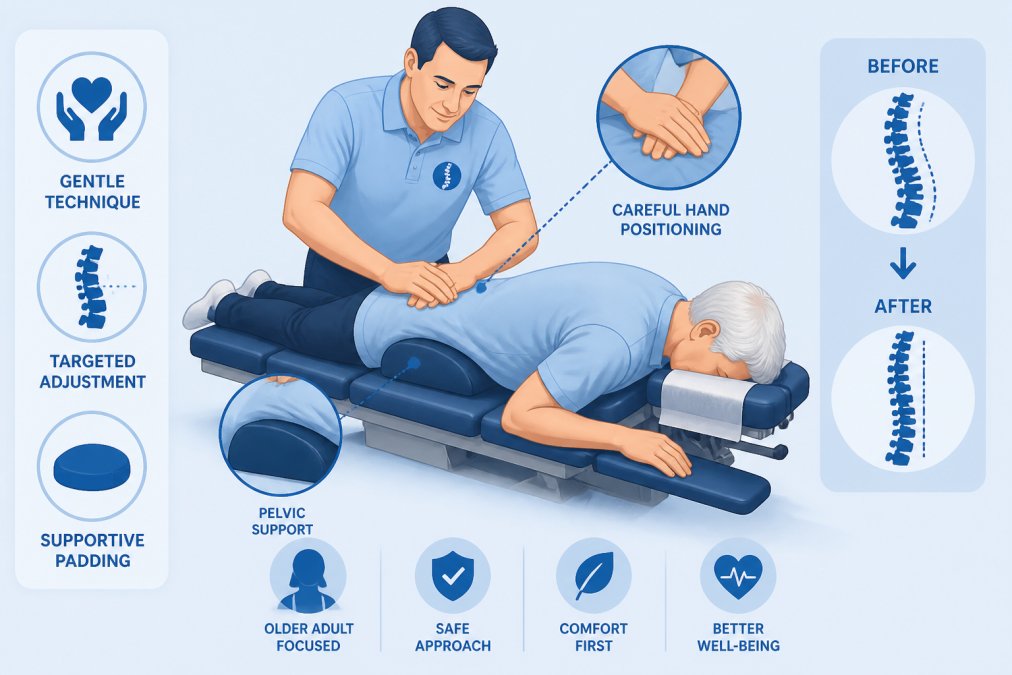
Reduced force represents the primary modification. High-velocity, low-amplitude thrust adjustments are often replaced with gentler approaches. Low-force techniques apply sustained pressure or slower movements to achieve alignment changes without sudden impact.
Increased assessment time precedes any adjustment. A thorough intake includes detailed health history, current medications, previous injuries, and imaging results if available. Practitioners perform orthopedic and neurological tests specific to geriatric populations and may request recent X-rays to identify contraindications before proceeding.
Positioning and support matter significantly. Practitioners use pillows, bolsters, and specialized tables to ensure comfort and safety. Proper positioning reduces strain on arthritic joints and protects vulnerable areas.
Alternative techniques supplement or replace traditional adjustments entirely. Mobilization, soft tissue therapy, therapeutic ultrasound, and electrical stimulation achieve therapeutic outcomes without manipulation. A skilled practitioner selects the right tool for each patient's specific situation.
Gentle techniques represent the evolution of chiropractic care for aging populations. These methods prioritize safety while maintaining effectiveness for common senior conditions.
Mobilization techniques move joints through their available range of motion without sudden force. The practitioner applies slow, controlled pressure, allowing tissues to gradually relax and improve mobility.
Soft tissue therapy targets muscles, tendons, and fascia directly. Techniques like myofascial release, trigger point therapy, and therapeutic massage reduce muscle tension and improve circulation.
Instrument-assisted techniques use specialized tools to deliver controlled force. Devices like the Activator apply precise, low-force impulses to specific points, making them ideal for patients with osteoporosis.
Flexion-distraction therapy uses specialized tables that gently stretch the spine while applying controlled pressure. This technique is particularly effective for lower back pain related to disc problems and spinal stenosis.
Drop-table techniques use tables with sections that drop slightly during the adjustment, creating a gentle separation effect without the force of a traditional thrust.
Understanding potential risks allows you to make informed decisions and communicate effectively with your healthcare team. Most risks are manageable through proper screening and technique selection, but some conditions genuinely contraindicate spinal manipulation.
Cervical artery dissection represents the most serious potential complication, though it remains rare. Certain cervical manipulation techniques can cause tearing of the vertebral or carotid artery, leading to stroke. Risk factors include age over 60, high blood pressure, and certain connective tissue disorders. Qualified practitioners screen for these factors and use modified techniques or avoid cervical manipulation entirely when risk is elevated.
Vertebral fracture risk increases substantially with osteoporosis. Seniors with significant bone loss may sustain fractures from manipulation that would cause no injury in younger patients.
Spinal cord compression from severe stenosis can worsen with certain adjustments. If the spinal canal is already narrowed, aggressive manipulation may increase pressure on nerve tissue.
Instability in the spine, whether from previous surgery or severe degenerative changes, contraindicates traditional adjustments. An unstable spine requires stabilization, not mobilization.
Certain medications increase bleeding risk. Seniors taking anticoagulants or antiplatelet medications have higher risk of bruising and bleeding complications from manipulation.
Recent fractures, severe acute pain, or undiagnosed conditions warrant caution. A responsible practitioner may recommend imaging or consultation with your primary care physician before proceeding.
These are risks associated with inappropriate application of chiropractic care, not inherent dangers of the discipline itself. A qualified, cautious practitioner screens for these conditions and adapts their approach accordingly.
Medicare Part B covers chiropractic services, but only for subluxation of the vertebral column. Coverage is limited to manipulation of the spine to correct subluxation and does not extend to X-rays, physical therapy, or other diagnostic or therapeutic procedures performed in a chiropractic office.
The number of visits covered varies based on medical necessity as determined by your healthcare provider and Medicare guidelines. To receive Medicare coverage, you must see a Medicare-enrolled chiropractor. Verify provider enrollment through the Medicare website or by calling Medicare directly.
Supplemental insurance (Medigap) policies vary in their coverage of chiropractic care. Some policies provide additional coverage beyond Medicare's basic benefits, while others do not. Medicare Advantage plans (Part C) may have different coverage rules than Original Medicare. Contact your plan before scheduling treatment to understand your coverage and any authorization requirements.
Osteoporosis presents a particular challenge in geriatric chiropractic care. The condition, characterized by decreased bone density and increased fracture risk, requires modified approach and careful technique selection. However, appropriate chiropractic care can support bone health and mobility in seniors with osteoporosis.
Traditional high-velocity spinal manipulation carries unacceptable risk for patients with significant bone loss. A forceful adjustment that would cause no injury in a healthy 50-year-old could fracture vertebrae in a 75-year-old with advanced osteoporosis.
Bone density screening (DEXA scan) provides objective information about fracture risk. Seniors with osteoporosis should share these results with their chiropractor before treatment begins.
Gentle techniques become mandatory for osteoporotic patients. Mobilization, soft tissue therapy, and low-force instrument-assisted methods achieve therapeutic benefit without fracture risk. Weight-bearing exercise and resistance training should complement chiropractic care. Your practitioner can recommend appropriate exercises and monitor your progress.
Nutritional support for bone health extends beyond chiropractic scope but deserves mention. Adequate calcium, vitamin D, and protein intake support bone strength. Some chiropractors specialize in osteoporosis-aware care and have additional training in managing this population.
The period following a chiropractic adjustment is critical for recovery and maximizing therapeutic benefit. Seniors require specific guidance for post-adjustment care to ensure safety and support healing.

Immediate post-adjustment care begins in the office. Your practitioner should provide clear instructions about activity level for the remainder of the day. Most practitioners recommend avoiding strenuous activity for 24 hours following adjustment.
Ice or heat application depends on the specific adjustment and your individual response. Follow your practitioner's specific recommendations, as individual responses vary.
Hydration supports tissue recovery and overall healing. Drinking adequate water in the hours and days following adjustment helps flush metabolic waste and supports cellular function.
Gentle movement and stretching accelerate recovery and reinforce the adjustment. Your practitioner may provide specific exercises to perform at home. Consistency matters more than intensity; gentle daily movement outperforms occasional intense activity.
Sleep quality affects healing significantly. Proper pillow support and mattress comfort become even more important after adjustment.
Over-the-counter pain medication may mask symptoms of complications. If you experience unusual pain, numbness, or weakness following adjustment, contact your practitioner or primary care physician rather than simply taking pain medication.
Follow-up appointments allow your practitioner to assess your response and adjust the treatment plan as needed. Communicate honestly about your experience, what improved, what remained unchanged, and any concerning symptoms.
Home care extends beyond the immediate post-adjustment period. Ergonomic modifications, regular gentle exercise, stress management, and proper posture throughout daily activities support the benefits achieved through chiropractic treatment.
Chiropractic care for seniors works best as part of a comprehensive approach to health and mobility. When delivered by a qualified, cautious practitioner who respects the unique needs of aging bodies, it can meaningfully improve pain, mobility, and quality of life. The key is finding a practitioner who prioritizes your safety, communicates clearly about risks and benefits, and adapts their techniques to your individual health profile.
At chiropracticcare.clinic, we understand that seniors deserve evidence-based care that acknowledges both the potential benefits and the real risks of chiropractic treatment. A thorough initial consultation, honest assessment of your conditions, and commitment to gentle, appropriate techniques form the foundation of safe and effective geriatric chiropractic care.
Yes, many seniors in their 70s and 80s can receive chiropractic care safely when treated by a qualified practitioner using age-appropriate techniques. However, safety depends on individual health status, bone density, medical history, and any existing conditions like osteoporosis or cervical artery disease. A thorough health assessment and consultation with your primary care physician before starting treatment is essential. Your chiropractor should modify adjustments based on your specific needs and any contraindications.
Medicare Part B covers chiropractic adjustments for acute and chronic conditions, but only when performed by a licensed chiropractor. Coverage is limited to spinal manipulation for conditions that affect the spine. Medicare requires documentation that the treatment is medically necessary and relates to a specific condition. Coverage limits and copayment amounts apply. Contact Medicare or your supplemental insurance provider for current coverage details, as benefits can vary based on your specific plan.
Potential risks for seniors include temporary soreness, muscle stiffness, and headaches after adjustment. More serious but rare complications include cervical artery dissection, vertebral artery injury, and stroke, particularly with neck adjustments in older adults. Seniors with osteoporosis, spinal stenosis, or degenerative disc disease face increased risk of fracture or nerve compression. Those taking blood thinners or with certain cardiovascular conditions require special precautions. A qualified chiropractor will screen for these contraindications and adjust treatment accordingly.
Chiropractors adapt treatment for seniors by using gentler techniques, reduced force during spinal manipulation, shorter adjustment sessions, and more frequent but lighter touches. They may use drop-table techniques, instrument-assisted adjustments, or soft-tissue therapy instead of manual manipulation. Treatment frequency and intensity are customized based on bone density, mobility level, and overall health. A practitioner experienced in geriatric care will take time to understand your health history and adjust their approach to minimize risk while maximizing therapeutic benefit.


