

How Often Should Athletes Get Adjustments? Guide
How often should athletes get adjustments? Learn frequency by sport, signs you need one, injury prevention, and the cost of chiropractic care without.
Read More →
Last Updated: August 15, 2026
For athletes, chiropractic care often serves as a supportive element within a larger multidisciplinary healthcare approach. Our evaluations are designed to help identify any joint movement limitations or structural imbalances that might be restricting an athlete’s typical range of motion during training. We work with athletes to ensure that their joints are functioning within comfortable mechanics, supporting their overall participation in sport.
A sports medicine chiropractor evaluates movement patterns, spinal alignment, and joint mobility as part of an athlete’s broader training and recovery plan, working alongside coaches, trainers, and other healthcare providers where appropriate.
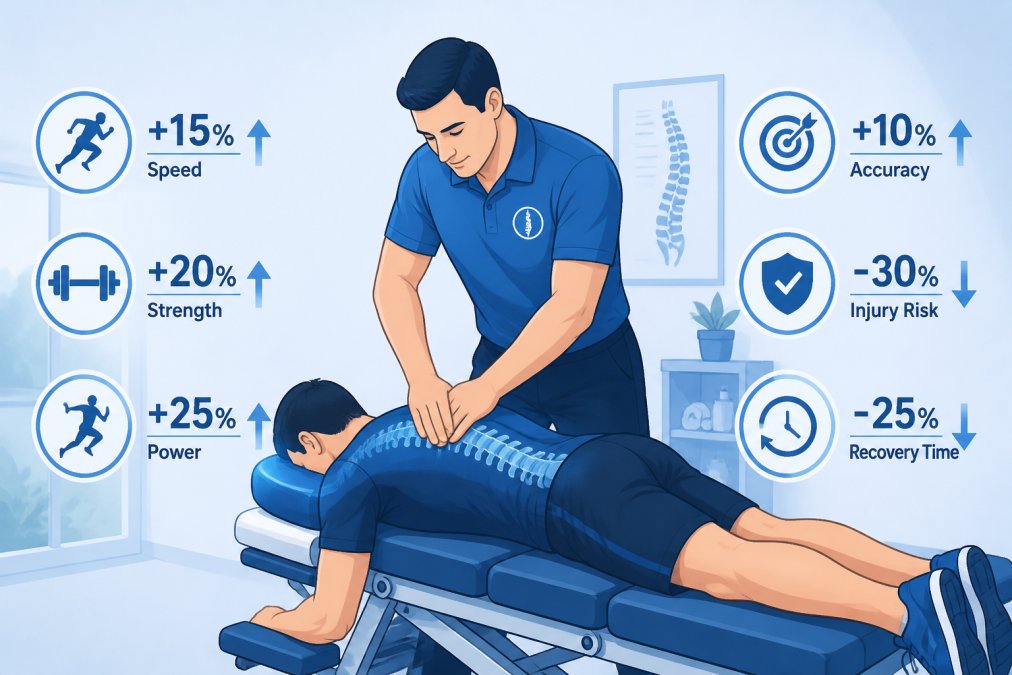
Maintaining good joint function and range of motion is important for all physical activity. Regular evaluations can help identify areas of restricted movement in the spine and extremities. Addressing general joint mobility and muscle tension, alongside soft tissue therapy where appropriate, can contribute to comfortable movement patterns during training.
When evaluating an athlete, care typically includes assessing both the structure and function of the joints, examining overall posture, evaluating joint mobility across multiple planes of motion, and reviewing general body mechanics. This helps build a picture of how the musculoskeletal system is functioning, providing input for the athlete’s training and recovery routine.
Injury prevention through chiropractic care centers on identifying and correcting biomechanical imbalances before they cause acute injury or chronic strain. Many athletes don't realize they have postural problems or spinal misalignments until pain develops, by which point compensatory movement patterns have already formed.
A sports chiropractor evaluates movement patterns, spinal alignment, and joint mobility to find restrictions and imbalances. Common issues include forward head posture, hip imbalances from repetitive movements, and thoracic spine stiffness forcing excessive stress onto your lower back or neck. These aren't painful yet, but they're setting up injury conditions.
Preventative chiropractic care addresses these issues through regular adjustments, soft tissue therapy, and corrective exercises. Adjustments restore normal joint mechanics and spinal alignment. Soft tissue work reduces muscle tension and trigger points. Corrective exercises retrain your neuromuscular system to move correctly. Together, these reduce injury risk by maintaining optimal biomechanics throughout your training cycle.
Some athletes who receive regular chiropractic care report fewer training-related aches and better recovery between sessions, though individual results vary. Maintaining joint mobility and muscle balance may help the body absorb and distribute physical stress through healthy tissue rather than compensating through areas that are already restricted.
Off-season and early preseason are ideal periods to address accumulated imbalances from the previous season. Regular adjustments during your training cycle maintain alignment and catch new issues early.
How often athletes should get adjusted depends on your sport, training intensity, current injury status, and whether you're in a preventative or rehabilitation phase. A consultation with a sports chiropractor helps establish your specific needs.
Athletes in high-impact sports (football, basketball, soccer, gymnastics) typically benefit from adjustments every 1-2 weeks during competitive season. These sports involve repetitive impact, rapid directional changes, and collision forces creating cumulative spinal stress. More frequent adjustments maintain alignment and prevent small issues from becoming major problems.
Athletes in lower-impact sports (swimming, cycling, running) often respond well to adjustments every 2-3 weeks during training. While repetitive motion creates specific imbalances unique to each sport, impact forces are lower, so spinal stress accumulates more slowly.
During off-season with reduced training, many athletes shift to monthly maintenance adjustments. If recovering from acute injury, your chiropractor may recommend 2-3 times per week initially, decreasing as your condition improves.
Start with a consultation where a sports chiropractor evaluates your movement patterns, training volume, and injury history. They'll recommend a frequency matching your situation, then adjust based on how your body responds.
Physical therapy and chiropractic care both play valuable roles in an athlete's recovery and movement plan, but they focus on different areas. Physical therapy generally emphasizes rehabilitation, strengthening specific muscles, and retraining proper movement patterns. Chiropractic care, by contrast, focuses on assessing joint and spinal function and improving mobility within a comfortable range of motion.
Because these areas of focus are distinct, some athletes find benefit from care that integrates both approaches. An athlete with lower back pain, for example, might work with a physical therapist to strengthen core muscles while also having a chiropractor assess joint mobility as part of the same overall plan.
Ask your healthcare provider whether combining chiropractic care and physical therapy fits your situation.
Integrate chiropractic care into your training plan by viewing it as a core component of athletic development, not an optional add-on pursued only when injured. Successful athletes treat chiropractic maintenance like strength training: a regular practice that supports overall musculoskeletal health.

Schedule an initial evaluation before beginning regular training. A sports chiropractor will assess your spinal alignment, movement patterns, range of motion, and existing imbalances. This baseline identifies your specific vulnerabilities. A baseball pitcher has different risk factors than a distance runner.
Establish a maintenance schedule aligned with your training calendar. During off-season, monthly visits maintain alignment. As you enter preseason, increase frequency to every 2-3 weeks. During competitive season, frequency rises to weekly or twice-weekly adjustments depending on your sport's demands.
Communicate your training plan to your chiropractor. Tell them about your sport, training schedule, recent intensity increases, and movements that feel restricted. This helps them anticipate which areas need attention and provide targeted care.
Combine chiropractic care with physical therapy if you have weak areas or movement restrictions. Include regular soft tissue therapy, massage, or myofascial release as part of your integrated plan. Many chiropractors offer soft tissue therapy directly or can recommend specialists.
Supporting the body during the recovery period between demanding training blocks is an important part of an athlete's overall plan. Immediately after an acute injury, the focus should be on basic rest or icing, following the guidance of a medical provider.
Once acute inflammation has decreased, a chiropractic assessment can help identify restricted joints or areas of tenderness. Gentle adjustments combined with targeted exercises may help restore comfortable movement. If symptoms persist, worsen, or suggest a specific diagnosis, a referral to a physical therapist or sports medicine physician is the appropriate next step.
For strain that develops gradually from repetitive training, an assessment can help identify movement restrictions or joint issues that may be contributing to it. Corrective exercises and regular monitoring can be part of a plan to address the underlying contributors, alongside guidance from your broader training and medical team.
Work with your chiropractor, and your wider care team where relevant, to develop a recovery approach that fits your sport and training schedule.
Before beginning chiropractic care for sports performance, understand what to expect, what questions to ask, and how to evaluate whether a chiropractor is right for your needs.
Find a chiropractor with specific training in sports medicine. A sports chiropractor understands different sports' demands, recognizes sport-specific injury patterns, and knows how to integrate chiropractic care with athletic training. Ask about their experience with your sport and whether they work with other athletes.
During your first visit, expect a thorough evaluation. A quality sports chiropractor will take time understanding your training history, current symptoms, and performance goals. They'll perform orthopedic and neurological tests assessing your spinal alignment, range of motion, muscle strength, and movement patterns. This evaluation should take 30-45 minutes minimum.
Ask your chiropractor to explain their findings clearly. You should understand what they found, why it matters for your performance, and how their treatment plan addresses it. You deserve clarity on your investment.
Understand the recommended treatment frequency and duration before committing. Your chiropractor should explain why they're recommending their specific frequency and give you a realistic timeline for improvement. Be cautious of chiropractors recommending indefinite treatment without clear milestones.
Ask about their approach to corrective exercises. The best chiropractic care includes exercises you perform at home to reinforce adjustments and address underlying imbalances.
Discuss how they handle acute injuries versus preventative care. Your needs may shift from preventative maintenance to injury management during your athletic season.
Check whether your insurance covers chiropractic care. Coverage varies by plan and provider. Understanding your coverage prevents unexpected out-of-pocket costs.
Be honest about any previous injuries or conditions. Your chiropractor needs complete medical history to provide safe, effective care.
Chiropractic care for sports performance works best as a proactive part of an athlete's overall training and injury-prevention plan, alongside coaching, strength training, and other healthcare providers, rather than only a response to pain. Start with a comprehensive evaluation to identify your specific needs and establish a maintenance schedule matching your training calendar. Schedule a consultation with Dr. McNally at Chiropractic Care Clinic in Montgomery to discuss how an evaluation might fit into your training routine.
Chiropractic care is not a performance-enhancement treatment. The goal is to support the overall function and comfort of the musculoskeletal system as part of an athlete's broader care plan. Any improvements an athlete experiences in movement or comfort vary by individual and depend on their specific needs and overall training program.
Maintenance frequency depends on your sport, training intensity, and current condition. Competitive athletes typically benefit from adjustments every 1-2 weeks during active training seasons, while recreational athletes may need monthly visits. Your chiropractor will recommend a schedule based on your specific athletic demands and recovery needs.
Chiropractic care focuses on spinal alignment, joint mobility, and nervous system regulation to optimize movement and prevent injury. Physical therapy emphasizes therapeutic exercises and functional movement patterns to rebuild strength and correct imbalances. Many athletes benefit from both: chiropractic adjustments restore proper alignment and mobility, while physical therapy strengthens the muscles that support that alignment.
Regular musculoskeletal assessments can help some athletes maintain general mobility and address minor joint restrictions before they become bigger problems. By periodically evaluating posture and joint mechanics, a chiropractor can help identify areas that may benefit from attention, as one part of an athlete's overall injury-prevention approach. Results vary by individual.


