

Tennis Elbow Pain? What a Chiropractic Exam Checks First
Outer or inner elbow pain in Montgomery? Learn what a chiropractic exam checks first to tell tennis elbow, golfer's elbow, and referred pain apart today.
Read More →
Last Updated: October 12, 2026
A cervicogenic headache is a type of headache that originates from problems in the neck, particularly the cervical spine and surrounding structures, and cervicogenic headaches chiropractic care addresses these neck-related issues. Unlike migraines or tension headaches that start in the brain, cervicogenic headaches stem from restricted neck-joint motion, muscle tension, or nerve irritation in the upper back and neck region. (Source: the National Institute of Neurological Disorders and Stroke)
The connection between neck problems and headache pain is direct.
Cervicogenic headaches typically start on one side of the head and may feel like a dull, aching pain. They often worsen with certain neck movements or prolonged postures.
The key difference between cervicogenic headaches and other types is location and trigger. A tension-type headache may feel similar, but it usually stems from stress or muscle tightness across the entire head.
Recognizing cervicogenic headache symptoms helps you determine whether cervicogenic headaches chiropractic treatment might help. These headaches have distinct patterns that set them apart from other types.
Common symptoms include:
The headache frequency and duration vary widely. Some people experience constant low-level pain, while others have episodes that last hours or days.
A key feature is that the pain typically stays on one side (CERVICOGENIC HEADACHES: AN EVIDENCE-LED APPROACH TO CLINICAL MANAGEMENT). This pattern distinguishes it from the bilateral pressure of tension headaches.
Many patients report that their headache improves when they rest the neck or change position.
Accurate diagnosis is the foundation of effective treatment. A proper chiropractic assessment identifies whether your headache truly stems from the neck or if another condition is responsible.
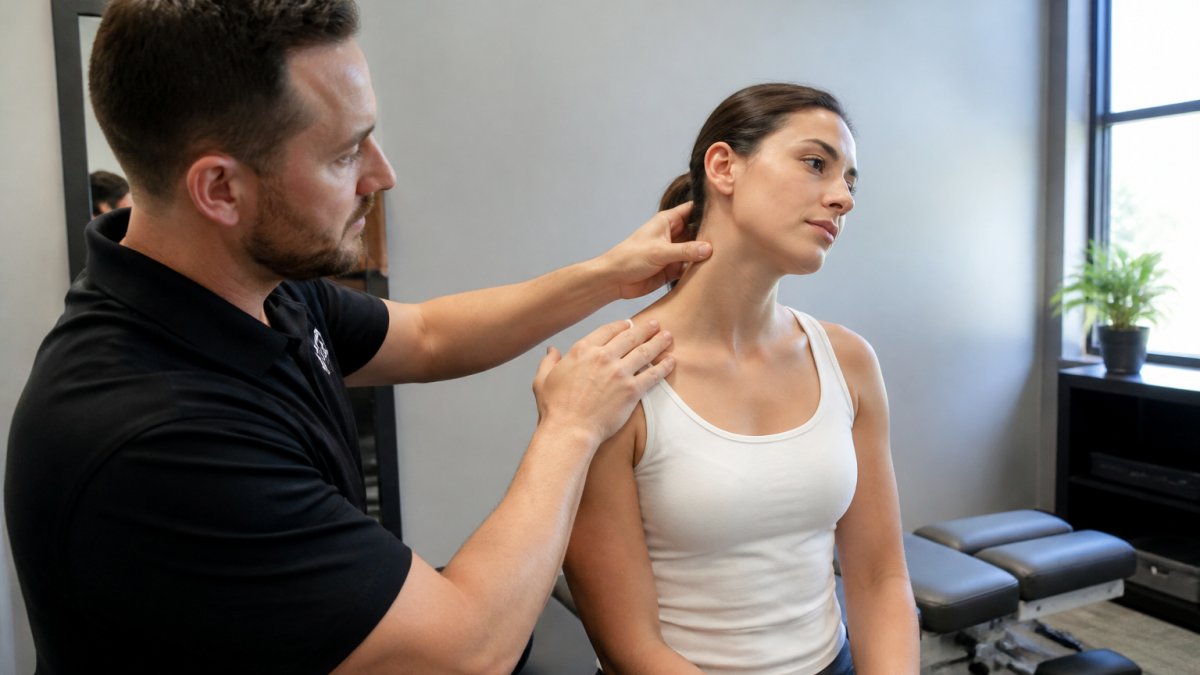
The assessment begins with a detailed history. Your chiropractor will ask when the headaches started, what makes them better or worse, and whether any injury or posture change preceded them.
Physical examination comes next. Your chiropractor tests your neck's range of motion by asking you to move your head in different directions. Restricted motion in specific directions suggests joint dysfunction.
Orthopedic and neurological tests help confirm the diagnosis. These may include:
A positive finding on these tests, combined with your symptom pattern, supports the cervicogenic headache diagnosis.
X-rays or MRI imaging isn't always needed. Many cervicogenic headaches respond well to treatment based on clinical findings alone. However, imaging may be recommended if:
Imaging helps rule out serious pathology and can reveal structural changes like arthritis, disc problems, or misalignment that contribute to restricted motion and pain. Your chiropractor will determine whether imaging is appropriate for your specific situation.
Treatment focuses on restoring normal joint mobility, reducing muscle tension, and eliminating the pain cycle. Multiple approaches often work better than a single technique.
Spinal manipulation involves applying controlled force to restricted joints in the cervical spine. This technique aims to restore joint mobility and reduce nerve irritation. When done correctly, manipulation can provide rapid pain relief and improve range of motion.
The procedure is typically performed with you lying face-down or sitting. Your chiropractor uses precise hand techniques to move the joint through its normal range.
Manipulation works best when combined with other therapies. It addresses the joint component but doesn't solve muscle tension or posture problems that contributed to the problem initially.
Manual therapy targeting muscles and soft tissues complements spinal manipulation. Techniques include:
These approaches reduce muscle tension that restricts neck motion and contributes to pain. They also improve blood flow and promote healing in irritated tissues.
Conservative care also includes:
The combination of these approaches addresses multiple contributing factors rather than treating only the headache symptom.
What you do between appointments matters as much as in-office treatment. Exercises and home care strategies prevent symptoms from returning and build long-term improvement.
Neck mobility exercises restore normal range of motion. Simple movements performed regularly help undo the restricted motion that causes pain:
Perform these movements slowly and only to the point of mild stretch, never pain. Repeat each direction 10-15 times, several times daily. Consistency matters more than intensity.
Strengthening exercises stabilize the neck and prevent future problems:
Weak neck and upper back muscles force the cervical spine to work harder, increasing pain and restricting motion. Building strength provides better support and reduces reliance on pain medication or frequent treatment.
Poor posture is often the primary culprit. Forward head posture, common with desk work and phone use, places excessive strain on the cervical spine. Correcting posture prevents headache recurrence.
Practical posture fixes:
Ergonomic changes reduce strain throughout your workday. Small adjustments like raising your monitor or adjusting your chair height can prevent the repetitive stress that triggers cervicogenic headaches.
Sleep position matters too. Side sleeping or back sleeping with proper pillow support is better than stomach sleeping, which forces neck rotation for extended periods.
While chiropractic care is generally safe, understanding potential risks helps you make informed decisions and communicate openly with your chiropractor.
Common mild side effects include temporary soreness, stiffness, or mild headache after treatment. These typically resolve within 24-48 hours and indicate that tissues are responding to treatment.
Rare serious complications associated with neck manipulation include vertebral artery dissection, a tear in the blood vessel that supplies the brain. This complication is extremely uncommon but can cause stroke. Risk factors include:
Your chiropractor screens for these risk factors during the initial assessment. If you have risk factors, alternative treatment approaches that avoid forceful manipulation may be recommended.
Contraindications that rule out manipulation include:
A thorough clinical assessment identifies these conditions before treatment begins.
Seek immediate medical attention if you experience:
These symptoms may indicate a serious condition requiring emergency care rather than chiropractic treatment. Never delay medical evaluation to pursue other therapies when red flags are present.
Age alone doesn't prevent chiropractic care, but seniors may have additional health considerations. Osteoporosis, arthritis, or medication use changes how treatment should be adjusted. Always disclose your complete medical history and current medications to ensure safe, appropriate care.
Understanding what to expect from treatment helps you stay committed and recognize whether the approach is working.
Initial treatment frequency typically involves 2-3 visits per week for the first 2-4 weeks.
Treatment duration varies widely depending on:
Some patients experience significant improvement within 4-6 weeks. Others with chronic, severe cervicogenic headaches may require 8-12 weeks of consistent treatment.
Measuring progress involves tracking:
Keep a simple log of your symptoms. Document when headaches occur, their intensity, and any triggers.
Expect gradual improvement rather than immediate complete relief. Most patients notice reduced pain intensity first, followed by fewer headache episodes.
Chronic cervicogenic headaches affect your quality of life, work productivity, and daily activities. Identifying the specific joint and muscle problems causing headaches, then developing a personalized treatment plan combining spinal manipulation, manual therapy, exercises, and posture correction, can be beneficial.
Cervicogenic headaches typically originate in the neck and radiate toward the back of the head, often on one side. Pain is triggered or worsens with neck movement or sustained postures. Unlike tension-type headaches, cervicogenic headaches involve restricted neck-joint motion and muscle tension in the upper back and neck. A clinical assessment by a qualified professional, including range-of-motion testing and palpation, helps confirm the diagnosis by reproducing or relieving symptoms through neck manipulation.
Spinal manipulative therapy is generally considered safe for most people with cervicogenic headaches when performed by a qualified chiropractor. However, safety depends on proper assessment to rule out contraindications such as severe osteoporosis, certain neurological conditions, or recent neck trauma. A thorough clinical evaluation before treatment identifies red flags. Mild soreness or temporary symptom increase can occur after adjustment. Anyone with severe or worsening symptoms should seek urgent medical evaluation to rule out serious underlying conditions.
Treatment response varies based on headache duration, severity, and individual factors. Some patients report short-term relief within the first few visits, while others require several weeks of consistent treatment to see measurable improvement. A typical treatment plan may involve 2 to 3 visits per week initially, tapering as symptoms improve. Progress is tracked through headache frequency, duration, and intensity. Your chiropractor should establish clear benchmarks and adjust the plan if you do not see improvement within 4 to 6 weeks of consistent care.
Home care is essential for sustained improvement. Apply heat or ice to reduce muscle tension and inflammation. Perform gentle neck-mobility exercises as recommended by your chiropractor, avoiding movements that trigger pain. Maintain proper posture, especially if you work at a desk, keep your screen at eye level and take frequent breaks. Avoid prolonged static positions that restrict motion. Over-the-counter pain relief may provide short-term relief, but the goal is addressing the underlying neck dysfunction. Your chiropractor may provide specific stretches or strengthening exercises tailored to your condition.


