

Tennis Elbow Pain? What a Chiropractic Exam Checks First
Outer or inner elbow pain in Montgomery? Learn what a chiropractic exam checks first to tell tennis elbow, golfer's elbow, and referred pain apart today.
Read More →
Last Updated: September 1, 2026
Daily stretches can help reduce the risk of chronic back pain by addressing common contributors: poor posture, muscle tension, and limited mobility. Tight muscles restrict range of motion, which can lead to compensatory movement patterns that place added strain on the spine over time. Regular stretching supports flexibility and helps reduce muscle tension.
Consistent daily stretching, just 10-15 minutes, can form part of a routine that supports back health. The key is consistency: one-time sessions provide only temporary relief, while a daily practice supports more lasting adaptations in muscle tissue over time.
Perform these stretches daily in the order listed, holding each for the duration specified in the "How Long to Hold Stretches" section below.
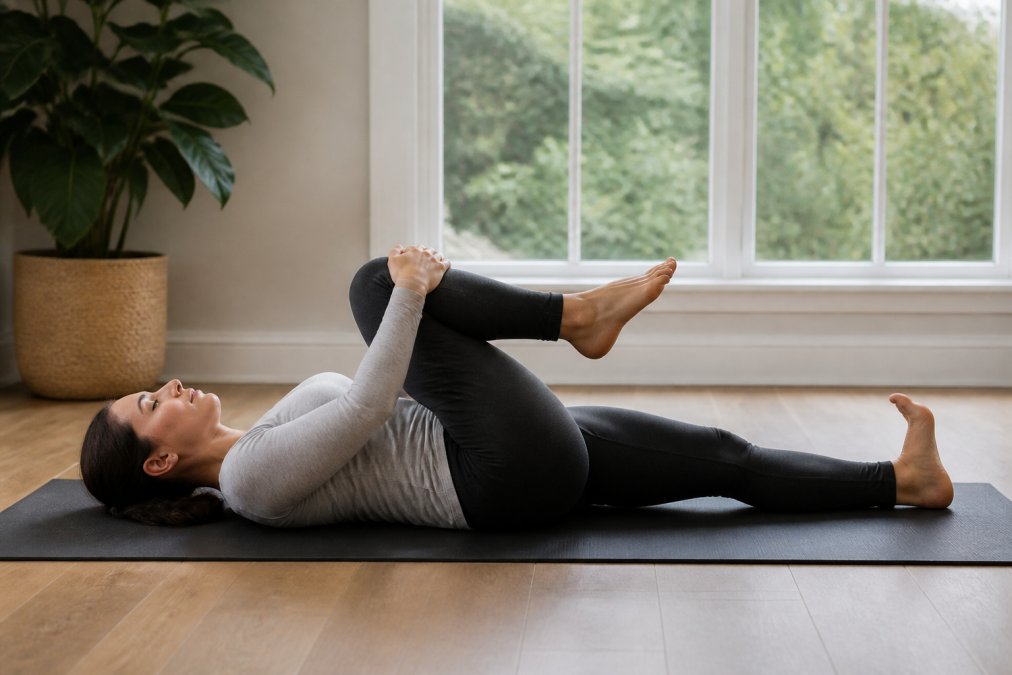
The knee-to-chest stretch decompresses your lumbar spine and releases lower back tension.
How to perform:
This stretch releases tension in the iliopsoas and rectus femoris muscles, which connect your thigh to your pelvis and lumbar spine. When these tighten, they pull your pelvis forward and exaggerate lower back curve, contributing to chronic pain.
Child's pose gently stretches your entire back, shoulders, and hips while promoting relaxation.
How to perform:
Child's pose decompresses your entire vertebral column and reduces disc pressure. It stretches your latissimus dorsi and erector spinae muscles that run along your spine.
The cat-cow stretch mobilizes your entire spine through gentle flexion and extension, improving range of motion.
How to perform:
This dynamic stretch teaches your spine mobility in both directions and helps identify areas of restriction or discomfort.
The pelvic tilt strengthens your core while teaching proper pelvic alignment, essential for maintaining good posture and supporting your lumbar spine.
How to perform:
The pelvic tilt strengthens your transverse abdominis and rectus abdominis muscles, which stabilize your spine and prevent excessive lumbar movement.
The supine bridge strengthens your glutes, hamstrings, and lower back while improving core stability, critical for counteracting prolonged sitting.
How to perform:
Weak glutes force your lower back muscles to work harder during movement. Strengthening them through the bridge redistributes workload and reduces lumbar strain.
Caution: This stretch involves hip rotation. If you have a diagnosed disc condition, recent injury, osteoporosis, or numbness or tingling in your legs, check with your healthcare provider before continuing. See "When to See a Doctor for Back Pain" below.
The piriformis stretch targets a deep buttock muscle that, when tight, can compress the sciatic nerve and cause radiating leg pain.
How to perform:
Regular piriformis stretching may help reduce sciatic nerve compression and support healthy nerve function.
Caution: This stretch involves spinal rotation. If you have a diagnosed disc condition, recent injury, osteoporosis, or numbness or tingling in your legs, check with your healthcare provider before continuing.
The seated spinal twist improves rotational mobility and stretches muscles along your spine and torso.
How to perform:
This stretch may help restore rotational range of motion affected by aging or prolonged sitting.
Stretch duration can influence whether you experience lasting flexibility improvements or just temporary relief. For static stretches like knee-to-chest, child's pose, piriformis stretch, and seated spinal twist, hold each for 20-30 seconds on your first repetition. Perform 2-3 repetitions per stretch, holding 15-20 seconds on subsequent repetitions.
Dynamic stretches like cat-cow require continuous movement for 60-90 seconds per round, performing 2-3 rounds total. Strengthening exercises like pelvic tilt and supine bridge should be performed for 15-20 repetitions per set with 2-3 sets total, holding the peak contraction for 2-3 seconds.
Your complete daily routine should take approximately 10-15 minutes. Consistency matters more than duration, because consistent shorter daily sessions may support more effective muscle adaptation than infrequent longer sessions.

Never bounce while stretching. Bouncing activates your stretch reflex, causing muscles to contract protectively rather than relax. Instead, move slowly into each stretch and hold statically at a comfortable intensity.
Avoid stretching through sharp pain. Mild discomfort is normal, but sharp pain indicates you've gone too far. Back off slightly until you feel a gentle stretch without pain. Pushing through sharp pain can injure muscle fibers or strain your spine.
Warm up before stretching with 5-10 minutes of light movement like walking. This increases blood flow and prepares muscles for stretching. Maintain proper alignment throughout each stretch, for example, keep your lower back pressed into the floor during knee-to-chest stretches rather than allowing your hips to rotate.
During acute back pain flare-ups, focus on gentle child's pose and mild knee-to-chest stretches rather than your full routine. Be cautious with twisting movements if you have disc problems, and check with your healthcare provider before performing seated spinal twists or aggressive cat-cow movements.
Breathe continuously throughout your stretches. Holding your breath increases tension and reduces stretching effectiveness. Breathe slowly and deeply, allowing each exhale to deepen your stretch slightly.
Deliberate breathing amplifies stretching's relaxation benefits and helps your nervous system recognize safety, allowing deeper muscle release. Use diaphragmatic breathing: inhale slowly through your nose for a count of 4, allowing your belly to expand. Hold briefly, then exhale through your mouth for a count of 6. This extended exhale activates your vagus nerve and triggers your parasympathetic nervous system, reducing muscle tension.
Synchronize breathing with dynamic stretches, inhale during cow position and exhale during cat position. After completing your routine, spend 2-3 minutes in child's pose, focusing on deep breathing. This cool-down allows your nervous system to transition to rest mode.
Hydrate within 30 minutes of completing your routine to support muscle recovery. Ensure adequate sleep (7-9 hours nightly), which supports the body's recovery and adaptation processes.
While daily stretching can help support back health for many people, certain warning signs indicate you need professional evaluation. Seek medical attention if your back pain is accompanied by numbness or tingling in your legs or feet, suggesting nerve compression. Bowel or bladder dysfunction alongside back pain requires immediate attention, as these symptoms suggest cauda equina syndrome.
Severe pain that doesn't improve with stretching, rest, and over-the-counter pain management within 2-3 weeks warrants professional evaluation. Fever accompanying back pain suggests infection requiring medical attention. Unexplained weight loss with back pain can indicate systemic illness or malignancy. A history of cancer with new or worsening back pain requires immediate evaluation. Recent trauma or significant falls preceding your back pain indicate potential fracture or serious injury.
Professional evaluation helps identify underlying issues that stretching alone cannot address.
Consistency determines whether daily stretches become a lasting habit or fade within weeks. Choose a specific time each day for stretching and treat it like a non-negotiable appointment. Morning stretching energizes your body and improves posture throughout the day; evening stretching reduces accumulated tension and promotes better sleep.
Start with a shorter 5-7 minute routine for the first week, then gradually add stretches as the routine becomes habitual. Track your progress by noting which stretches you performed and any changes in pain, stiffness, or mobility.
Adapt your routine based on daily activities and how you're feeling. On particularly stiff days, extend your routine; on busy days, perform an abbreviated 5-minute version rather than skipping entirely. Designate a specific stretching space with a yoga mat and minimal distractions. Some find soft music or guided videos enhance their routine; others prefer silence.
Tell family members about your commitment or find a stretching partner for accountability. Recognize that daily stretches represent an investment in long-term spinal health, 10-15 minutes daily is a small investment that may help support long-term spinal health.
Daily stretches can help support back health by addressing muscle tightness and promoting spinal mobility. The stretches outlined here address major muscle groups supporting your lumbar spine. Consistency matters more than intensity; consistent shorter daily sessions may support more effective results than occasional longer sessions. If pain persists despite consistent stretching, worsens, or is accompanied by concerning symptoms like numbness or nerve pain, professional evaluation is essential. At chiropracticcare.clinic, we support your spinal health through personalized, conservative care when stretching and self-care need professional support.
A: Daily stretching can help reduce muscle tension, improve flexibility, and support spinal health when done consistently and correctly. Gentle, controlled stretches increase range of motion in the lumbar spine and surrounding muscles, which may reduce pain caused by stiffness and poor posture. However, results depend on proper technique, appropriate hold duration, and addressing underlying causes. Consult a healthcare professional to determine if daily stretching is suitable for your specific condition.
A: Most effective stretches are held for 20-30 seconds per repetition, typically performed 2-3 times. This duration allows muscles to relax and lengthen without triggering protective tension. For flexibility improvement, aim for 3-5 repetitions of each stretch. Avoid bouncing or forcing stretches beyond mild tension. Consistency matters more than duration, regular daily stretching produces better results than occasional longer sessions.
A: Seek medical attention if back pain persists beyond 4-6 weeks, worsens despite stretching, includes numbness or tingling in the legs, follows an injury, or significantly limits daily activities. Severe pain, loss of bladder or bowel control, unexplained weight loss, or fever warrant immediate evaluation. A healthcare provider can diagnose underlying conditions, rule out serious pathology, and recommend appropriate treatment including physical therapy or chiropractic care.
A: Modified stretches work well for limited mobility. Seated stretches like the seated spinal twist eliminate balance concerns. Supine (lying down) stretches such as the knee-to-chest provide support and reduce strain on the lumbar spine. Chair-based stretches allow you to control range of motion precisely. Start with gentle movement and gradually increase range as flexibility improves. Always avoid forcing stretches into pain, mild tension is the goal.


