

Tennis Elbow Pain? What a Chiropractic Exam Checks First
Outer or inner elbow pain in Montgomery? Learn what a chiropractic exam checks first to tell tennis elbow, golfer's elbow, and referred pain apart today.
Read More →
Last Updated: August 29, 2026
How you sleep directly affects your spine's health. During sleep, your vertebrae need support to maintain neutral alignment, a position where your head, shoulders, and hips form a straight line. When your spine stays neutral, muscles and ligaments relax, reducing inflammation and allowing tissue repair. Poor alignment forces muscles to work overtime, perpetuating chronic lower back pain.
Your mattress, pillows, and sleeping position work together as an integrated system. A worn mattress that sags can't support neutral alignment, and a pillow that's too high or low tilts your cervical spine, sending stress down your entire spinal column. Your body's pressure points, shoulders, hips, and heels, concentrate where you contact the bed. If your mattress can't distribute weight evenly, pressure builds unevenly, forcing your spine to compensate by curving or rotating, which aggravates lower back pain.
Not all sleeping positions are equal for supporting chronic lower back pain. Your goal is to find a position that keeps your spine in neutral alignment while allowing muscles to fully relax. Three positions work well; others should be avoided entirely.
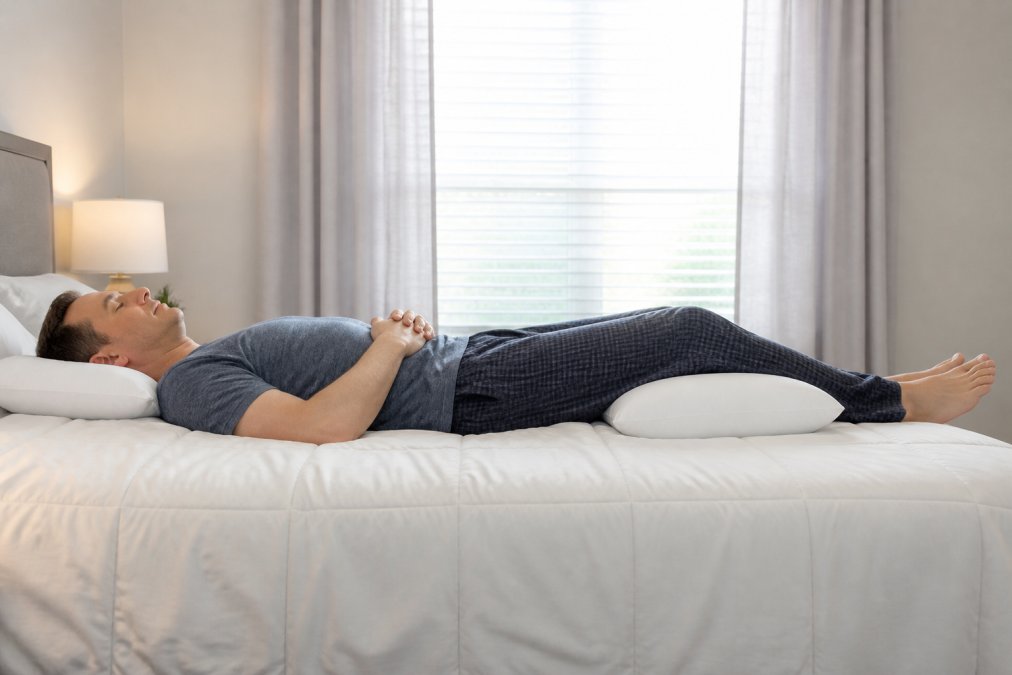
Sleeping on your back distributes weight evenly across your entire body, allowing your spine to maintain its natural curves without twisting. Place one pillow under your head to support your cervical spine at a neutral angle, with your chin slightly tucked. The critical step is placing a second pillow under both knees.
This knee pillow is essential. When your knees are slightly elevated, your pelvic tilt changes, reducing tension in your lumbar spine and relaxing your hip flexors. The pillow should be firm enough to maintain its shape but not so rigid it creates a hard edge. If you're accustomed to other positions, start by spending 20-30 minutes in this position before bed. Over two to three weeks, your muscles will adapt, and the position will feel natural.
Side-sleeping can work for chronic lower back pain with proper pillow placement. Your head pillow should fill the space between your shoulder and ear, keeping your cervical spine aligned with your thoracic spine. Your shoulder should rest on the mattress itself, not the pillow.
Place a pillow between your knees to prevent your top leg from pulling your pelvis out of alignment. Without this pillow, your top leg drops toward the bed, rotating your pelvis and creating a sideways curve in your lumbar spine. Side-sleeping is particularly helpful if you have pain radiating down one leg or if one side of your lower back is more painful.
Stomach-sleeping is the worst position for chronic lower back pain. Your spine rotates and arches excessively, your head must turn to one side, and your hip flexors shorten, pulling your pelvis forward and increasing the curve in your lower back. The fetal position also creates problems by compressing your lower back and closing the space between vertebrae. Avoid any position where your spine twists or your pelvis rotates out of alignment.
Your mattress is the foundation of your sleep setup. A poor mattress undermines even the best sleeping position, while a good mattress amplifies the benefits of proper positioning.
The ideal firmness level is medium-firm, typically rating between 6 and 7 on a 1-to-10 scale. At this level, your heavier areas (shoulders and hips) sink slightly for pressure relief, while lighter areas (lower back and legs) stay supported. Excessive firmness creates pressure points rather than alleviating them.
Material matters. Memory foam conforms closely for pressure distribution but can trap heat. Innerspring mattresses offer more support and airflow but can create pressure points. Hybrid mattresses combine benefits of both. Latex is naturally responsive, durable, and cooler than memory foam. Your body weight influences the best choice: lighter individuals (under 150 pounds) may find softer medium-firm mattresses work better, while heavier individuals (over 200 pounds) often benefit from firmer medium-firm mattresses.
Test a mattress by lying on it in your typical sleeping position for at least 10-15 minutes. Pay attention to whether your lower back feels supported or if there's a gap between your lower back and the mattress surface. Edge support matters more than many realize, poor edge support will sag, pulling your spine out of alignment.
Most quality mattresses last 7-10 years before materials break down and lose support. If your mattress is older than 8 years, it's likely contributing to your chronic lower back pain.
Gentle stretching before bed reduces tension that accumulates during the day. Perform these stretches slowly and gently, this is not the time for aggressive stretching. The goal is to lengthen muscles and reduce muscle guarding.
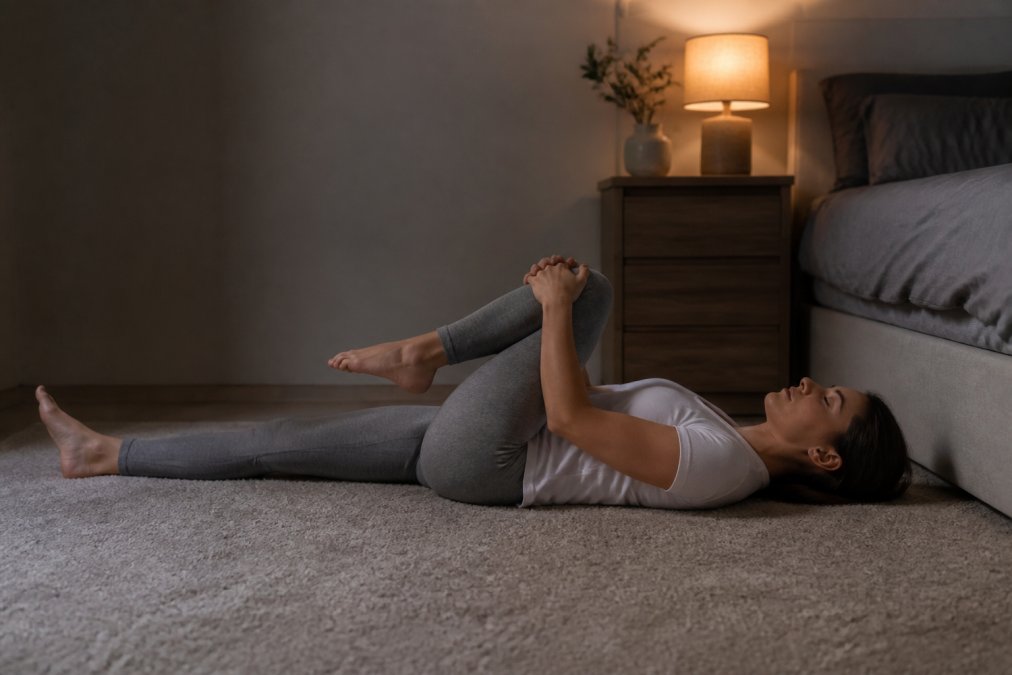
Begin your routine 20-30 minutes before bed.
Knee-to-chest stretch: Lie on your back. Bend one knee and gently pull it toward your chest. Hold for 20-30 seconds, then repeat with the other leg. Perform 2-3 repetitions per side.
Supine twist: Bend both knees and gently lower them to one side while keeping your shoulders flat. Hold for 20-30 seconds, then repeat on the other side.
Hip flexor stretch: Kneel on one knee with the other foot forward in a low lunge. Gently press your hips forward until you feel a stretch in the front of your hip. Hold for 20-30 seconds per side.
Cat-cow stretch: On hands and knees, slowly arch your back while lifting your gaze (cow), then round your spine while tucking your chin (cat). Move slowly between positions for 1-2 minutes.
Perform this routine every night. Consistency matters more than intensity. Over 2-3 weeks, your muscles will relax more quickly and sleep quality will improve.
Keep your bedroom temperature between 60-67 degrees Fahrenheit. A cooler room promotes deeper sleep stages where tissue repair happens most actively. Eliminate light sources using blackout curtains or a sleep mask. Avoid screens 30-60 minutes before bed, as blue light suppresses melatonin and activates your nervous system.
Avoid alcohol and caffeine in the evening. Alcohol disrupts sleep architecture, and caffeine remains in your system for 5-6 hours. Create a consistent sleep schedule by going to bed and waking at the same time every day, which trains your body to expect sleep at those times.
Seek immediate medical attention if you experience sudden severe pain accompanied by numbness, tingling, or weakness in your legs, particularly if it affects your ability to control your bowel or bladder.
Contact a healthcare provider if your chronic lower back pain persists despite consistent efforts to improve your sleep setup, perform stretches, and maintain good sleep hygiene for 4-6 weeks. See a doctor if your pain radiates down your leg below the knee, if you have unexplained weight loss accompanying your pain, or if your pain worsens progressively despite conservative treatment.
If you have a history of osteoporosis, cancer, or are taking corticosteroids, seek professional evaluation for any new or worsening back pain. Professional evaluation can determine whether your pain stems from mechanical issues, nerve compression, inflammatory conditions, or other causes.
Strategic use of additional pillows and accessories can significantly improve your spinal alignment during sleep.
For supine sleepers, a pillow under your knees is essential. Consider adding a small rolled towel under your neck if your main pillow doesn't adequately support your cervical curve. For side sleepers, the pillow between your knees should extend from your hip to your knee. Body pillows help side sleepers maintain position throughout the night, preventing you from rolling onto your back or stomach.
Wedge pillows can help some people with chronic lower back pain, particularly if you also experience acid reflux or breathing difficulties. Mattress toppers can modify the feel of an existing mattress without replacing it entirely, a memory foam topper adds conformity to a mattress that's too firm, while a firmer topper adds support to one that's too soft.
Your bedroom environment influences both sleep quality and pain perception. Darkness is critical, even dim light reduces melatonin production and worsens sleep quality. Use blackout curtains, remove electronic displays, and consider a sleep mask.
Noise disruption fragments sleep. Use earplugs or white noise machines to mask disruptive sounds. Mattress firmness and condition matter more than price. An affordable medium-firm mattress in good condition outperforms an expensive mattress that's broken down.
Bedding materials affect temperature regulation. Cotton sheets breathe better than synthetic materials. Avoid heavy blankets that trap excessive heat. Pillow quality directly affects spinal alignment, invest in a pillow that maintains its shape throughout the night. Ensure your mattress sits on a firm, supportive surface, as a sagging bed frame will undermine even an excellent mattress.
How to sleep with chronic lower back pain requires attention to three interconnected factors: your sleeping position, your mattress, and your pre-sleep routine. The supine position with knee support works best for most people, though side-sleeping with proper pillow placement is an effective alternative. Your mattress must be medium-firm to support neutral spinal alignment without creating pressure points. Gentle stretching and consistent sleep hygiene practices prepare your body for restorative sleep where healing occurs.
If your chronic lower back pain persists despite these efforts, professional evaluation can identify underlying issues and guide more targeted treatment. Start with the positioning and stretching recommendations outlined here; consistency over weeks produces measurable results. If pain continues, schedule a consultation to explore whether additional intervention would benefit your specific situation.
Sleeping on your back with a pillow under your knees is often the most effective position for chronic lower back pain. This position maintains neutral spine alignment and reduces pressure on the lumbar spine. Sleeping on your side with a pillow between your knees is the second-best option. Both positions support spinal alignment better than sleeping on your stomach, which can strain the cervical spine and create muscle tension.
Mattress firmness significantly impacts sleep quality and pain management. A medium-firm mattress typically provides the best balance of support and comfort for chronic lower back pain, as it maintains spinal alignment while allowing pressure point relief at the hips and shoulders. Very soft mattresses can cause your spine to sag, increasing vertebrae stress, while overly firm mattresses may create pressure points. The best mattress for lower back pain depends on your body weight and sleeping position.
Yes. Stretches for lower back pain before bed can help reduce nocturnal pain and improve sleep quality. Gentle stretching routines 15-30 minutes before sleep promote muscle relaxation and pelvic tilt correction. Focus on low-intensity stretches like knee-to-chest holds and hamstring stretches rather than intense flexibility work. This pre-sleep routine supports sleep architecture and helps transition your body into a restorative state.
Contact a healthcare provider when to see a doctor for chronic back pain if pain persists beyond six weeks, worsens despite conservative treatment, or is accompanied by numbness, tingling, or loss of bowel/bladder control. Seek immediate care if pain follows a fall or accident. A qualified professional can rule out underlying conditions and recommend appropriate treatment options, including physical therapy, chiropractic care, or other interventions.


