

Yoga Poses to Avoid With Chronic Back Pain
Yoga poses to avoid with chronic back pain: Learn which yoga poses aggravate chronic back pain, why they're risky, and safe modifications to keep.
Read More →
Last Updated: August 26, 2026
Mobility is independence. When seniors lose it, everything else follows: the ability to live alone, to visit friends, to do meaningful work. Yet many assume stiffness, pain, and reduced range of motion are simply the price of aging. They aren't. Chiropractic care for seniors mobility addresses the mechanical foundation of movement, spinal alignment, joint flexibility, and neuromuscular function, in ways that can meaningfully restore what seems lost.
Over decades, the spine and joints undergo predictable changes: vertebral subluxation (misalignment), degenerative changes in cartilage, loss of spinal disc height, and chronic soft tissue tension. A senior who moves less because of pain loses muscle mass. Reduced muscle mass means less spinal support. Less support means more pain. The cycle accelerates unless something breaks it.
Chiropractic care targets the mechanical root: restoring spinal alignment, improving joint mobility, and rebuilding functional independence. Many seniors experience meaningful improvements in their ability to move, bend, and perform daily activities through conservative, non-surgical care.
At chiropracticcare.clinic, we recognize that seniors face unique challenges. Their bones are more fragile. Their medical histories are complex. Their goals are specific: not athletic performance, but the ability to get out of bed without pain, to walk without limitation, to maintain the independence they've built over a lifetime. This guide covers what you need to know about chiropractic care for seniors mobility, how it works, what to expect, how to evaluate safety, and how to integrate it with other care.
Understanding what's actually happening to your spine and joints as you age helps explain why movement becomes difficult and why targeted care can help restore it.
Vertebral subluxation refers to misalignment of the vertebrae. Over decades, poor posture, repetitive strain, and previous injuries accumulate. The vertebrae shift slightly out of their normal position, restricting spinal mobility and potentially compressing nerves, leading to pain, numbness, or weakness.
Age-related degeneration is the natural breakdown of cartilage and disc material in the spine. Discs lose water content and height. Cartilage becomes rough and thin. Bone spurs develop as the body tries to stabilize unstable joints. This process, called spondylosis or osteoarthritis of the spine, isn't reversible, but its effects on mobility and pain can be managed effectively.
Reduced spinal flexibility emerges as ligaments and tendons lose elasticity and supporting muscles weaken. A senior who could touch their toes at 40 may struggle to bend forward at 70. This combination of structural changes, soft tissue tension, and reduced neuromuscular coordination makes everyday tasks harder: putting on shoes, looking over your shoulder while driving, reaching for items on shelves.
Chronic soft tissue tension develops in muscles, tendons, and fascia around the spine and joints. Poor posture, repetitive movements, and protective guarding all contribute. Over time, these tissues become chronically tight, blood flow decreases, and metabolic waste accumulates.
Joint stiffness affects the spine, hips, knees, shoulders, and neck. Seniors often wake up stiff and take time to "loosen up." This stiffness comes from reduced synovial fluid in joints, changes in cartilage, and the nervous system's protective response to perceived instability.
Many seniors have multiple issues simultaneously. A 72-year-old might have cervical spondylosis, thoracic subluxation, and chronic hip tension, all contributing to limited mobility and pain. Comprehensive chiropractic care for seniors mobility looks at the whole kinetic chain.
Chiropractic care for seniors mobility requires a fundamentally different approach than care for younger patients. Techniques must account for bone fragility, reduced disc height, potential osteoporosis, and other medical conditions. A chiropractor experienced with seniors uses gentler adjustments, modified positioning, and often incorporates soft tissue work alongside spinal manipulation.
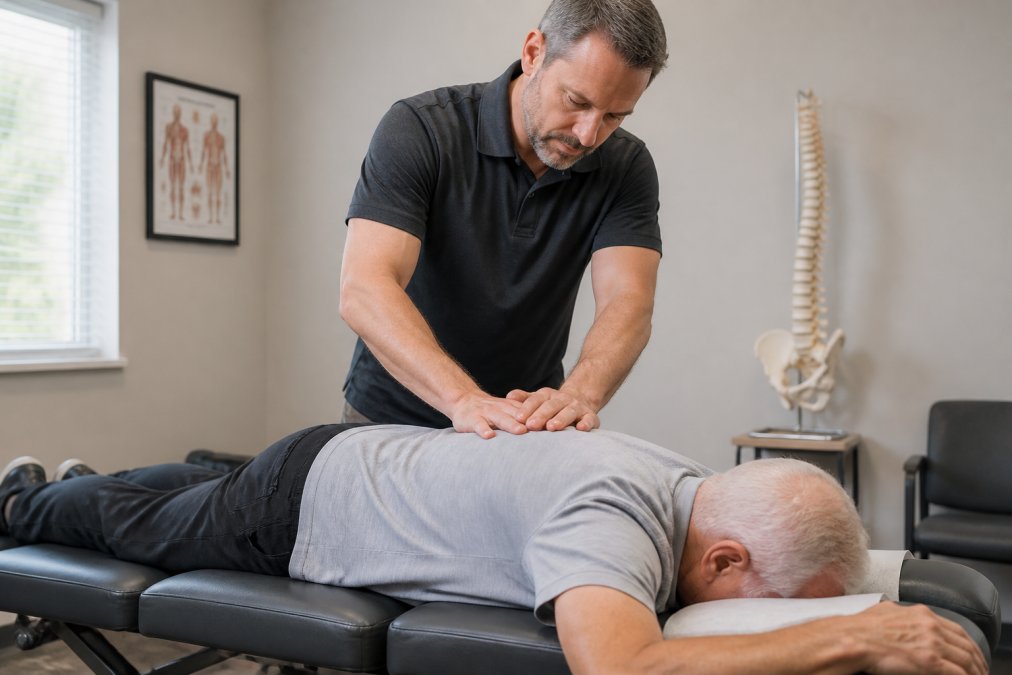
Low-force adjustments are the foundation of senior chiropractic care. Rather than high-velocity, high-amplitude thrusts used on younger patients, gentle adjustments use slower, controlled movements with lighter force. Activator methods (using a handheld instrument to deliver precise, low-force impulses) and drop-table techniques (where sections of the table drop slightly to facilitate movement) are common. These approaches restore spinal alignment without the jarring impact that can be risky for seniors with fragile bones or disc degeneration.
Mobilization techniques differ from manipulation. Instead of a rapid thrust, mobilization involves slow, controlled movement of a joint through its available range. A chiropractor might gently move your neck through flexion, extension, and rotation, taking the joint to the point of resistance, holding, and releasing. This restores mobility without sudden force.
Soft tissue therapy addresses chronic muscle tension and fascial restrictions that accompany aging. Techniques like myofascial release, therapeutic massage, and trigger point therapy work on muscles and connective tissue supporting the spine. This reduces pain, improves blood flow, and prepares the area for spinal adjustment.
Spinal decompression techniques gently stretch the spine to reduce pressure on discs and nerves. A chiropractor might use gentle traction or positioning to decompress the cervical or lumbar spine. This is particularly helpful for seniors with disc-related pain or nerve compression symptoms.
Postural correction and ergonomic adjustment are often overlooked but critical. A chiropractor can assess your posture, identify unnecessary stress on your spine, and teach you how to move differently. Small changes in daily movement patterns can dramatically reduce pain and improve mobility over time.
The choice of technique depends on your specific condition, bone density, medical history, and tolerance. A responsible chiropractor will perform medical screening before treatment and adjust their approach based on your response.
Range of motion, the degree to which a joint can move, is fundamental to independence. Limited range of motion in the neck makes it hard to check your blind spot while driving. Limited range in the lower back makes it difficult to put on socks or pick something up off the floor. Stiffness in the hips affects walking, climbing stairs, and getting in and out of chairs.
Chiropractic adjustments restore mobility by correcting vertebral subluxation and reducing joint restriction. When vertebrae are misaligned, they mechanically limit motion of adjacent segments. An adjustment realigns the vertebra, removing the mechanical block and stimulating mechanoreceptors that signal the nervous system the joint is stable and mobile. This neural feedback reduces protective muscle guarding, allowing further movement.
Stretching and therapeutic exercises complement chiropractic adjustments. A chiropractor will often teach you specific stretches and exercises to maintain and build on mobility gains. These might include gentle neck flexion and extension, thoracic rotation, hip flexor stretches, or hamstring stretches. Consistent, moderate-intensity stretching over weeks and months produces lasting improvements in flexibility.
Active range of motion exercises require you to move the joint yourself, without external assistance. These are safer for seniors and build strength alongside mobility. Examples include shoulder circles, gentle spinal twists, or walking with exaggerated hip motion.
Passive range of motion involves a therapist or chiropractor moving your joint for you. This is useful when active movement is too painful or when you need to understand what full mobility feels like.
Functional movement training teaches you how to move in ways that preserve and build mobility. This might include instruction on proper bending mechanics, how to safely lift objects, how to get in and out of a car, or how to climb stairs without stressing your spine.
Improvement typically takes time. Mobility lost over decades doesn't return in weeks. However, many seniors report noticeable improvements in range of motion within 4-6 weeks of consistent chiropractic care combined with home exercises.
Medicare coverage for chiropractic care is limited compared to other healthcare services. Understanding what is and isn't covered is essential for planning treatment and managing out-of-pocket costs.
Medicare Part B covers chiropractic services, but only for spinal manipulation. Specifically, Medicare covers spinal manipulation for the treatment of subluxation of the spine. Medicare does not cover other chiropractic services like soft tissue therapy, postural assessment, ergonomic training, or therapeutic exercises.
Coverage requires that a medical doctor or other qualified healthcare provider has documented the subluxation through examination or imaging. Additionally, the manipulation must be medically necessary for your condition.
Medicare Part B chiropractic coverage is based on documented medical necessity; confirm current visit-frequency guidance and your specific copay percentage with Medicare or your chiropractor's billing office.
Not all chiropractors accept Medicare. When seeking chiropractic care as a Medicare beneficiary, confirm that the chiropractor accepts Medicare and understands the coverage limitations.
Supplemental insurance (Medigap) may cover some costs that Medicare doesn't, depending on your specific plan. Medicare Advantage plans (Part C) sometimes offer additional chiropractic coverage beyond what Original Medicare provides. Coverage varies by plan, so check your specific plan's benefits.
Services not covered by Medicare, such as soft tissue therapy, postural correction, and therapeutic exercises, are billed separately. Ask your chiropractor's office for current fee information.
The key takeaway: Medicare covers spinal manipulation for documented subluxation when medically necessary; coverage is not based on a fixed number of visits per year, so confirm current visit-frequency guidance and your specific copay percentage with Medicare or your chiropractor's billing office. Other chiropractic services are not covered. Plan accordingly and confirm coverage with your chiropractor before beginning treatment.
Chiropractic care for seniors mobility is generally safe when performed by a qualified, experienced chiropractor who performs thorough medical screening. However, certain conditions require special precautions or may contraindicate chiropractic treatment entirely.
Medical screening before treatment is non-negotiable. A responsible chiropractor will ask detailed questions about your medical history, current medications, previous surgeries, and any imaging you've had. They'll perform orthopedic and neurological tests to assess your condition. This screening identifies potential contraindications and informs the choice of technique.
Osteoporosis causes bones to become brittle and fracture-prone. High-force adjustments can potentially cause fractures in people with severe osteoporosis. However, this doesn't mean chiropractic care is contraindicated; it means the chiropractor must use gentler techniques. Bone density testing (DEXA scan) before treatment helps clarify the risk level.
Spinal fusion or other spinal surgery changes spinal biomechanics. Segments above and below a fusion experience increased stress. A chiropractor experienced with post-surgical patients will understand these considerations and modify their approach accordingly.
Severe degenerative disc disease with significant loss of disc height or bone spurs may contraindicate certain techniques. However, gentle mobilization and soft tissue therapy are often helpful and safe.
Anticoagulation therapy (blood thinners like warfarin or newer anticoagulants) increases bleeding risk. A chiropractor aware of your anticoagulation therapy will modify their approach accordingly.
Vertebral artery dissection is a rare but serious condition where the artery supplying blood to the brain tears. Careful screening and gentle techniques reduce any theoretical risk.
Recent fractures or acute injuries typically contraindicate chiropractic manipulation until healing is sufficient. However, gentle mobilization and soft tissue therapy may be appropriate during early healing.
A qualified chiropractor will know these contraindications and screen for them. If your chiropractor doesn't ask detailed questions about your medical history or seems dismissive of your concerns, that's a red flag.
The benefits of chiropractic care extend only as far as your daily habits support them. A senior who receives excellent chiropractic treatment but then sits in a recliner all day will gradually lose mobility gains. Conversely, a senior who combines chiropractic care with consistent home exercises and movement-conscious daily habits experiences lasting improvement in mobility and independence.

Daily movement is the foundation. This doesn't mean intense exercise. It means moving regularly throughout the day. A 10-minute walk after meals, gentle stretching while watching television, or moving around the house while doing chores all contribute. Aim to move every hour.
Stretching protocols prescribed by your chiropractor should become part of your daily routine. These are typically simple, gentle stretches held for 20-30 seconds, repeated 2-3 times. Common stretches for seniors include neck flexion and extension, thoracic rotation, hip flexor stretches, hamstring stretches, calf stretches, and lower back stretches. Perform these daily, preferably after a warm shower when muscles are more pliable.
Posture awareness during daily activities prevents the postural degradation that leads to mobility loss. When sitting, maintain a neutral spine with shoulders back and feet flat on the floor. When standing, stand tall with shoulders back and weight distributed evenly. When lifting, bend at the knees, not the waist. These habits, practiced consistently, preserve spinal alignment.
Balance training reduces fall risk and improves functional independence. Simple balance exercises include standing on one leg for 20-30 seconds, walking heel-to-toe in a straight line, standing from a chair without using your hands, and gentle lunges or step-ups. Perform balance exercises daily, near a wall or sturdy chair in case you need support.
Strengthening exercises maintain the muscle mass that supports your spine and joints. Bodyweight exercises work: squats (hold a chair for support if needed), wall push-ups, glute bridges, planks (modified on knees if needed), and step-ups. Perform strengthening exercises 2-3 times per week, with a day of rest between sessions.
Sleep posture affects spinal alignment and pain levels. Sleep on your side or back, not your stomach. Use a pillow that supports your neck in neutral alignment. A pillow between your knees (when side-sleeping) or under your knees (when back-sleeping) reduces stress on your lower back.
Ergonomic setup at home prevents postural stress. If you spend time at a desk, ensure your monitor is at eye level, your chair supports your lower back, and your feet are flat on the floor. If you watch television, sit upright with good back support rather than slouching.
Hydration and nutrition support joint and disc health. Discs are largely water; dehydration contributes to disc degeneration. Anti-inflammatory foods support tissue health.
Maintaining mobility at home requires consistency. A senior who does prescribed stretches and exercises daily, maintains good posture, moves regularly, and sleeps well will experience sustained improvements in mobility and independence.
Chiropractic care for seniors mobility addresses the mechanical foundation of movement, spinal alignment, joint flexibility, and neuromuscular function. When combined with consistent home exercises, good posture habits, and regular movement, it can meaningfully restore independence and quality of life. The key is finding a qualified chiropractor experienced with seniors, understanding what Medicare covers, and committing to the daily habits that sustain mobility gains.
At chiropracticcare.clinic, we understand the specific needs of seniors seeking to maintain independence and function. If you're experiencing mobility limitations, chronic pain, or reduced range of motion, a consultation can clarify whether chiropractic care is appropriate for your situation. Contact chiropracticcare.clinic to schedule a consultation.
| Exercise Type | Frequency | Duration | Best For |
|---|---|---|---|
| Daily stretching | Daily | 10-15 minutes | Maintaining flexibility and range of motion |
| Balance training | Daily | 5-10 minutes | Fall prevention and functional stability |
| Strengthening | 2-3x per week | 15-20 minutes | Maintaining muscle mass and spinal support |
| Walking or light cardio | Daily | 20-30 minutes | Overall mobility and cardiovascular health |
| Posture awareness | Continuous | Throughout day | Preventing postural degradation and pain |
EXTERNAL SOURCES:
Medicare Part B covers spinal manipulation for subluxation based on documented medical necessity; confirm current visit-frequency guidance and copay percentage with Medicare directly.
Research from the American Chiropractic Association on geriatric care best practices emphasizes the importance of medical screening and gentle technique modification for seniors with age-related spinal changes and bone density concerns.
The National Institute on Aging guidance on fall prevention and mobility maintenance identifies consistent balance training, strengthening exercises, and postural awareness as evidence-based strategies for maintaining functional independence in older adults.
A: Chiropractic care can be appropriate for older adults when preceded by thorough medical screening. A qualified chiropractor will assess your medical history, current medications, bone density, and any existing conditions before treatment. Gentle adjustment techniques and soft tissue therapy are often safer options than high-velocity manipulations for very elderly patients. Always consult with your primary care physician before starting chiropractic care, especially if you have osteoporosis, spinal stenosis, or other age-related conditions.
A: Medicare Part B covers chiropractic care, but only for spinal manipulation to correct a vertebral subluxation. Coverage is based on documented medical necessity rather than a fixed number of visits per year; confirm current visit-frequency guidance directly with Medicare. The chiropractor must be Medicare-enrolled, and your treatment must be medically necessary. Your specific coverage depends on your plan and whether you've met your deductible. Contact your Medicare provider directly or visit Medicare.gov to verify your coverage details.
A: Frequency depends on your condition, age, and treatment goals. Your chiropractor will recommend a schedule based on your spinal health, range of motion improvements, and functional goals. Regular reassessment ensures the plan remains appropriate as your mobility improves.
A: Chiropractic care addresses spinal alignment, joint stiffness, and soft tissue tension that restrict movement. Combined with therapeutic exercises and consistent home maintenance, many seniors experience improved range of motion and functional independence. However, results vary based on the underlying cause of mobility loss, your overall health, and commitment to prescribed exercises. Chiropractic care works best as part of a broader wellness approach that may include physical therapy, exercise, and coordination with your primary care physician.


